World Wars Era
27 verified stories from the World Wars Era, each with its Short and sources.

They Rammed an Explosive-Packed Warship Into a Nazi Dock. Then Walked Away.
British commandos executed Operation Chariot: packing the obsolete destroyer HMS Campbeltown with four tons of hidden high explosives and ramming it directly into the dry dock gates at Saint-Nazaire, France. The objective was simple: destroy the only Atlantic dock capable of repairing the battleship Tirpitz. When German officers boarded the wreckage the following morning, concealed delayed fuses detonated, completely obliterating the dock for the remainder of the war.

He Survived Dynamite and Ran 150 Miles in -40° Arctic Snow ❄️
In the bitter winter of 1931, Canadian Mounties surrounded Albert Johnson's frozen Yukon cabin. When he fired through the door, police threw twenty pounds of dynamite, completely blowing off the roof—yet Johnson survived and kept shooting from a dug-out trench. Disappearing into the blinding blizzard, he walked backwards through snowdrifts and masked his footprints in caribou herds to throw off trackers. Desperate, the Mounties launched history's first aerial manhunt before cornering the mysterious Mad Trapper on a frozen river.

He Swore This Dam Was Safe. Hours Later, It Wiped Out an Entire Valley.
In March 1928, legendary chief engineer William Mulholland personally inspected the St. Francis Dam in California after muddy leaks appeared along its face, declaring the concrete structure completely safe. Less than twelve hours later, the dam suffered a catastrophic failure, unleashing a terrifying 140-foot wall of twelve billion gallons of water. The raging flood obliterated powerhouse stations and towns, hurling 10,000-ton concrete blocks miles downstream and claiming over 400 lives in California's deadliest civil engineering disaster.
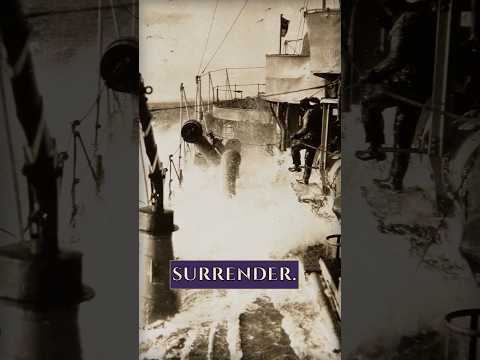
Their Warship Sank in Flames. So 50 Sailors Stole a Ghost Ship.
In November 1914, fifty German sailors from the light cruiser SMS Emden were stranded on Direction Island in the Cocos archipelago after their ship was destroyed in battle by HMAS Sydney. Rather than surrender, their young commander commandeered the Ayesha—a rotting, unseaworthy 97-ton wooden schooner abandoned in the lagoon. Defying all odds, the crew pumped water day and night, evaded Allied naval patrols across seventeen hundred miles of open ocean to Sumatra, transferred ships to Arabia, and fought their way across the desert on camels to reach safety.

A Fake ID in a Dead Man's Pocket Saved Thousands of Soldiers ⚰️
British intelligence used the body of a homeless man to feed Nazi Germany a fake invasion plan - and it worked. Thousands of Allied soldiers survived the real invasion because of it. This is Operation Mincemeat.

Enemy Soldiers Stopped a War to Play Football
in the middle of World War One, soldiers on both sides stopped shooting, sang carols, and met in no-man's land. This is the true story of the Christmas Truce.

He Survived Poison, Bullets, and a Frozen River.
Grigori Rasputin was poisoned, shot multiple times, beaten, and thrown into a frozen river in one single night in 1916. This is the true story of the mystic who wouldn't die.

Australia Lost a War... to Birds
the Australian military declared war on emus destroying farmland, machine guns and all. They lost. This is the true story of the Great Emu War.

A Blast Flattened 80 Million Trees. No Crater. No Answer. ☄️
an explosion over Siberia flattened 80 million trees across 830 square miles - with no crater and no meteor ever found. This is the Tunguska Event, still unexplained after over a century.

US and German Soldiers Fought on the Same Side
In May 1945, five days after Hitler died, American GIs and anti-Nazi German soldiers made an unthinkable alliance to defend French prisoners against the SS. This is the true story of the Battle of Castle Itter.

Their Ship Sank in Antarctic Ice. Then a Miracle Gunboat Arrived.
In February 1903, the Swedish South Polar Expedition was struck by catastrophe when their ship, the Antarctic, was crushed by pack ice in the Weddell Sea. Stranded thousands of miles from civilization, twenty-five men were fractured into three isolated groups across Snow Hill Island, Hope Bay, and Paulet Island. With zero communication and presumed lost by the world, they survived brutal polar winters in crude stone huts on a diet of penguins and seals. Defying the deadly ice, Lieutenant Commander Julián Irízar and the Argentine Navy steamed into the frozen seas aboard the thirty-year-old corvette ARA Uruguay. In an astonishing feat of polar navigation, they located every scattered outpost and brought all twenty-five men home alive.

The Navy Named Two Warships Meow and Bow-Wow. They Won a War. 🐱
the British Admiralty approved an audacious plan to transport two tiny motorboats three thousand miles through the African bush to challenge German naval dominance on Lake Tanganyika. The eccentric commander who led the mission suggested naming them Cat and Dog—rejected by the Admiralty—so he tried the French equivalents, Mimi and Toutou, meaning Meow and Bow-Wow. The Admiralty approved them without knowing the translation. After months of hauling the boats by train, river barge, and ox team through jungle and over mountains, they launched on Christmas Day 1915 and immediately began attacking. Within weeks they had captured one German steamer and sunk another, breaking Germany's grip on the lake.

They Built a Cannon Out of Five Nations' Junk to Survive a 55-Day Siege
During the fifty-five-day Siege of the International Legations in Peking in 1900, foreign legation guards and thousands of Chinese Christian refugees were trapped and besieged by imperial Qing forces. Facing heavy artillery fire without any big guns of their own, Chinese refugees excavated an old, rusted British bronze cannon barrel from an abandoned junk shop. American Navy Gunner Joseph Mitchell mounted the barrel onto a spare Italian gun carriage, loaded it with Russian shells found in a well, primed it with German powder, and fired it using American gunners. Nicknamed the 'International Gun' or 'Old Betsy,' this improvised cannon shattered enemy barricades until an international relief column broke through.

They Banned Pets on Ships. So Troops Enlisted a Bear.
British transport ships to Italy forbade pet animals from boarding. To bring their bear with them, soldiers from Poland officially enlisted Wojtek as a soldier with an army rank and a paybook. During the Battle of Monte Cassino in May 1944, Wojtek hauled heavy ammunition boxes under cannon fire, inspiring his unit to adopt a shell-carrying bear as their official emblem.

Two Ships Collided. It Leveled an Entire City.
two ships collided in Halifax Harbour, setting off the largest man-made explosion in history before the atomic bomb. It leveled two square kilometers of the city in seconds. This is the true story of the Halifax Explosion.

A Former President Paddled Into an Unmapped River. It Nearly Killed Him.
after losing the 1912 election, Theodore Roosevelt joined the Brazilian explorer Colonel Cândido Rondon to follow the Rio da Dúvida - the River of Doubt - an unknown river deep in the Amazon basin. The heavy dugout canoes were unsuited to the constant rapids and were often lost, forcing the men to haul them overland and build new ones, while poor provisions left them on starvation rations. Malaria and fever struck almost everyone, one man drowned in the rapids, and Roosevelt's infected leg wound left the party fearing for his life each day. Rubber tappers helped them down the last stretch of the river. Of the 19 men who set out, 16 returned. The river was renamed Rio Roosevelt, but his health never fully recovered, and he died less than five years later.

Scientists Tormented 22 Orphans for an Experiment
researchers in Iowa conducted a secret psychological experiment on 22 orphans, intentionally conditioning healthy children into developing lifelong stutters. This is the true story of the Monster Study.
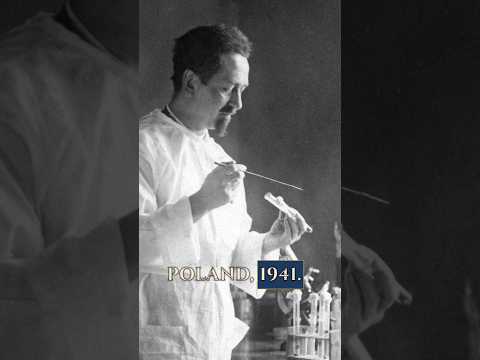
A City's Greatest Minds Let Lice Drink Their Blood to Survive the Nazis 🩸
In Nazi-occupied Lwów, biologist Rudolf Weigl made the first effective typhus vaccine from lice raised on human blood. The Germans wanted it for their army, so the people who fed the lice carried papers from the German army's high command and were quickly released if the Gestapo stopped them. Weigl used that cover to hire Polish intellectuals, Jews and members of the underground, and his vaccine was smuggled into the Lwów and Warsaw ghettos. He was named Righteous Among the Nations in 2003.

A Wave of Molasses Killed 21 People in Boston
a massive tank of molasses burst in Boston, sending a 25-foot wave moving 35 miles per hour through the streets. It killed 21 people. This actually happened.

A Shoemaker Bought a Used Uniform and Took Over a Town Hall 🎖️
In October 1906, Wilhelm Voigt, a shoemaker and ex-convict, put on a captain's uniform pieced together from second-hand shops, stopped soldiers in the street and marched them into the town hall of Köpenick near Berlin. He arrested the mayor, had the town's cash handed over and walked off with it. He was soon caught and sentenced, then pardoned - the 'Captain of Köpenick'.

A Battleship Came for the Rebels. Their Cannon Was Fake.
In November 1904, a new law made the smallpox vaccine mandatory in Brazil, and Rio de Janeiro exploded into a week of street battles - overturned streetcars, smashed lamps, barricades. When troops finally stormed the last rebel stronghold, its feared dynamite turned out to be wood wrapped in silver paper.

They Glowed in the Dark. It Was Killing Them. ☢️
In the 1920s, factory workers painted watch dials with radium paint and were told it was harmless. It wasn't. This is the true story of the Radium Girls.

Earthquakes Shook This Volcano Island for Days. Then It Joined the Mainland.
In January 1914, earthquakes shook the volcanic island of Sakurajima in southern Japan. Then its west flank burst open, and minutes later the other side erupted too. That evening a powerful earthquake struck Kagoshima City. The lava that followed filled the strait and joined the island to the Osumi Peninsula for good.

A Prison Built So No Two Inmates Could Meet 🏝️
the British finished a prison on India's Andaman Islands with 693 solitary cells arranged so no two inmates could ever see each other. Prisoners called crossing the sea to reach it Kala Pani - black water - because it meant losing everything they left behind.

Six Cars Raced From New York to Paris in 1908. It Took 169 Days.
On February 12, 1908, six automobiles lined up in Times Square to start an epic race around the world to Paris. Driving through areas with few paved roads, winter blizzards, and rough terrain across multiple continents, only three cars completed the course. After 169 days, American mechanic George Schuster drove the Thomas Flyer into Paris to claim victory.

He Flew Across the English Channel in 1909 Despite Severe Burns 🛩️
On July 25, 1909, French aviation pioneer Louis Blériot made the first aeroplane flight across the English Channel. Despite severe burns on his foot from an earlier flight, Blériot took off from Calais in his Blériot XI monoplane without a compass. Flying over the water and losing sight of land for several minutes, he circled above the cliffs of Dover and landed safely after about thirty-six minutes to win the Daily Mail prize.

A Pearl Farmer Burns His Own Pearls in Public
Kokichi Mikimoto cultivated pearls in Japan and promoted his business with public pearl burnings. His early half-round pearls and his later adoption of the Mise-Nishikawa method were different stages of the story.