Science & Invention
13 verified stories about science & invention.

An Earthquake Trapped a Lake Above a City. They Drained It With Shovels. ⛏️
In May 1960 the strongest earthquake ever recorded hit southern Chile. Landslides blocked the outflow of Riñihue Lake, and the water began rising behind the debris dam, with about 100,000 people living downstream along the San Pedro River toward Valdivia. Bulldozers bogged down in the mud, so soldiers and hundreds of workers dug with shovels, lowering the dam until the lake drained gradually. Chileans call it the Riñihuazo.

What Happens When a Submarine's Window Cracks Seven Miles Down?
On 23 January 1960, two men descended into the Mariana Trench aboard the bathyscaphe Trieste. At thirty-five thousand eight hundred feet down, they reached the seabed of Challenger Deep. During the descent, a sharp bang shook the cabin as an outer Plexiglas viewing window cracked under pressure, yet the steel sphere held.

They Built a Cannon Out of Five Nations' Junk to Survive a 55-Day Siege
During the fifty-five-day Siege of the International Legations in Peking in 1900, foreign legation guards and thousands of Chinese Christian refugees were trapped and besieged by imperial Qing forces. Facing heavy artillery fire without any big guns of their own, Chinese refugees excavated an old, rusted British bronze cannon barrel from an abandoned junk shop. American Navy Gunner Joseph Mitchell mounted the barrel onto a spare Italian gun carriage, loaded it with Russian shells found in a well, primed it with German powder, and fired it using American gunners. Nicknamed the 'International Gun' or 'Old Betsy,' this improvised cannon shattered enemy barricades until an international relief column broke through.

Scientists Tormented 22 Orphans for an Experiment
researchers in Iowa conducted a secret psychological experiment on 22 orphans, intentionally conditioning healthy children into developing lifelong stutters. This is the true story of the Monster Study.
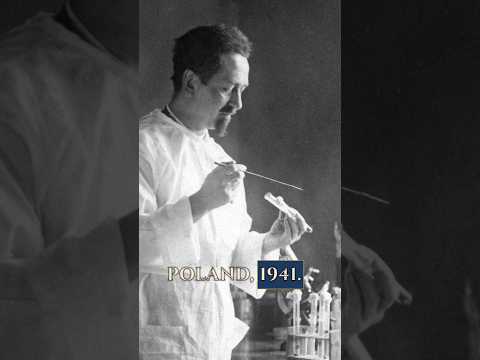
A City's Greatest Minds Let Lice Drink Their Blood to Survive the Nazis 🩸
In Nazi-occupied Lwów, biologist Rudolf Weigl made the first effective typhus vaccine from lice raised on human blood. The Germans wanted it for their army, so the people who fed the lice carried papers from the German army's high command and were quickly released if the Gestapo stopped them. Weigl used that cover to hire Polish intellectuals, Jews and members of the underground, and his vaccine was smuggled into the Lwów and Warsaw ghettos. He was named Righteous Among the Nations in 2003.

They Glowed in the Dark. It Was Killing Them. ☢️
In the 1920s, factory workers painted watch dials with radium paint and were told it was harmless. It wasn't. This is the true story of the Radium Girls.

A 2,000-Year-Old Bronze Lump Was Actually the First Computer ⚙️
sponge divers sheltering from a storm off the Greek island of Antikythera discovered an ancient shipwreck. Among the marble statues was a corroded, calcified lump of bronze. When it dried and cracked open, archaeologists found over thirty interlocking bronze gears that tracked the sun, moon phases, planetary movements, and even predicted solar eclipses and Olympic games. It was the world's first analogue computer—technology so advanced nothing equaled it for another thousand years.

A River Smelled So Bad That Parliament Ran Away. So They Rebuilt London.
In the sweltering summer of 1858, London experienced the Great Stink: the River Thames was so overloaded with raw human waste that the overpowering stench forced Parliament to suspend sessions and soak curtains in disinfectant. Facing public fury and cholera outbreaks, the government funded Joseph Bazalgette to construct a monumental network of subterranean brick sewers that eliminated waterborne epidemics and modernised the city.

Six Cars Raced From New York to Paris in 1908. It Took 169 Days.
On February 12, 1908, six automobiles lined up in Times Square to start an epic race around the world to Paris. Driving through areas with few paved roads, winter blizzards, and rough terrain across multiple continents, only three cars completed the course. After 169 days, American mechanic George Schuster drove the Thomas Flyer into Paris to claim victory.

He Flew Across the English Channel in 1909 Despite Severe Burns 🛩️
On July 25, 1909, French aviation pioneer Louis Blériot made the first aeroplane flight across the English Channel. Despite severe burns on his foot from an earlier flight, Blériot took off from Calais in his Blériot XI monoplane without a compass. Flying over the water and losing sight of land for several minutes, he circled above the cliffs of Dover and landed safely after about thirty-six minutes to win the Daily Mail prize.

How Do You Build a Whole New Capital City in 41 Months? 🏗️
Brazil's capital had been Rio de Janeiro. President Juscelino Kubitschek's motto was "fifty years in five", and a brand-new capital was the cornerstone of his plan. Lúcio Costa won the contest for the master plan, Oscar Niemeyer designed most of the public buildings, and construction that began in February 1957 was finished 41 months later. Brasília became the capital in 1960.
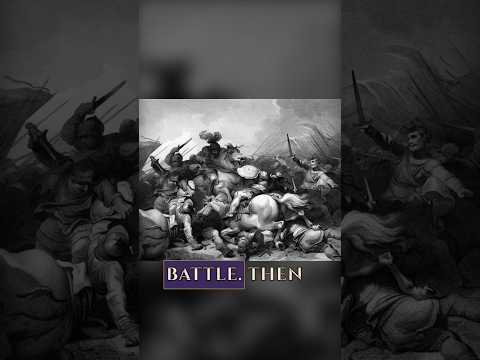
A King Died Charging His Rival. 527 Years Later, He Turned Up Under a Car Park 🅿️
Richard III charged Henry Tudor at the Battle of Bosworth in 1485, cut down Henry's standard-bearer and was surrounded - the last English king to die in battle. He was buried hastily in Leicester's Greyfriars friary, and the grave was lost. In 2012 archaeologists found his skeleton under a city car park; DNA from living relatives confirmed it, and in 2015 he was reburied in Leicester Cathedral.

A Pearl Farmer Burns His Own Pearls in Public
Kokichi Mikimoto cultivated pearls in Japan and promoted his business with public pearl burnings. His early half-round pearls and his later adoption of the Mise-Nishikawa method were different stages of the story.