History from Europe
21 verified stories set in Europe.

They Rammed an Explosive-Packed Warship Into a Nazi Dock. Then Walked Away.
British commandos executed Operation Chariot: packing the obsolete destroyer HMS Campbeltown with four tons of hidden high explosives and ramming it directly into the dry dock gates at Saint-Nazaire, France. The objective was simple: destroy the only Atlantic dock capable of repairing the battleship Tirpitz. When German officers boarded the wreckage the following morning, concealed delayed fuses detonated, completely obliterating the dock for the remainder of the war.

A Country With No Army Took On the Royal Navy. And Won.
Between 1958 and 1976, Iceland fought three Cod Wars with Britain over its fishing waters. Iceland's coast guard cut British trawl nets, frigates and patrol boats rammed each other 55 times in the final round, and Iceland threatened to shut a NATO base. It worked.
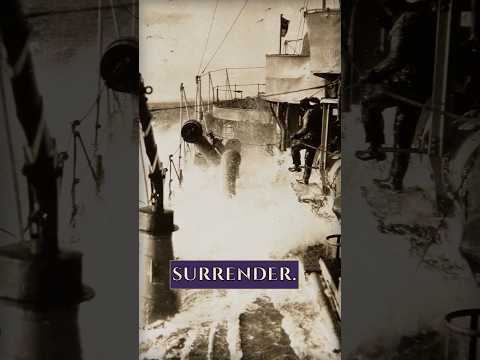
Their Warship Sank in Flames. So 50 Sailors Stole a Ghost Ship.
In November 1914, fifty German sailors from the light cruiser SMS Emden were stranded on Direction Island in the Cocos archipelago after their ship was destroyed in battle by HMAS Sydney. Rather than surrender, their young commander commandeered the Ayesha—a rotting, unseaworthy 97-ton wooden schooner abandoned in the lagoon. Defying all odds, the crew pumped water day and night, evaded Allied naval patrols across seventeen hundred miles of open ocean to Sumatra, transferred ships to Arabia, and fought their way across the desert on camels to reach safety.

A Fake ID in a Dead Man's Pocket Saved Thousands of Soldiers ⚰️
British intelligence used the body of a homeless man to feed Nazi Germany a fake invasion plan - and it worked. Thousands of Allied soldiers survived the real invasion because of it. This is Operation Mincemeat.

A Nuclear Launch Needed All 3 Officers to Agree. He Said No.
a Soviet submarine lost contact with Moscow during the Cuban Missile Crisis and its captain wanted to fire a nuclear torpedo at the American fleet. Launching it required all three senior officers to agree. This is the true story of Vasili Arkhipov, the man who said no.

Enemy Soldiers Stopped a War to Play Football
in the middle of World War One, soldiers on both sides stopped shooting, sang carols, and met in no-man's land. This is the true story of the Christmas Truce.

What Happens When a Submarine's Window Cracks Seven Miles Down?
On 23 January 1960, two men descended into the Mariana Trench aboard the bathyscaphe Trieste. At thirty-five thousand eight hundred feet down, they reached the seabed of Challenger Deep. During the descent, a sharp bang shook the cabin as an outer Plexiglas viewing window cracked under pressure, yet the steel sphere held.

He Survived Poison, Bullets, and a Frozen River.
Grigori Rasputin was poisoned, shot multiple times, beaten, and thrown into a frozen river in one single night in 1916. This is the true story of the mystic who wouldn't die.

A Blast Flattened 80 Million Trees. No Crater. No Answer. ☄️
an explosion over Siberia flattened 80 million trees across 830 square miles - with no crater and no meteor ever found. This is the Tunguska Event, still unexplained after over a century.

US and German Soldiers Fought on the Same Side
In May 1945, five days after Hitler died, American GIs and anti-Nazi German soldiers made an unthinkable alliance to defend French prisoners against the SS. This is the true story of the Battle of Castle Itter.

Four Students Broke Into Westminster Abbey to Steal a Stone
At Christmas 1950, four Glasgow University students - Ian Hamilton, Gavin Vernon, Kay Matheson and Alan Stuart - took the Stone of Destiny from under the Coronation Chair in Westminster Abbey. It broke in two on the floor. A policeman chatted to two of them in their car without spotting the piece hidden inside. The stone turned up at Arbroath Abbey in April 1951, and none of them was ever prosecuted.

They Banned Pets on Ships. So Troops Enlisted a Bear.
British transport ships to Italy forbade pet animals from boarding. To bring their bear with them, soldiers from Poland officially enlisted Wojtek as a soldier with an army rank and a paybook. During the Battle of Monte Cassino in May 1944, Wojtek hauled heavy ammunition boxes under cannon fire, inspiring his unit to adopt a shell-carrying bear as their official emblem.

A King Built the Deadliest Warship. It Sank in 20 Minutes
Sweden launched the Vasa, a massive 64-gun warship meant to dominate the Baltic Sea. King Gustavus Adolphus demanded extra heavy bronze cannons, making the hull dangerously top-heavy. Just twenty minutes into its maiden voyage, a light breeze tilted the ship, seawater flooded the open lower gun ports, and the pride of the Swedish navy sank in front of thousands of horrified onlookers. In 1961, 333 years later, it was raised from the Baltic mud almost completely intact.
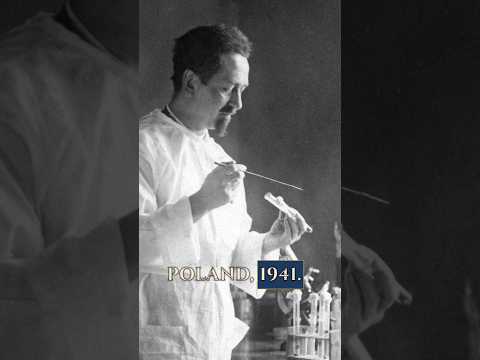
A City's Greatest Minds Let Lice Drink Their Blood to Survive the Nazis 🩸
In Nazi-occupied Lwów, biologist Rudolf Weigl made the first effective typhus vaccine from lice raised on human blood. The Germans wanted it for their army, so the people who fed the lice carried papers from the German army's high command and were quickly released if the Gestapo stopped them. Weigl used that cover to hire Polish intellectuals, Jews and members of the underground, and his vaccine was smuggled into the Lwów and Warsaw ghettos. He was named Righteous Among the Nations in 2003.

A Shoemaker Bought a Used Uniform and Took Over a Town Hall 🎖️
In October 1906, Wilhelm Voigt, a shoemaker and ex-convict, put on a captain's uniform pieced together from second-hand shops, stopped soldiers in the street and marched them into the town hall of Köpenick near Berlin. He arrested the mayor, had the town's cash handed over and walked off with it. He was soon caught and sentenced, then pardoned - the 'Captain of Köpenick'.

A 2,000-Year-Old Bronze Lump Was Actually the First Computer ⚙️
sponge divers sheltering from a storm off the Greek island of Antikythera discovered an ancient shipwreck. Among the marble statues was a corroded, calcified lump of bronze. When it dried and cracked open, archaeologists found over thirty interlocking bronze gears that tracked the sun, moon phases, planetary movements, and even predicted solar eclipses and Olympic games. It was the world's first analogue computer—technology so advanced nothing equaled it for another thousand years.

A River Smelled So Bad That Parliament Ran Away. So They Rebuilt London.
In the sweltering summer of 1858, London experienced the Great Stink: the River Thames was so overloaded with raw human waste that the overpowering stench forced Parliament to suspend sessions and soak curtains in disinfectant. Facing public fury and cholera outbreaks, the government funded Joseph Bazalgette to construct a monumental network of subterranean brick sewers that eliminated waterborne epidemics and modernised the city.

Three Men Flew a Balloon to the North Pole. They Vanished for 33 Years. ❄️
In July 1897, Swedish engineer Salomon August Andrée and two companions lifted off in the hydrogen balloon Örnen, attempting to become the first humans to fly across the North Pole. Within days, freezing rain weighed down the balloon, forcing a crash landing onto pack ice three hundred miles from civilization. After months battling freezing temperatures and polar bears, the expedition vanished without a trace. Thirty-three years later in 1930, Norwegian seal hunters stumbled upon their frozen camp—discovering their diaries and ninety-three preserved photograph negatives that revealed their incredible final journey.

He Had Never Run a Marathon. He Entered One at the Olympics.
At the 1952 Olympics in Helsinki, Emil Zatopek of Czechoslovakia won the 5,000 and 10,000 metres - and on the day of one of those wins his wife Dana took gold in the javelin. Then he ran the first marathon of his life. Halfway through he asked the world record holder, Jim Peters, if the pace was too fast; Peters, joking, said it wasn't fast enough. Zatopek sped up and won in an Olympic record.

He Flew Across the English Channel in 1909 Despite Severe Burns 🛩️
On July 25, 1909, French aviation pioneer Louis Blériot made the first aeroplane flight across the English Channel. Despite severe burns on his foot from an earlier flight, Blériot took off from Calais in his Blériot XI monoplane without a compass. Flying over the water and losing sight of land for several minutes, he circled above the cliffs of Dover and landed safely after about thirty-six minutes to win the Daily Mail prize.
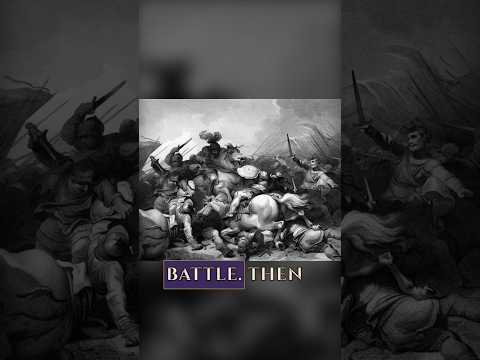
A King Died Charging His Rival. 527 Years Later, He Turned Up Under a Car Park 🅿️
Richard III charged Henry Tudor at the Battle of Bosworth in 1485, cut down Henry's standard-bearer and was surrounded - the last English king to die in battle. He was buried hastily in Leicester's Greyfriars friary, and the grave was lost. In 2012 archaeologists found his skeleton under a city car park; DNA from living relatives confirmed it, and in 2015 he was reburied in Leicester Cathedral.