
Oddities
14 verified stories about oddities.

A Drug Lord Smuggled 4 Hippos Into Colombia. Now There Are Hundreds.
In the 1980s, Pablo Escobar illegally imported 4 hippos to his private zoo. After his death they were left behind - and they never stopped breeding. Colombia now has the largest wild hippo population outside Africa.

Australia Lost a War... to Birds
the Australian military declared war on emus destroying farmland, machine guns and all. They lost. This is the true story of the Great Emu War.

A Blast Flattened 80 Million Trees. No Crater. No Answer. ☄️
an explosion over Siberia flattened 80 million trees across 830 square miles - with no crater and no meteor ever found. This is the Tunguska Event, still unexplained after over a century.
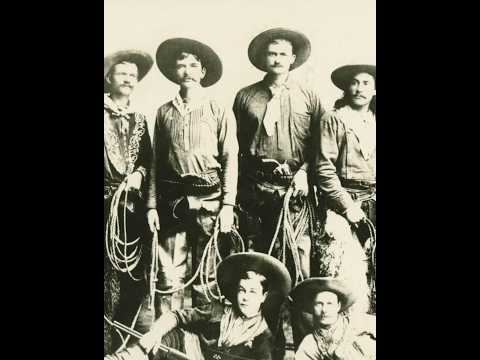
A Whole Town Faked Wild West Shootouts for Tourists
In the 1870s, a Nevada railroad town was so peaceful it didn't even have a sheriff - so the whole town started faking Wild West shootouts for disappointed train tourists. This is the true story of Palisade, Nevada.

They Banned Pets on Ships. So Troops Enlisted a Bear.
British transport ships to Italy forbade pet animals from boarding. To bring their bear with them, soldiers from Poland officially enlisted Wojtek as a soldier with an army rank and a paybook. During the Battle of Monte Cassino in May 1944, Wojtek hauled heavy ammunition boxes under cannon fire, inspiring his unit to adopt a shell-carrying bear as their official emblem.

A Wave of Molasses Killed 21 People in Boston
a massive tank of molasses burst in Boston, sending a 25-foot wave moving 35 miles per hour through the streets. It killed 21 people. This actually happened.

A Shoemaker Bought a Used Uniform and Took Over a Town Hall 🎖️
In October 1906, Wilhelm Voigt, a shoemaker and ex-convict, put on a captain's uniform pieced together from second-hand shops, stopped soldiers in the street and marched them into the town hall of Köpenick near Berlin. He arrested the mayor, had the town's cash handed over and walked off with it. He was soon caught and sentenced, then pardoned - the 'Captain of Köpenick'.

Rumors Said Foreigners Were Eating Babies. Seoul Panicked.
a rumor spread through Seoul that foreigners were kidnapping Korean children - to grind their organs into medicine and use their eyes as camera lenses. Panicked crowds surrounded hospitals, schools, and churches run by foreigners, and diplomats began preparing to evacuate.

A 2,000-Year-Old Bronze Lump Was Actually the First Computer ⚙️
sponge divers sheltering from a storm off the Greek island of Antikythera discovered an ancient shipwreck. Among the marble statues was a corroded, calcified lump of bronze. When it dried and cracked open, archaeologists found over thirty interlocking bronze gears that tracked the sun, moon phases, planetary movements, and even predicted solar eclipses and Olympic games. It was the world's first analogue computer—technology so advanced nothing equaled it for another thousand years.

A Feared Emir Spared a Man Because He Couldn't Stop Laughing
In 1838 Nasrullah Khan, the Emir of Bukhara, arrested Colonel Charles Stoddart, a British officer sent to persuade him to free Russian slaves and sign a treaty of friendship. In November 1841 Captain Arthur Conolly - the man who coined the phrase "the Great Game" - arrived to secure his release and was captured too. In 1842 both were beheaded in the square in front of the Ark of Bukhara on charges of spying for Britain. When the missionary Joseph Wolff came to discover their fate, he appeared before the emir in full canonical robes, and the emir shook with uncontrollable laughter and spared him.

He Had Never Run a Marathon. He Entered One at the Olympics.
At the 1952 Olympics in Helsinki, Emil Zatopek of Czechoslovakia won the 5,000 and 10,000 metres - and on the day of one of those wins his wife Dana took gold in the javelin. Then he ran the first marathon of his life. Halfway through he asked the world record holder, Jim Peters, if the pace was too fast; Peters, joking, said it wasn't fast enough. Zatopek sped up and won in an Olympic record.

Holy Charms Fell From the Sky. So Japan Started Dancing.
as the Tokugawa shogunate crumbled, word spread across Japan that sacred amulets were falling from heaven. Where they landed, towns stopped work for days: people exchanged gifts, went on pilgrimages, and danced in costumes, cross-dressed or naked, chanting "ee ja nai ka" - roughly "Who cares?" or "Why not?". Priests and itinerant preachers were suspected of scattering the amulets themselves, and some suspects were caught in the act. The movement ended as the Meiji Restoration began.

Accounts Disagree on Lincoln’s Famous Wrestling Match
Before politics, Abraham Lincoln earned a reputation as a wrestler in New Salem, Illinois. Popular accounts say he defeated local champion Jack Armstrong—but some historical accounts say the famous match may have ended in a draw.

A Pearl Farmer Burns His Own Pearls in Public
Kokichi Mikimoto cultivated pearls in Japan and promoted his business with public pearl burnings. His early half-round pearls and his later adoption of the Mise-Nishikawa method were different stages of the story.