Echoes of History Uncut Logo
ECHOES OF HISTORY UNCUT
Explore Vault & Catalog Menu
Browse by region

History from North America

Investigating high-stakes episodes in United States, Canadian, and continental North American history.

Historical Scope & Archival Methodology

From the rugged frontiers of nineteenth-century settlement to the classified laboratories of the Manhattan Project and Silicon Valley, North America has served as the stage for radical industrial, political, and scientific experiments.

Our North American dossiers uncover the overlooked incidents behind major national narratives: catastrophic industrial accidents, daring bank heists, naval disasters off rugged coastlines, and fierce technological rivalries. We draw directly from the U.S. National Archives and Records Administration (NARA), the Library of Congress, and Canadian federal repositories.

Primary Archival Deposits & Record Types:
• U.S. National Archives and Records Administration (NARA) Holdings • Library of Congress Manuscript Division Collections • Federal Congressional Hearing Reports and State Historical Society Papers
He Survived Dynamite and Ran 150 Miles in -40° Arctic Snow
World Wars Era · Canada · 1932

He Survived Dynamite and Ran 150 Miles in -40° Arctic Snow

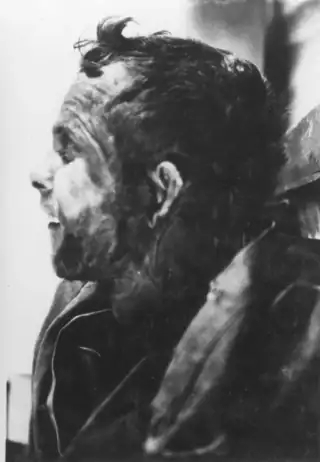
In the bitter winter of 1931, Canadian Mounties surrounded Albert Johnson's frozen Yukon cabin. When he fired through the door, police threw twenty pounds of dynamite, completely blowing off the roof—yet Johnson survived and kept shooting from a dug-out trench. Disappearing into the blinding blizzard, he walked backwards through snowdrifts and masked his footprints in caribou herds to throw off trackers. Desperate, the Mounties launched history's first aerial manhunt before cornering the mysterious Mad Trapper on a frozen river.
He Swore This Dam Was Safe. Hours Later, It Wiped Out an Entire Valley.
World Wars Era · USA · 1928

He Swore This Dam Was Safe. Hours Later, It Wiped Out an Entire Valley.

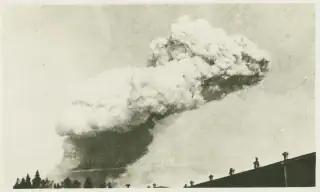
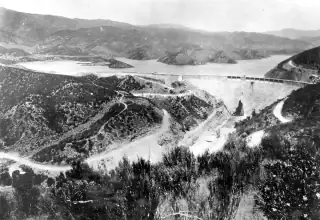
On March 12, 1928, legendary chief engineer William Mulholland personally inspected the St. Francis Dam in California after muddy leaks appeared along its abutments, declaring the concrete structure completely safe. Less than twelve hours later, the dam catastrophically ruptured, unleashing a 140-foot wall of twelve billion gallons of water. The raging torrent obliterated towns, carried 10,000-ton concrete blocks up to three-quarters of a mile down San Francisquito Canyon, and claimed over 400 lives in California's deadliest civil engineering disaster.

From Broken Wrists to Hollywood Chaos: The 35-Year Genesis of Street Fighter
Modern · United States · 1994

From Broken Wrists to Hollywood Chaos: The 35-Year Genesis of Street Fighter

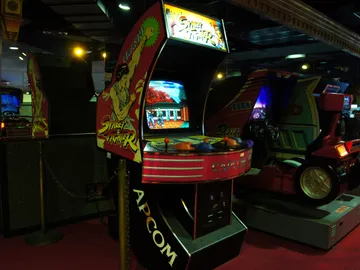
In 1987, Street Fighter began with hydraulic punch-pads that physically injured players. Four years later, an accidental animation-cancel glitch in Street Fighter II created the modern fighting game combo, igniting a multi-billion-dollar coin-op phenomenon. From teenagers lining up quarters on glass CRT monitors to Capcom's chaotic $35 million Hollywood live-action film and the 2009 Chun-Li disaster, this is the authentic 35-year historical chronicle connecting arcade hardware to today's 2026 cinematic reboot.

Shot in the Chest, He Spoke for 90 Minutes: Teddy Roosevelt’s 1912 Milwaukee Speech
World Wars Era · United States · 1912

Shot in the Chest, He Spoke for 90 Minutes: Teddy Roosevelt’s 1912 Milwaukee Speech

On October 14, 1912, an assassin shot Theodore Roosevelt in the chest at point-blank range outside a Milwaukee hotel. Saved by a folded fifty-page manuscript and a steel eyeglass case, the former president refused medical aid, opened his blood-soaked shirt before 9,000 stunned voters, and delivered an 84-minute address with the bullet lodged against his ribs.

Trapped on the Ocean Floor in 240 Feet of Water
World Wars Era · United States · 1939

Trapped on the Ocean Floor in 240 Feet of Water

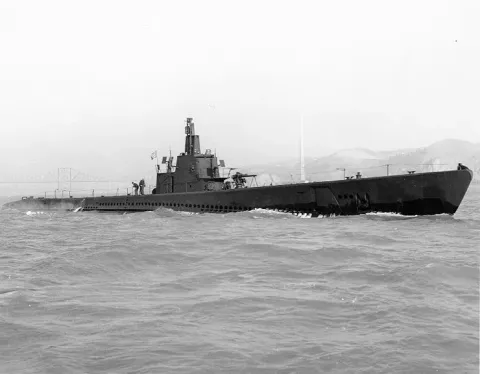
Partially flooded off the coast of Portsmouth, New Hampshire on May 23, 1939, the submarine USS Squalus sank to the bottom and came to rest keel down in 40 fathoms (240 feet) of water. No crew had ever been saved from a stricken submarine at that depth before—until maverick naval designer Charles 'Swede' Momsen lowered his experimental rescue diving bell.

A Wave of Molasses Killed 21 People in Boston
World Wars Era · USA · 1919

A Wave of Molasses Killed 21 People in Boston

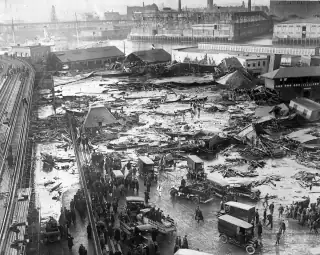
On January 15, 1919, a colossal steel tank holding 2.3 million gallons of fermenting industrial molasses burst in Boston's crowded North End. A twenty-five-foot tsunami of thick syrup moving at thirty-five miles per hour swept through streets, smashing buildings, lifting an elevated railway train from its trestle, and killing twenty-one people.

They Glowed in the Dark. It Was Killing Them.
World Wars Era · USA · c. 1920

They Glowed in the Dark. It Was Killing Them.

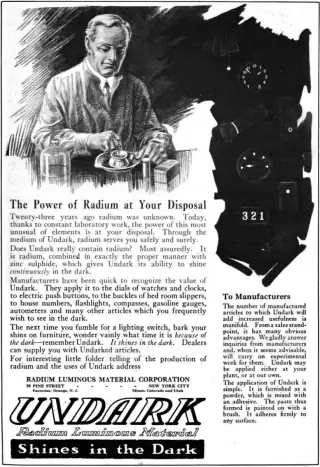
In the 1920s, young female factory workers at the United States Radium Corporation in Orange, New Jersey, painted luminous watch dials with radioactive paint trade-named 'Undark'. Instructed to 'lip-point' camel-hair brushes between their lips to paint fine numerals, the women ingested lethal quantities of radium that decayed their bones from within, sparking an epic legal battle that laid the foundation of modern American occupational safety laws.

The Day a 42-MPH Wind Twisted the Tacoma Narrows Bridge Apart
World Wars Era · United States · 1940

The Day a 42-MPH Wind Twisted the Tacoma Narrows Bridge Apart

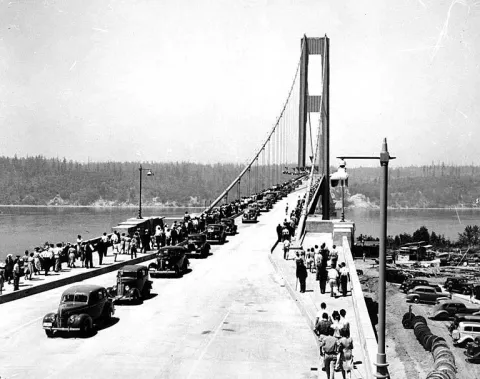
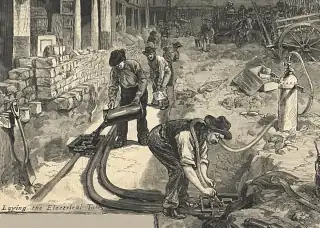
The original Tacoma Narrows Bridge in Puget Sound, Washington State, collapsed on November 7, 1940. On that day, a stiff gale set upon the area, which enhanced the rolling movement of the span. The main span gave way, sending a car belonging to Coatsworth and his daughter's dog plummeting into the Narrows, where the water was reported to be over 100 feet deep.

He Hid His Name in Atari’s Secret Room
Modern · United States · 1979

He Hid His Name in Atari’s Secret Room

In 1979, Atari management banned programmer credits from game boxes and manuals to prevent rival tech companies from poaching talent. Developing Adventure for the Atari 2600 inside just 4,096 bytes of ROM, programmer Warren Robinett secretly coded an invisible one-pixel object that bypassed collision routines, revealing an unauthorized secret room with his name. By the time the signature was discovered, cartridges were already in homes and Robinett had resigned, letting his name reach players anyway.

Two Nations Nearly Went to War Over One Pig.
19th Century · USA · 1859

Two Nations Nearly Went to War Over One Pig.

In June 1859, on San Juan Island, American settler Lyman Cutlar shot a Hudson's Bay Company pig that was rooting in his garden. Within weeks, 461 Americans with 14 cannons faced British warships - until a British admiral refused to start a war over "a squabble about a pig." The two nations shared the island until 1872. The only casualty was the pig.

The Demon Core: Two Lethal Flashes of Blue Light at Los Alamos
World Wars Era · United States · 1945

The Demon Core: Two Lethal Flashes of Blue Light at Los Alamos

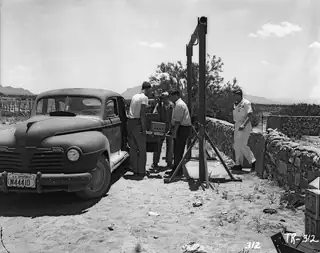
In 1945 and 1946 at Los Alamos Laboratory, a 14-pound subcritical plutonium mass slated for a third atomic bomb fatally irradiated two physicists during manual criticality experiments. Known as 'the Demon Core,' the accidents triggered a flash of blue ionizing radiation, leading to an immediate ban on hands-on assembly and permanently reshaping nuclear safety.

Six Cars Raced From New York to Paris in 1908. It Took 169 Days.
World Wars Era · USA · 1908

Six Cars Raced From New York to Paris in 1908. It Took 169 Days.

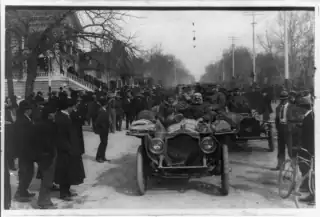
On February 12, 1908, six primitive automobiles lined up before an ecstatic crowd of 250,000 people in Times Square to start an epic 22,000-mile race around the world to Paris. Driving through trackless wilderness, winter blizzards, axle-deep Siberian quagmires, and rough terrain across North America, Asia, and Europe, only three cars finished. After 169 grueling days, American mechanic George Schuster piloted the 1907 Thomas Flyer down the boulevards of Paris to claim an astonishing victory.

Accounts Disagree on Lincoln’s Famous Wrestling Match
19th Century · USA · c. 1831

Accounts Disagree on Lincoln’s Famous Wrestling Match

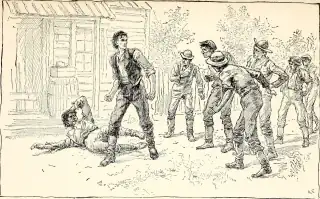
In the late summer of 1831, a gangling twenty-two-year-old store clerk named Abraham Lincoln faced off against Jack Armstrong, champion of the roughneck Clary's Grove boys, in a legendary frontier wrestling bout on the dusty streets of New Salem, Illinois. Though later campaign biographers cast Lincoln as a clean victor, eyewitness accounts and historical depositions reveal a far more chaotic, disputed contest that forged a lifelong brotherhood.

The Denny's Dynasty: How Jensen Huang Built Nvidia, Bet the Farm, and Lost the Throne
Modern · United States · 1993

The Denny's Dynasty: How Jensen Huang Built Nvidia, Bet the Farm, and Lost the Throne

Before commanding a $3 trillion computing empire, Jensen Huang washed dishes and cleaned restrooms at Denny's. In 1993, he co-founded Nvidia in a roadside diner booth. In November 2026, an explosive corporate inquiry into export controls, family nepotism, and undisclosed ties brought an abrupt end to Silicon Valley's longest-running CEO reign.

Why Colonists Gave Thanks After a Massacre
Before 1800 · United States · 1637

Why Colonists Gave Thanks After a Massacre

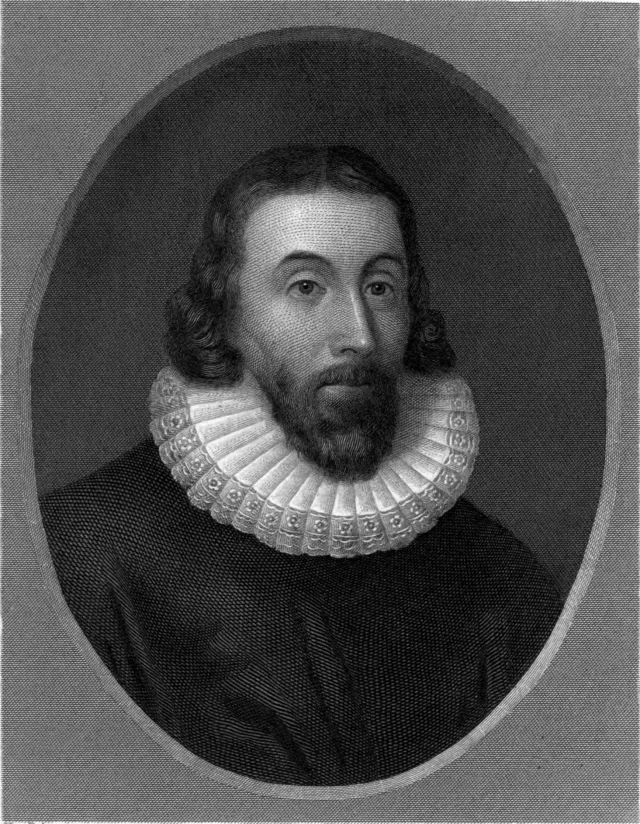
Colonial thanksgiving proclamations did not begin as a single peaceful harvest tradition. In 1637, Massachusetts Governor John Winthrop declared a public day of thanksgiving after colonial militias massacred Pequot villagers at Mystic, and in 1863 Abraham Lincoln established the modern national holiday amid the Civil War without mentioning Pilgrims.

Saved to Vault

Keyboard Navigation

⌘K / Ctrl+K
Instant search across all 100 dossiers
J / K
Jump to Next / Previous chapter in dossier
← / →
Step through Eras on Timeline or Lightbox plates
?
Toggle this keyboard shortcuts guide