
Trapped on the Ocean Floor in 240 Feet of Water
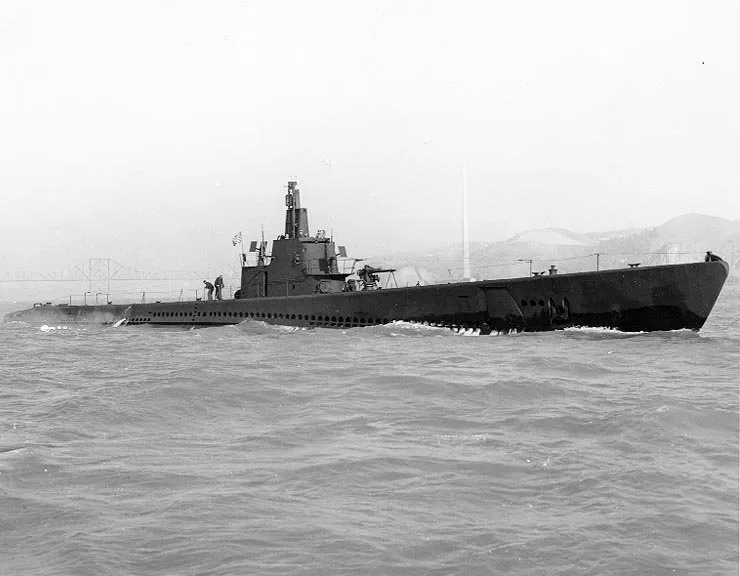
Partially flooded off the coast of Portsmouth, New Hampshire on May 23, 1939, the submarine USS Squalus sank to the bottom and came to rest keel down in 40 fathoms (240 feet) of water. No crew had ever been saved from a stricken submarine at that depth before—until maverick naval designer Charles 'Swede' Momsen lowered his experimental rescue diving bell.
In this dossier (9 chapters) ▾
- 01 Forty Fathoms Down Off Portsmouth
- 02 Red Smoke Rockets and the Sculpin Overhead
- 03 Charles “Swede” Momsen’s Diving Bell
- 04 Medal of Honor Divers and Helium-Oxygen Science
- 05 Exoneration and Rebirth as USS Sailfish
- 06 Why It Matters
- 07 What the Record Shows
- 08 Archival Evidence & Picture Credits
- 09 Verified Archival Sources & Bibliography
Historical Dossier: The Sinking and Deep-Sea Rescue of USS Squalus (SS-192) Location: Off Portsmouth, New Hampshire, North Atlantic (240 ft depth) | Year: 23 May 1939 | Key Figures: Commander Charles “Swede” Momsen, Lieutenant Oliver F. Naquin, William Badders
Forty Fathoms Down Off Portsmouth
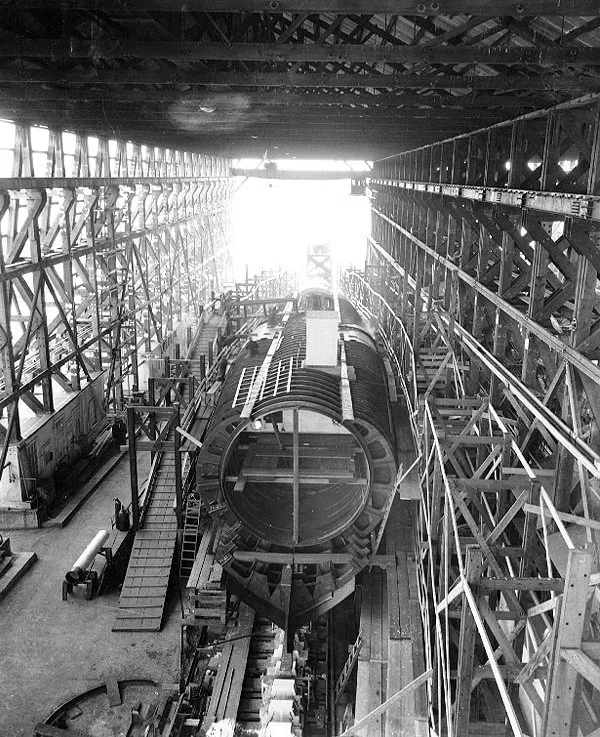
On the morning of May 23, 1939, the newly commissioned Sargo-class fleet submarine USS Squalus (SS-192) departed Portsmouth Navy Yard for a series of high-speed test dives near the Isles of Shoals off the coast of New Hampshire. At 07:40, with 56 crewmen and three civilian technicians aboard under the command of Lieutenant Oliver F. Naquin, the submarine began its nineteenth trial dive. Although the control room indicator panel showed green lights confirming that the main engine air-induction valves had closed, a mechanical linkage failure caused the massive 31-inch main induction valve to pop open as the boat submerged. Tons of icy North Atlantic water roared into both engine rooms, the after battery compartment, and the after torpedo room, drowning 26 men before an electrician’s mate managed to dog shut the watertight bulkhead door between the control room and the flooding aft sections.
Partially flooded and stern-heavy, USS Squalus sank to the ocean floor and came to rest keel down at a 10-degree upward angle in 40 fathoms—240 feet—of near-freezing water. Inside the unflooded forward torpedo room and control room, 33 survivors huddled in darkness on soda-lime carbon-dioxide absorbent blankets as the hull temperature plunged toward 34°F. In the entire history of submarine operations, no crew had ever been rescued from a stricken submarine trapped at that depth beneath the sea.
Red Smoke Rockets and the Sculpin Overhead
Maintaining strict discipline to conserve oxygen and prevent panic in the frigid forward hull, Lieutenant Naquin ordered his men to remain flat on their bunks and immediately released the forward marker buoy trailing a copper telephone line to the surface, while periodically firing red smoke rockets through the forward ejector tube to attract attention. Above them on the grey Atlantic, when Squalus failed to report her surfacing, sister submarine USS Sculpin (SS-191) was dispatched to search the dive coordinates.
At midday, Sculpin’s lookouts spotted one of Naquin’s red smoke rockets bursting above the waves. Inside the dark hull of Squalus, the survivors heard Sculpin’s propellers draw near overhead and stop. Voice contact was briefly established over the marker buoy telephone line before a heavy sea swell snapped the wire, prompting the trapped crew to tap Morse code signals against the steel hull plating. At 04:30 the following morning, May 24, the submarine rescue vessel USS Falcon (ASR-2) arrived at the Squalus’s position and moored in a five-point anchor spread directly over the sunken boat by 08:00.
Charles “Swede” Momsen’s Diving Bell
To reach the men 240 feet down, the Navy called into action Commander Charles “Swede” Momsen, head of the Experimental Diving Unit at the Washington Navy Yard. For more than a decade after the tragic losses of submarines S-51 and S-4 in the 1920s, Momsen had been a maverick engineer whose warnings about submarine escape and proposals for deep-sea rescue chambers had been resisted by conservative Navy top brass.
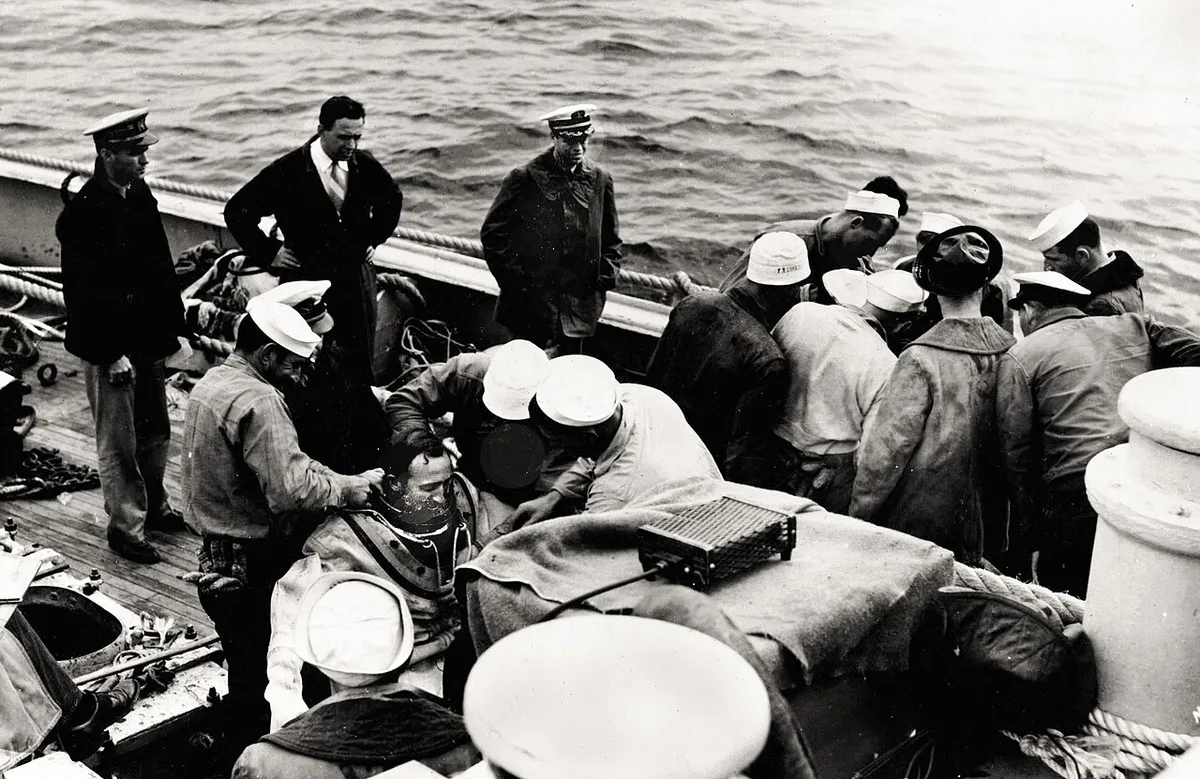
Aboard USS Falcon, Momsen and his diving team deployed the newly developed McCann-Momsen Submarine Rescue Chamber—a 10-foot-tall, 9-ton pear-shaped steel diving bell equipped with a rubber-gasketed lower skirt and an internal air-driven winch. At 10:15 a.m. on May 24, Navy deep-sea diver Martin Sibitzky descended 240 feet to the deck of the Squalus and bolted the steel downhaul guide cable directly to the center of the forward torpedo room escape hatch. Winching itself down the wire, the chamber sealed over the hatch, blew the water out of its lower skirt with compressed air, and opened the hatch to reveal the shivering survivors. Over four tense round trips to the ocean floor—including a harrowing fourth ascent when the downhaul wire jammed and divers had to cut and hand-haul the chamber through the dark water—every single man who had survived the initial flooding, 33 men in all, was brought alive to the surface just after midnight on May 25.
Medal of Honor Divers and Helium-Oxygen Science
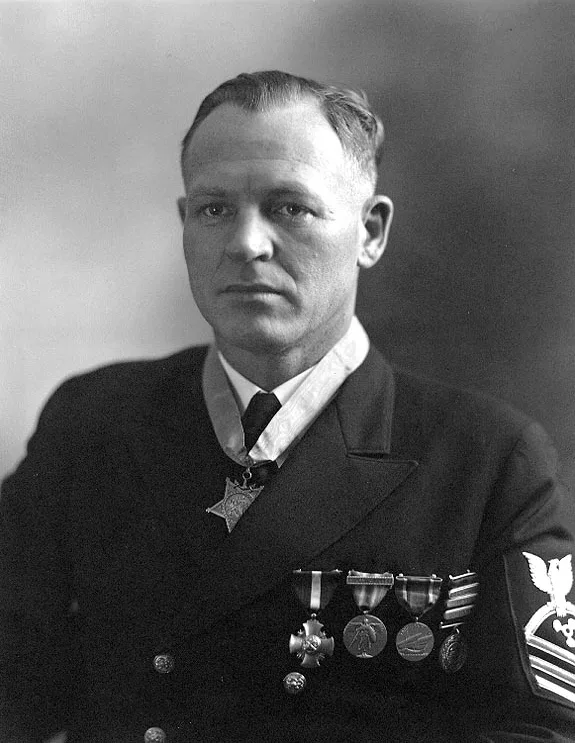
Working in crushing 107-psi pressure and near-freezing darkness to attach the rescue cables and later tunnel lift chains beneath the hull for salvage pontoons, the Navy’s experimental diving unit pushed human physiology to its absolute frontier. At 240 feet, ordinary compressed air caused severe nitrogen narcosis that clouded a diver’s mind within minutes; Momsen’s team deployed experimental helium-oxygen (heliox) breathing mixtures developed to keep divers clear-headed at extreme depth. For risking their lives during the rescue and the grueling 113-day salvage campaign, four enlisted divers—William Badders, Orson Leon Crandall, James Harper McDonald, and John Mihalowski—were awarded the Medal of Honor.
After three stages of pontoon lifts through the summer of 1939, USS Squalus was finally raised from the seafloor and towed into the Portsmouth Navy Yard on September 13, 1939.
Exoneration and Rebirth as USS Sailfish
A formal Navy Court of Inquiry investigated the loss and concluded that a mechanical malfunction—specifically a piping and linkage system failure that allowed the main induction valve to open while submerging—caused the disaster. The court fully exonerated the Squalus crew and formally commended Lieutenant Naquin for outstanding leadership during the crisis on the bottom.
Overhauled at Portsmouth with redesigned positive-locking induction valves that became standard across the U.S. submarine fleet, the boat was rechristened USS Sailfish (SS-192) and recommissioned on May 15, 1940. Many of the rescued survivors returned to submarine duty, with three rejoining the Sailfish herself, which went on to complete twelve combat war patrols in the Pacific during World War II and earn the Presidential Unit Citation.
Why It Matters
The rescue of the USS Squalus crew kick-started a whole new era of underwater technology and laid the scientific foundation for modern deep-sea saturation and mixed-gas diving. By proving under live emergency conditions that a tethered rescue chamber and helium-oxygen diving mixtures could bring thirty-three men back alive from 240 feet down, Momsen and his divers transformed submarine survival engineering forever.
What the Record Shows
22 sourced claims in this story, resting on 6 sources. Numbers link to the bibliography below.
- The submarine sank to the bottom and came to rest keel down in 40 fathoms (240 feet) of water. - source: 1
- No-one had ever been saved from a stricken sub beneath the ocean before. - source: 2
- The USS Squalus was lost off the coast of Portsmouth, New Hampshire on May 23, 1939. - source: 3
- A buoy trailing a telephone line was deployed to the surface. - source: 3
- Red smoke rockets were fired periodically to attract attention. - source: 3
- The Sculpin’s propellers drew near overhead and stopped. - source: 3
- The Falcon arrived at the Squalus’s position at 0430 and moored over the Squalus at 0800. - source: 3
- Charles Momsen was a maverick designer. - source: 2
- Charles Momsen was ignored by the navy top brass. - source: 2
- Maverick designer Charles Momsen was called into action to bring up the crew. - source: 2
- All the men who survived the sinking were rescued. - source: 4
- The program aimed to develop improvements in Navy diving equipment. - source: 5
- The rescue kick-started a whole new era of technology. - source: 2
- Modern deep-sea diving was laid as a foundation by the rescue. - source: 2
- Four enlisted divers were awarded the Medal of Honor for their work during the rescue and subsequent salvage. - source: 6
- USS Sailfish was recommissioned on 15 May 1940. - source: 1
- USS Squalus was raised and towed into the Portsmouth Navy Yard on 13 September. - source: 1
- A Court of Inquiry attributed probable cause to a piping system failure. - source: 5
- A Navy court of inquiry concluded that a mechanical malfunction caused the disaster. - source: 3
- The court exonerated the Squalus crew, commending Naquin for outstanding leadership during the crisis. - source: 3
- The Squalus was overhauled in Portsmouth and rechristened the Sailfish. - source: 3
- Many survivors returned to submarines, with three joining the Sailfish. - source: 3
Archival Evidence & Picture Credits
Every image on this page was checked against its Wikimedia Commons file page.
- USS Sailfish / Squalus (SS-192) underway (Public domain, U.S. Navy Archive) - Wikimedia Commons file page
- Portsmouth Naval Shipyard historical view (Public domain, DoD photo by D. Myles Cullen) - Wikimedia Commons file page
- William Badders, Medal of Honor recipient (Public domain, Naval Historical Center) - Wikimedia Commons file page
- Orson Leon Crandall, Medal of Honor recipient (Public domain, United States Navy) - Wikimedia Commons file page
- USS Squalus (SS-192) under construction, January 1938 (Public domain, US Navy Employee) - Wikimedia Commons file page
- Commander Charles “Swede” Momsen and deep-sea divers aboard USS Falcon (Public domain, U.S. Navy photo) - Wikimedia Commons file page


Verified Archival Sources & Bibliography
Every claim in this account has been fact-checked against primary archives and scholarly repositories:
- Naval History and Heritage Command — Loss and Salvage of USS Squalus (SS-192) (primary)
- BBC Documentary Archive — Charles Momsen and the Squalus Submarine Rescue (news)
- Naval History Foundation — Remembering the USS Squalus 75 Years Later (reference)
- On Eternal Patrol — USS Squalus (SS-192) Crew and Rescue Roll (reference)
- U.S. Government Publishing Office (GPO) — Navy Court of Inquiry & Diving Equipment Report (primary)
Historical Connection Graph
They Glowed in the Dark. It Was Killing Them.
AJ. "Trapped on the Ocean Floor in 240 Feet of Water." Echoes of History Uncut. Last modified October 20, 2026. https://echoesofhistoryuncut.com/articles/uss-squalus/.

An independent digital history publication and documentary studio reconstructing historical turning points through primary archives, official inquiries, and scholarly citations. Every factual claim in this dossier is cross-referenced to the numbered bibliography above.