
A Remote Lighthouse, a Half-Eaten Meal, and Three Missing Men.
In December 1900, the relief vessel Hesperus arrived at Eilean Mòr in the Outer Hebrides to find the Flannan Isles Lighthouse completely deserted. Inside, the lamp was unlit and two oilskin coats were gone; at the West landing, iron railings were twisted out of shape and a one-ton stone block had been wrenched from its perch above the Atlantic.
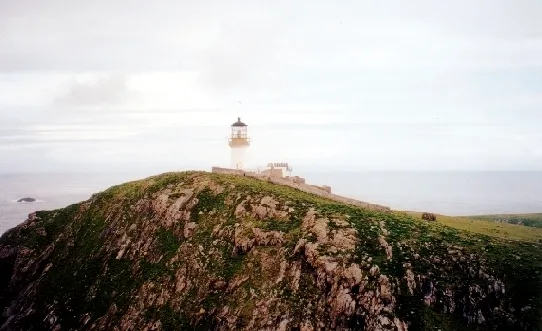
In this dossier (8 chapters) ▾
- 01 Three Men on the Edge of the North Atlantic
- 02 Arrival of the Relief Vessel Hesperus
- 03 Twisted Iron Railings at the West Landing
- 04 Widows, Rumors, and the Official Inquiry
- 05 Why It Matters
- 06 What the Record Shows
- 07 Archival Evidence & Picture Credits
- 08 Verified Archival Sources & Bibliography
Historical Dossier: The Vanishing of the Eilean Mòr Lighthouse Crew Location: Eilean Mòr, Flannan Isles, Outer Hebrides, Scotland | Year: December 1900 | Key Figures: James Ducat, Donald McArthur, Thomas Marshall, Joseph Moore, Robert Muirhead
Three Men on the Edge of the North Atlantic
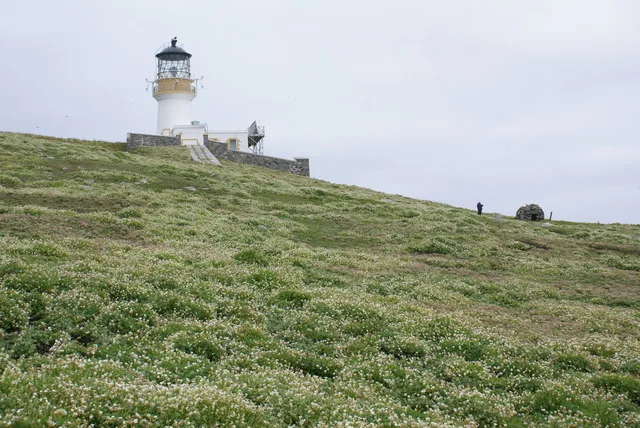
Twenty miles west of the Isle of Lewis in the Outer Hebrides of Scotland rises Eilean Mòr—the largest of the Flannan Islands, an isolated, cliff-girt outcrop of rock where the ancient dry-stone ruins of St Flannan’s Chapel sit below the summit. For centuries, Scottish shepherds who rowed out in summer to graze sheep refused to spend a single night on the island because of its superstitions and ferocious Atlantic squalls. In December 1899, the Northern Lighthouse Board completed a 75-foot masonry lighthouse tower on the island’s highest ridge, manned by a three-man crew working in strict rotation to keep the beacon shining each night for steamers rounding the north of Scotland.
In December 1900, just one year after the light was first lit, all three lighthouse keepers stationed on Eilean Mòr—43-year-old Principal Keeper James Ducat, a veteran with twenty years of lighthouse service; 28-year-old Second Assistant Thomas Marshall; and 40-year-old Occasional Keeper Donald McArthur, a seasoned mariner filling in for a sick colleague—vanished from the rock without a single witness.
Arrival of the Relief Vessel Hesperus
The first sign that something had gone terribly wrong came on December 15, 1900, when the steamer Archtor, bound from Philadelphia to Leith, passed the Flannan Isles in poor weather and logged that the Eilean Mòr light was not burning. Delayed for days by fierce winter gales, the Northern Lighthouse Board tender Hesperus—commanded by Captain James Harvey and carrying relief assistant keeper Joseph Moore—finally anchored off the island at noon on December 26, 1900. Expecting to see a signal flag flying from the flagstaff and the off-duty keepers waiting with provisioning boxes at the landing stage, Captain Harvey sounded the ship’s siren and fired a signal flare. Nothing moved along the cliff.
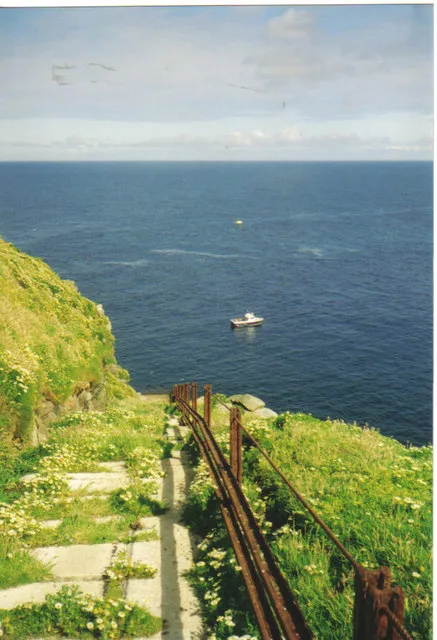
Rowed ashore to the sheltered East landing and climbing the 160 steep stone steps up the cliffside alone, Joseph Moore felt a growing sense of dread. When he unlocked the entrance gate to the compound, he found the lighthouse completely deserted. The kitchen door stood open, the hearth fire had been out for several days, and the clocks had stopped. Up in the lantern room, the wicks had been trimmed and the oil reservoirs filled—meaning the keepers had completed their daytime preparation routines on December 15—yet the main lamp had never been lit that evening. Later popular accounts embellished the scene with tales of half-eaten food on the table and logbooks reporting a storm that brought the men to tears, though Moore noticed one decisive physical clue inside the hallway: the heavy waterproof oilskin coats belonging to James Ducat and Thomas Marshall were gone, while Donald McArthur’s oilskin coat still hung on its peg. Because Northern Lighthouse Board regulations strictly forbade all three keepers from leaving the station unattended at the same time, only an extraordinary emergency outside could have drawn McArthur out into the December gale in his shirt-sleeves.
Twisted Iron Railings at the West Landing
On December 29, 1900, Northern Lighthouse Board Superintendent Robert Muirhead—who had personally recruited all three keepers and knew their discipline firsthand—arrived on Eilean Mòr to conduct a formal board investigation. Together with Moore and the relief crew, Muirhead made a thorough forensic search over and round the entire island.
While everything at the sheltered East landing place was found in complete order, the exposed West landing stage revealed the sheer violence of the storm that had struck the island on the afternoon of December 15. Even though the original crane had been washed away the previous winter and its summer replacement stood bolted high on its platform, heavy mooring ropes normally stored inside a wooden crate anchored 70 to 110 feet above sea level had been torn loose and scattered across the rocks. The old rope box wedged into a deep rock crevice had been ripped away completely, heavy iron railings cementing the cliff path were bent and wrenched out of their sockets, massive turf sods had been stripped from the cliff top 200 feet above the ocean, and a block of stone weighing upwards of 20 hundredweight (more than one ton) had been dislodged from its position by the impact of the sea.
Widows, Rumors, and the Official Inquiry
The tragedy devastated the keepers’ families ashore: James Ducat left behind a widow and four young children, and Donald McArthur left behind a widow. Over the decades that followed, Wilfrid Wilson Gibson’s 1912 poem Flannan Isle, stage plays, and sensationalist writers surrounded Eilean Mòr with supernatural myth—speculating that giant sea birds, ghost ships, or cabin fever had driven one of the keepers to murder his colleagues and throw himself into the Atlantic.
Why It Matters
Yet the physical evidence documented in Robert Muirhead’s official report of January 8, 1901, points to a clear, heartbreaking reconstruction. Having experienced the loss of the West crane the previous winter, Ducat and Marshall walked down to the West landing in their oilskins before dusk on December 15 to secure the storm-lashed equipment crates; seeing a series of giant Atlantic waves breaking high over the cliff, McArthur rushed out of the lighthouse without taking time to put on his coat to warn them, only for an enormous rogue wave—amplified by the funnel-shaped gully of the West landing—to sweep all three men into the boiling sea. Automated in 1971, the Flannan Isles Lighthouse stands today as maritime history’s enduring monument to the men who kept the outer lights burning against the full fury of the North Atlantic.
What the Record Shows
21 sourced claims in this story, resting on 6 sources. Numbers link to the bibliography below.
- The lighthouse was located on Eilean Mòr, the largest of the Flannan Islands. - source: 1
- The men at the Flannan Isle lighthouse worked to keep the light shining each night. - source: 1
- Three lighthouse keepers disappeared from the Flannan Isles lighthouse in December 1900. - source: 2
- A three-man crew maintained the lamp at the top of the lighthouse. - source: 3
- The lighthouse tender Hesperus arrived on the island with Joseph Moore. - source: 1
- The lighthouse was unlit, two coats were missing, and food was half-eaten when Moore entered. - source: 4
- Assistant keeper Joseph Moore arrived at the islands on a steam ship and found the lighthouse deserted. - source: 2
- St Flannan’s Chapel is located below the lighthouse. - source: 5
- The kitchen door was open, but the fire was not lit for some days. - source: 1
- The keepers left behind logs reporting a storm that brought them to tears and caused them to pray for their lives. - source: 4
- The iron railings were displaced and twisted. - source: 1
- Robert Muirhead arrived on Eilean Mòr on 29 December. - source: 1
- The men made a thorough search over and round the island. - source: 1
- A large block of stone weighing upwards of 20 cwt was dislodged from its position. - source: 1
- Everything at the East landing place was in order. - source: 1
- The crane was washed away during last winter. - source: 1
- Ropes normally held in a suspended brown crate were scattered over the rocks. - source: 4
- The old box at West landing was missing. - source: 6
- James Ducat left behind a widow and four children. - source: 1
- Donald McArthur left behind a widow. - source: 1
- Some speculate that one of the men was driven to insanity and murdered his colleagues and took his own life. - source: 4
Archival Evidence & Picture Credits
Every image on this page was checked against its Wikimedia Commons file page.
- The lighthouse on Eilean Mòr (CC BY-SA 2.0, Marc Calhoun) - Wikimedia Commons file page
- Steps to the landing place on the Flannan Isles (CC BY-SA 2.0, JJM) - Wikimedia Commons file page
- Flannan Island Lighthouse on the cliffs (CC BY-SA 2.0, Peter Standing) - Wikimedia Commons file page
- Close-up of the Flannan Isles Lighthouse tower (CC BY-SA 2.0, Chris Downer) - Wikimedia Commons file page
- The lighthouse seen through a stone wall on Eilean Mòr (CC BY-SA 2.0, Chris Downer) - Wikimedia Commons file page
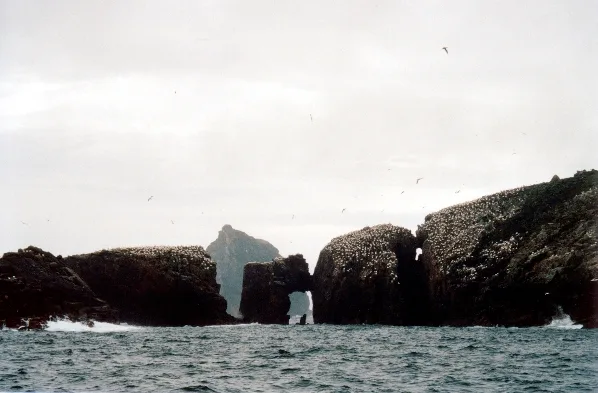
- Eilean a’ Ghobha and Roareim in the Flannan Isles (CC BY-SA 2.0, Marc Calhoun) - Wikimedia Commons file page


Verified Archival Sources & Bibliography
Every claim in this account has been fact-checked against primary archives and scholarly repositories:
- Brooklyn College CUNY Scotia Archive — The Mystery of Flannan Isle & Superintendent Muirhead’s Report (primary)
- BBC News — The Mystery of the Flannan Isles Lighthouse Keepers (news)
- BBC Archive — The Vanishing Lighthousemen of Eilean Mòr (reference)
- Pennsylvania State University Historical Review — The 1900 Flannan Isles Disappearance (reference)
- University of Glasgow Saints in Scottish Place-Names — St Flannan’s Chapel, Eilean Mòr (primary)
- Museum of Scottish Lighthouses — Original 1900 Northern Lighthouse Board Documents (primary)
Historical Connection Graph
A Blast Flattened 80 Million Trees. No Crater.
AJ. "A Remote Lighthouse, a Half-Eaten Meal, and Three Missing Men.." Echoes of History Uncut. Last modified October 19, 2026. https://echoesofhistoryuncut.com/articles/flannan-isles-lighthouse/.

An independent digital history publication and documentary studio reconstructing historical turning points through primary archives, official inquiries, and scholarly citations. Every factual claim in this dossier is cross-referenced to the numbered bibliography above.