
The Indestructible Grain: The Secret Symbolism Behind Dashain's Tika and Jamara
Millions receive the blood-red Tika and golden Jamara every autumn, but few realize its secret: unbroken rice grains representing human resilience, barley sprouted in secret darkness, and cooling yogurt binding a family together.
In this dossier (7 chapters) ▾
- 01 The Grain That Must Never Break
- 02 The Plant That Conquers Darkness: Etiolation and Sacred Barley
- 03 The Trinity of the Forehead: Vermilion, Curd, and Rice
- 04 The Elder’s Touch and the Sanskrit Ashirwad
- 05 What the Record Shows
- 06 Archival Evidence & Picture Credits
- 07 Verified Archival Sources & Bibliography
Cultural & Historical Dossier: The Sacred Symbolism of Tika & Jamara Festival: Dashain (Vijaya Dashami) | Geographic Focus: Nepal and the Himalayan Diaspora | Core Ingredients: Akshata (Unbroken Rice), Yava (Barley), Abir (Vermilion), Dahi (Curd)
The Grain That Must Never Break
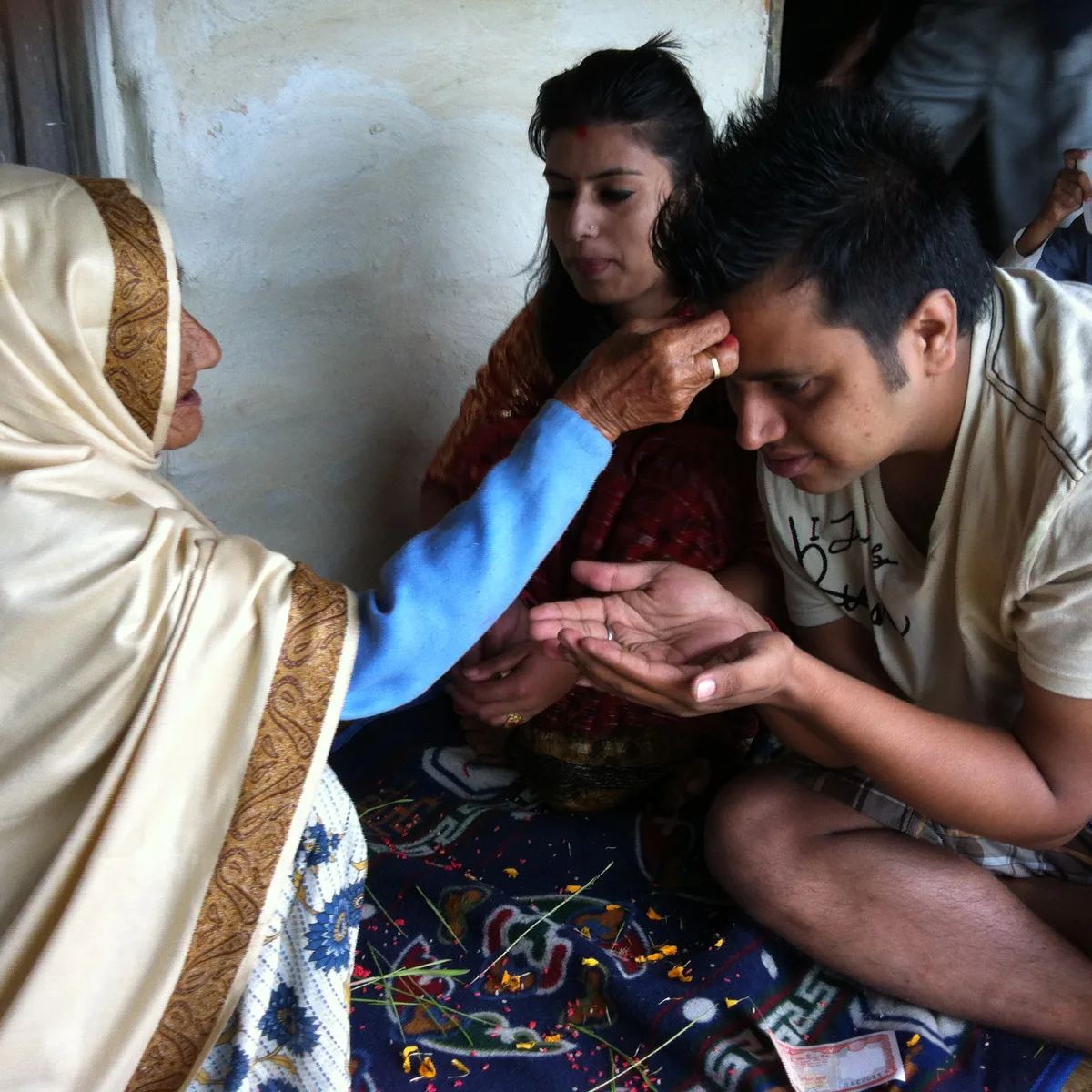
In the quiet rooms of homes across the Himalayas and the global Nepali diaspora each autumn—during the bright lunar fortnight of Ashwin or Kartik—an elder holds a brass or bronze plate (thali) piled with scarlet-coated rice and luminous golden barley shoots. As the auspicious hour approaches on Vijaya Dashami, the tenth and culminating day of the fifteen-day Dashain festival, the elder presses a firm, deliberate thumb between a younger relative’s eyebrows, leaving an emblem of red vermilion, white curd, and whole rice grains while tucking fresh yellow shoots behind the ear.
It is the most recognizable ceremonial gesture in Himalayan cultural life. Yet behind the annual family reunion lies an ancient botanical and philosophical grammar of human endurance, encoded into everyday agricultural staples that have linked mountain communities from the Vedic age to the twenty-first century.
The first and strictest rule of the ritual is deceptively simple: the rice grains used in the Tika mixture must never be broken.
In classical Sanskrit ritual nomenclature, these consecrated whole grains are called Akshata (अक्षता), formed from the verbal root kshad (“to cut, divide, crush, or injure”) negated by the prefix a-. Literally translated, Akshata means “that which is unbroken, uninjured, undivided, and imperishable.” Before the Dashain altar is prepared, households carefully winnow and inspect the harvested paddy rice (Oryza sativa) so that husked grains fractured during milling are set aside for cooking, leaving only intact kernels for the blessing plate. In agrarian philosophy across the Kathmandu Valley and the mid-hills of Nepal, broken grain symbolized fragmentation, discord, and vulnerability to misfortune. Pressing whole Akshata onto the forehead of the younger generation enacted a physical prayer: that whatever hardships, illnesses, or economic storms the coming year might bring, the recipient’s mind, fortune, and family lineage would remain whole and unshattered.
The Plant That Conquers Darkness: Etiolation and Sacred Barley
The golden crown accompanying the Tika—known in Nepali as Jamara—begins its life nine days earlier on Ghatasthapana (“the establishing of the sacred pot”), the opening dawn of Navaratri.
In the darkened sanctum of the household prayer room (Puja Kotha) or historic state shrines such as the Hanuman Dhoka Dashain Ghar in Kathmandu and the ancestral palace at Gorkha, a consecrated clay kalash filled with pure water is surrounded by a bed of washed river sand and fine alluvial soil. Into this bed, the head of the household sows seeds of barley (Hordeum vulgare, known in Vedic Sanskrit as Yava), often mixed with maize, wheat, and paddy seeds. Once watered, the seedbed is covered with banana leaves or a clay basin and shielded from every ray of direct sunlight for nine consecutive days while lamps burn and hymns from the Devi Mahatmya (Durga Saptashati) are recited.
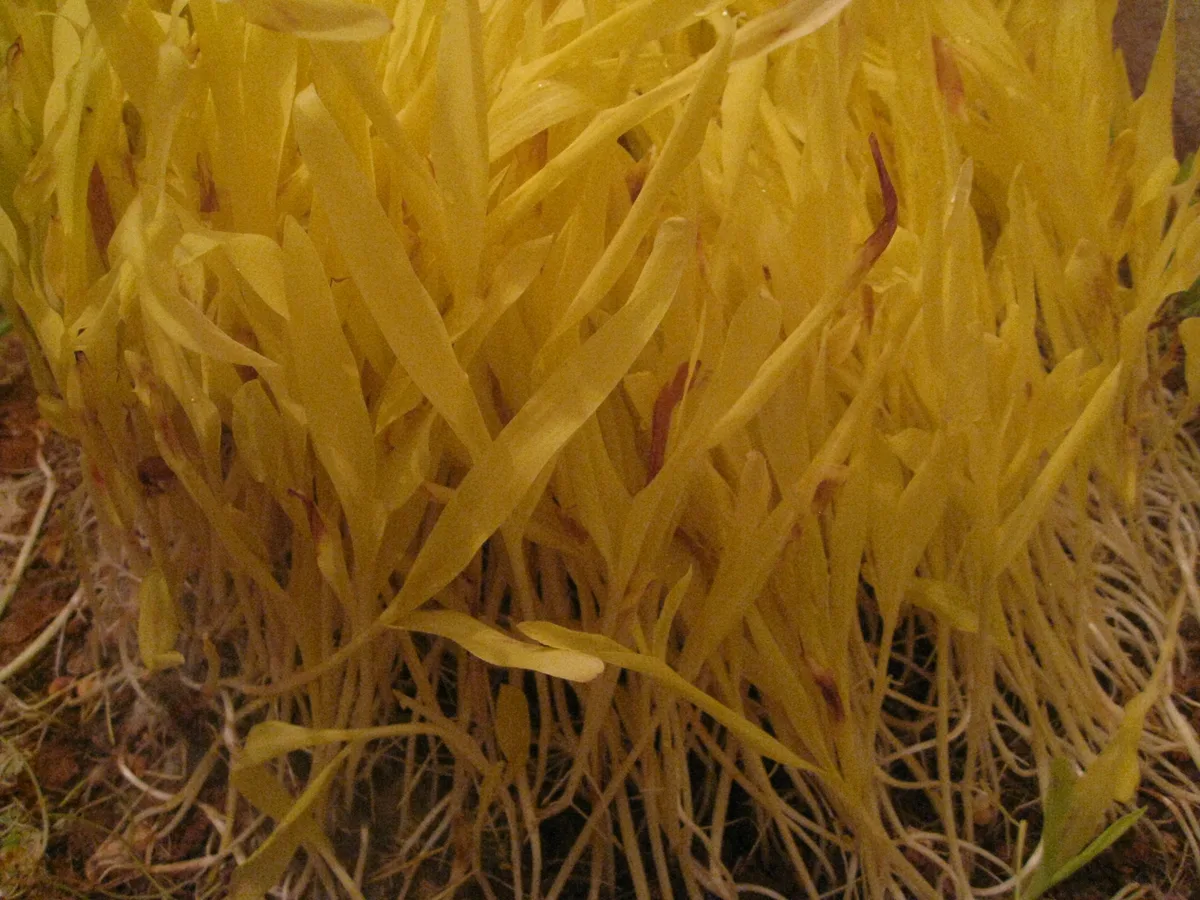
From a botanical perspective, the resulting seedlings undergo etiolation. Deprived of solar photons, the germinating shoots do not convert protochlorophyllide into green chlorophyll; instead, their stems elongate rapidly as they search upward for light, coloured by carotenoid pigments into a striking, luminous pale gold.
In the Atharvaveda and Rigveda, barley (Yava) was revered as one of humanity’s earliest domesticated sacred grains—celebrated as a purifier and “king of healing herbs” that warded off scarcity and affliction. Cultivating Jamara in total darkness during the nine nights of Navaratri served both an ecological and a mythic purpose: it tested the viability and germination strength of the household’s seed stock after the monsoon rains, and it mirrored the triumph of life pushing upward unbent through darkness. Placed behind the ear or atop the head on Vijaya Dashami, the cool, tender barley blades served as an auspicious floral crown of prosperity and seasonal vitality.
The Trinity of the Forehead: Vermilion, Curd, and Rice
While some indigenous Himalayan communities preserve the older tradition of white Tika (blending plain curd and unbroken rice as a pure emblem of peace and lunar clarity), the widely practiced red Dashain Tika unites three distinct substances into a deliberate symbolic triad:
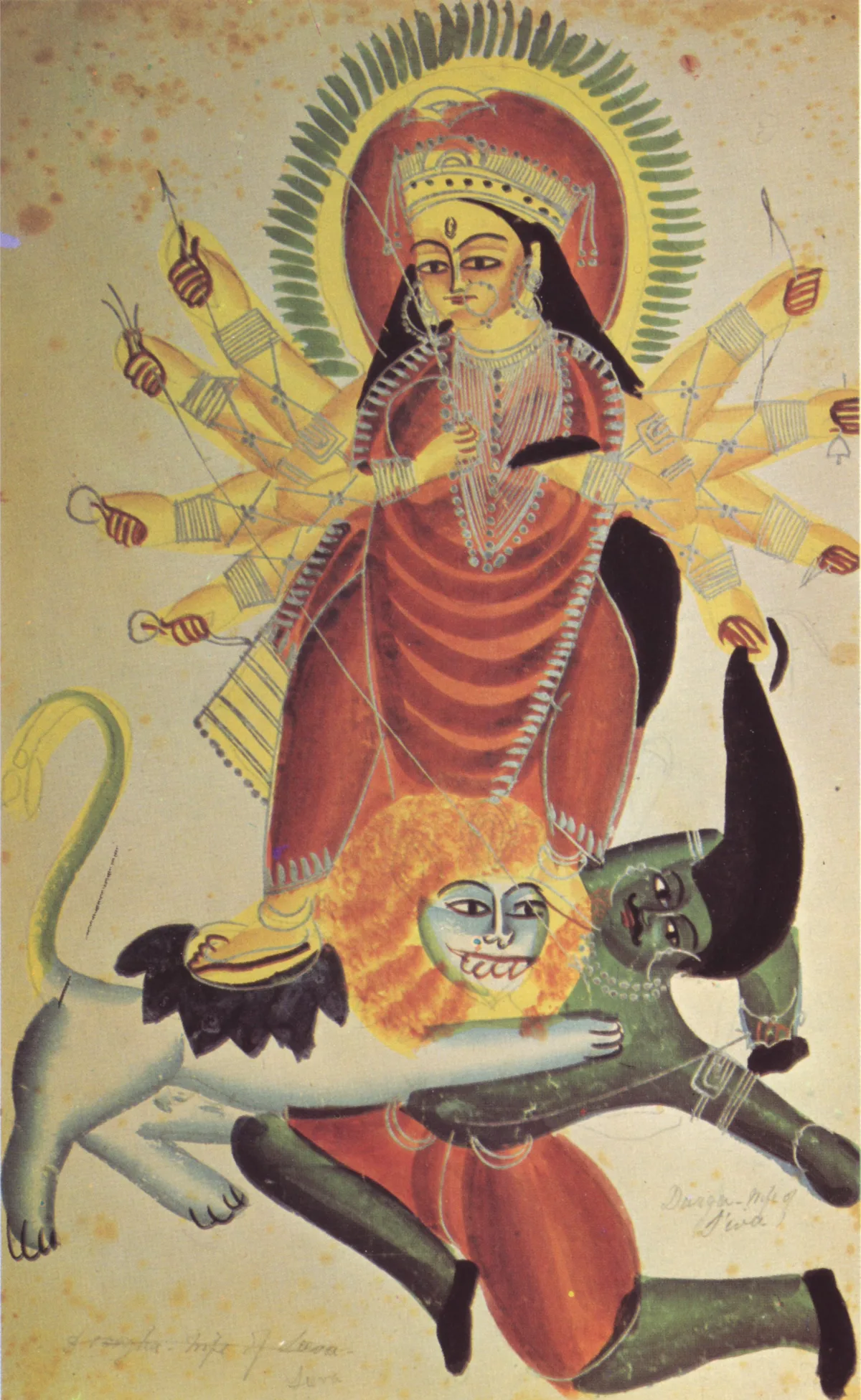
- Scarlet Vermilion (Abir / Simrik): Representing blood, warmth, and Shakti—the dynamic protective energy of Goddess Durga after her nine-day battle overcoming the chaos of the buffalo demon Mahishasura, as well as the righteous perseverance of Lord Rama. It signifies courage, action, and vitality.
- Cooling White Curd (Dahi): Because untempered fire can turn to anger or arrogance, fresh white yogurt is kneaded into the dry vermilion and rice. In South Asian ritual tradition, dahi embodies coolness, purity, digestion, and mental calm—tempering martial energy with serenity and grace.
- The Binding Medium of Kinship: Physically, dry rice and powder cannot cling to skin on their own. The yogurt acts as the natural adhesive that binds dozens of separate grains into a single cohesive cluster. Culturally, it mirrors the social function of Dashain itself, when sons, daughters, and migrant workers travel across mountain passes and oceans back to the ancestral home, reuniting scattered individuals into one family body.
The mixture is applied directly over the Ajna Chakra—the space between the eyebrows regarded in Hindu and Buddhist contemplative traditions as the seat of discernment, memory, and inward focus.
The Elder’s Touch and the Sanskrit Ashirwad
On the morning of Vijaya Dashami after the household Devi Visarjan (concluding rites of the altar), the ceremony of Tika flows along kinship hierarchy from elders to juniors.
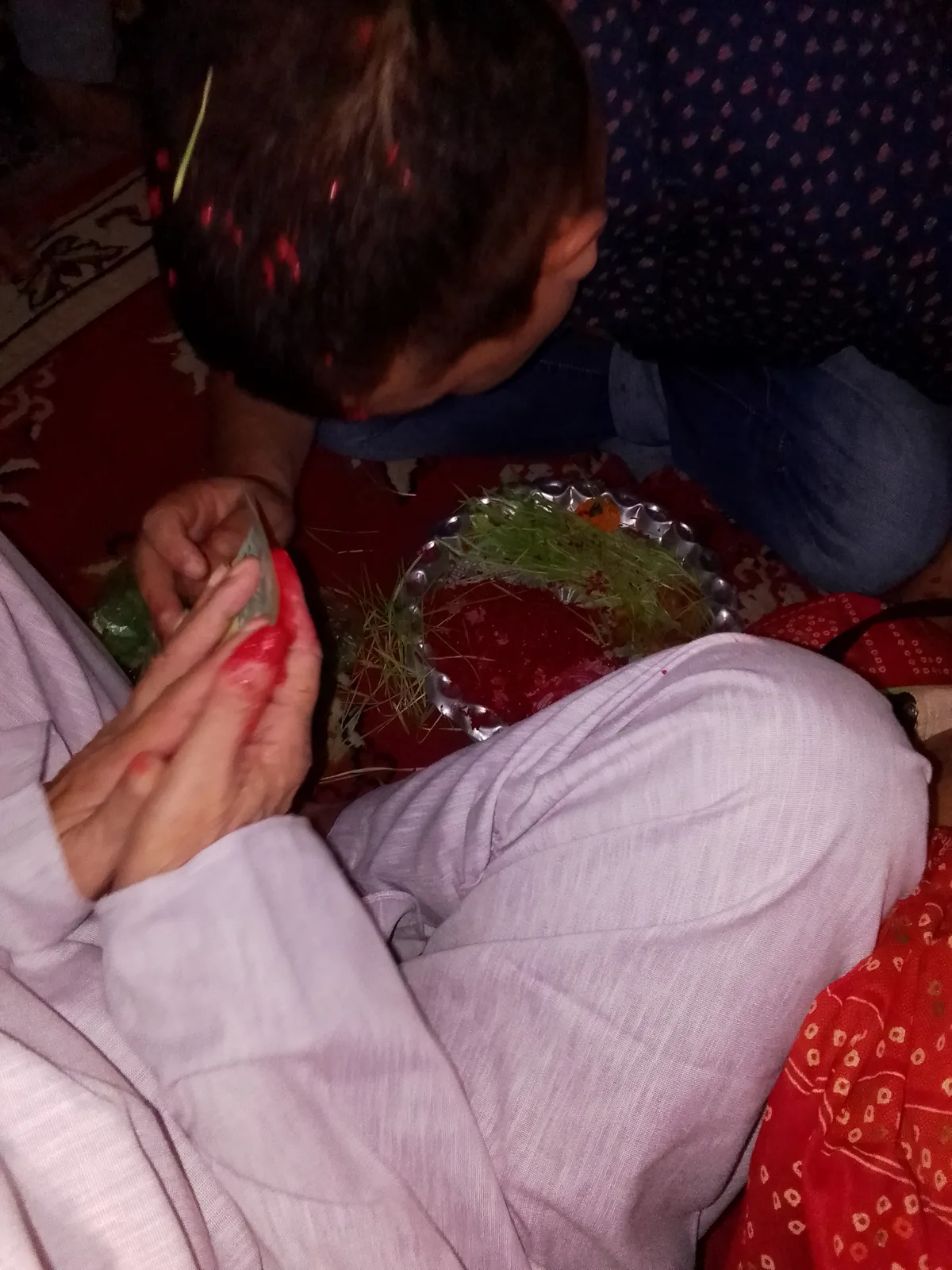
As elders place the Akshata and Jamara, they chant the traditional Sanskrit Ashirwad verses—invoking for men the longevity of Drona’s son Ashwatthama, the generosity of King Dasharatha, the conquest of obstacles of Lord Rama, the splendour of Nahusha, the speed of the wind, and the wisdom of Brihaspati (“Ayuh Dronasute, shriyanchо Dasharathe…”), while invoking for women the creative grace, fortitude, and wisdom of the protective forms of Jayanti Mangala Kali. Accompanied by Dakshina (customary gifts of money), the ritual transforms a handful of unbroken rice and dark-sprouted barley into a living covenant of protection between generations.
What the Record Shows
6 sourced claims in this story, resting on 6 sources. Numbers link to the bibliography below.
- In classical Sanskrit, Akshata translates literally as “that which is unbroken or uninjured,” requiring whole, unfractured rice grains for the Dashain Tika ritual - source: 1
- On Ghatasthapana, the opening day of Dashain, barley seeds (Yava) are sown in river sand inside the Puja Kotha and shielded from sunlight for nine days - source: 3
- Deprived of sunlight, the sprouting barley shoots cannot synthesize green chlorophyll (etiolation), emerging as luminous pale-yellow Jamara - source: 4
- In Vedic literature (Atharvaveda), barley (Yava) is revered as one of the earliest domesticated sacred grains and protective healing herbs - source: 5
- The Tika paste combines scarlet vermilion (Abir), cooling white curd (Dahi) as a binding adhesive, and unbroken rice pressed over the Ajna (brow) center - source: 2
- On Vijaya Dashami, elders apply Tika and Jamara from oldest to youngest while chanting Sanskrit Ashirwad blessings for longevity and resilience - source: 6
Archival Evidence & Picture Credits
Every image on this page was checked against its Wikimedia Commons file page.
- Dashain Tika with unbroken Akshata rice (CC BY-SA 3.0, Krish Dulal) - Wikimedia Commons file page
- Dasain Jamara golden shoots (CC BY-SA 3.0, 南アジア) - Wikimedia Commons file page
- Goddess Durga on her lion slaying Mahishasura, Kalighat school, 1880 (CC BY 2.0, Will) - Wikimedia Commons file page
- Putting Dashain Tika on forehead in Nepal (CC BY-SA 4.0, Nischal 61) - Wikimedia Commons file page


Verified Archival Sources & Bibliography
Every claim in this account has been fact-checked against primary archives and scholarly repositories:
- loc.gov — Library of Congress South Asian Collections: Himalayan Ritual & Agricultural Heritage
- unesco.org — UNESCO Intangible Cultural Heritage Registry: South Asian Festive Traditions
- en.wikipedia.org — Dashain: Ghatasthapana, Jamara Cultivation, and Vijaya Dashami Observances
- en.wikipedia.org — Etiolation: Botanical Mechanism of Chlorophyll Absence in Dark-Grown Shoots
- sacred-texts.com — Sacred Books of the East: Vedic Hymns to Yava (Barley) and Akshata
- britannica.com — Encyclopaedia Britannica: Dashain Festival and Nepalese Cultural Lineage
Historical Connection Graph
The King Who Refused Heaven for a Stray Dog: The True History of Nepal's Kukur Tihar
AJ. "The Indestructible Grain: The Secret Symbolism Behind Dashain's Tika and Jamara." Echoes of History Uncut. Last modified October 18, 2026. https://echoesofhistoryuncut.com/articles/symbolism-of-tika-and-jamara/.

An independent digital history publication and documentary studio reconstructing historical turning points through primary archives, official inquiries, and scholarly citations. Every factual claim in this dossier is cross-referenced to the numbered bibliography above.