
She Trapped the God of Death With a Flower: The Ancient History of Nepal's Bhai Tika
In ancient Himalayan folklore, Yamaraj—the God of Death—arrived in the Kathmandu Valley to claim a dying young man's soul. But his devoted sister barred his path, trapping the relentless deity into an unbreakable vow using an unbroken oil boundary, hard walnuts, and a garland of globe amaranth flowers that never fades.
In this dossier (6 chapters) ▾
Cultural & Historical Dossier: Bhai Tika (Kija Puja) & The Pacts of Longevity Festival: Tihar (Yamapanchak, Day 5) | Geographic Focus: Kathmandu Valley, Nepal & Himalayan Diaspora | Foundational Lore: Newar Indigenous Folklore, Bhavishya Purana, & Skanda Purana
The Shadow Across the Threshold
In ancient Himalayan mythology, death does not arrive as an invisible abstraction. It arrives on foot.
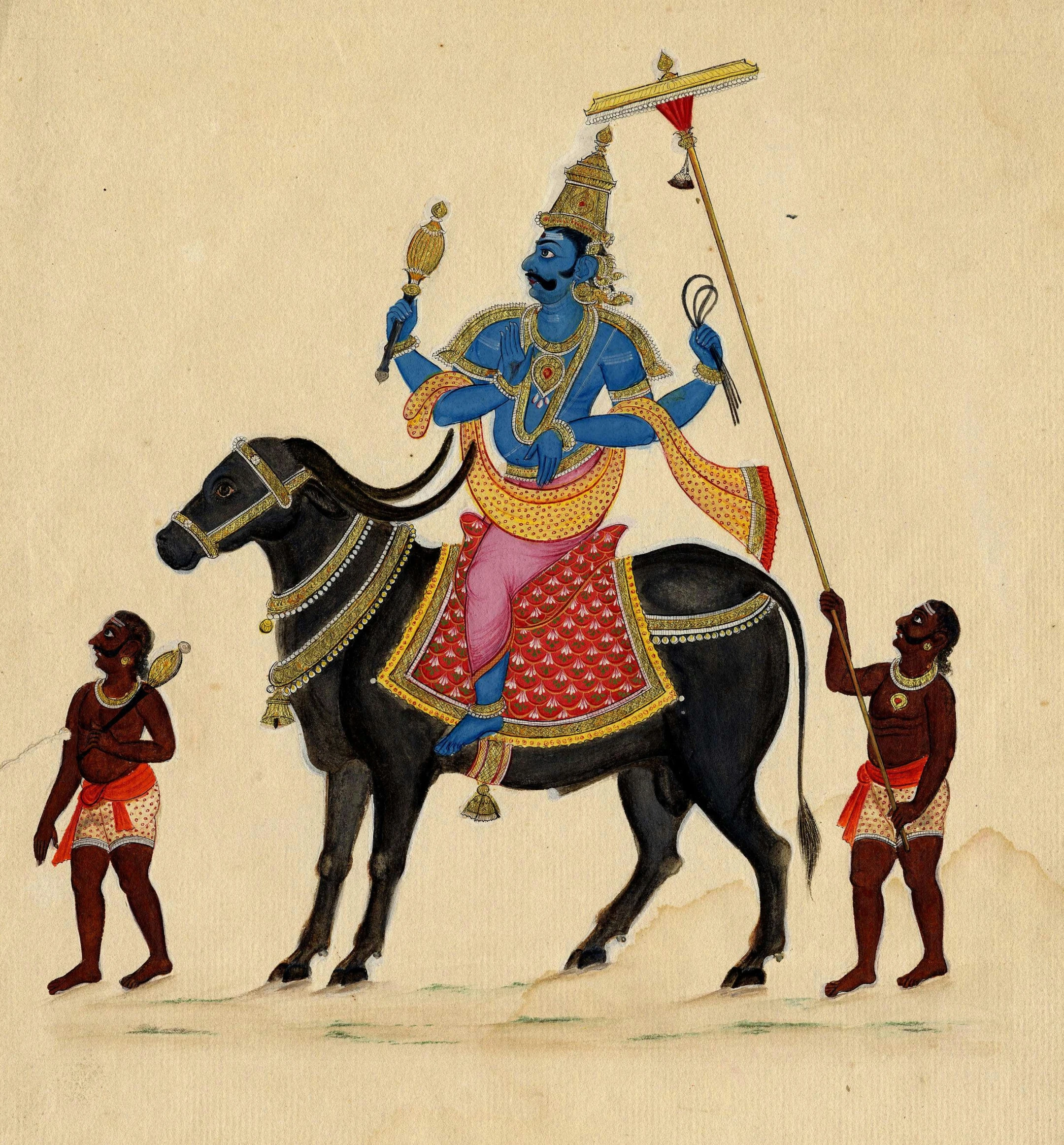
According to Newar oral tradition and classical Puranic literature, there was once a young man in the Kathmandu Valley whose astrological life span had reached its absolute end [1]. His breathing grew shallow, and his pulse fluttered. Outside the heavy wooden threshold of his brick courtyard, a formidable figure materialized out of the autumn mist: Yamaraj, the Vedic lord of death, mortal reckoning, and divine justice. Mounted upon a massive black water buffalo and brandishing his unbreakable noose (pāśa), Yamaraj had come to sever the silver cord of the young man’s soul [2].
Standing directly in the doorway was not a priest or an armed warrior, but the young man’s devoted sister.

Recognizing the towering deity, the sister did not plead for mercy or cower in terror. Instead, she invoked the sacred, inescapable laws of Himalayan hospitality (atithi satkar). In ancient Newar society, even the most feared guest cannot be turned away—or carry out an act of violence—without first receiving formal hospitality, ceremonial cleansing, and an offering of food and sacred water [3].
Trapped by the very moral code (dharma) over which he presided, Yamaraj conceded. He dismounted, crossed his legs upon the flagstone floor, and accepted the sister’s ceremonial puja. As she offered him warm water, dried fruits, and lighted oil lamps, Yamaraj, moved by her unshakable courage and impeccable adherence to duty, made a fateful promise: he agreed to grant her one final blessing before taking her brother’s soul to the netherworld [4].
It was precisely the opening she had engineered.
The Three Impossible Conditions
The sister did not ask for Yamaraj to abandon his cosmic duty outright—a request the Lord of Justice would have been forced to reject. Instead, she asked for a simple delay. She demanded that Yamaraj pledge, by his sacred name, not to claim her brother’s soul until three specific material conditions were met [5]:
- The Unbroken Circle of Oil: Yamaraj must wait until a boundary line drawn around her brother in mustard oil and holy water dried up completely.
- The Shattered Shell: Yamaraj must wait until the hard, uncracked native mountain walnuts (okhar) placed across the wooden threshold crumbled and cracked on their own.
- The Withered Garland: Yamaraj must wait until the garland of fresh purple flowers she placed around her brother’s neck withered, rotted, and lost its color.
Confident in the inevitable decay of all earthly matter, Yamaraj smiled, accepted the terms, and swore an unbreakable divine vow [6].
What the God of Death did not realize was that each condition was a masterclass in organic chemistry and botanical physics.
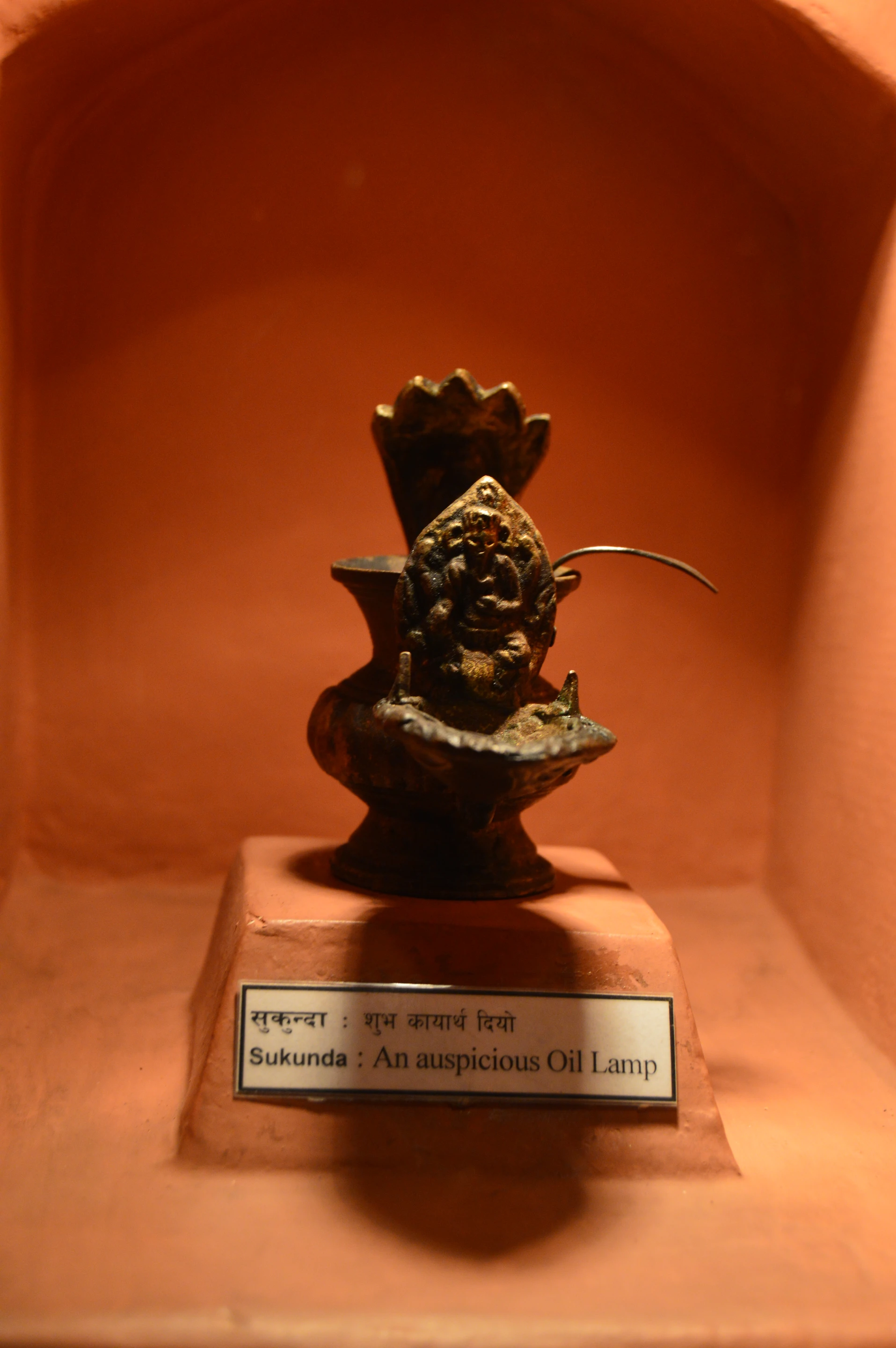
The sister poured heavy, cold-pressed mustard oil in a continuous, unbroken ring upon the cold Himalayan stone. Pure mustard oil contains long-chain fatty acids that do not evaporate like water; instead, the oil soaked deep into the porous stone, leaving an enduring dark boundary that defied evaporation [7].
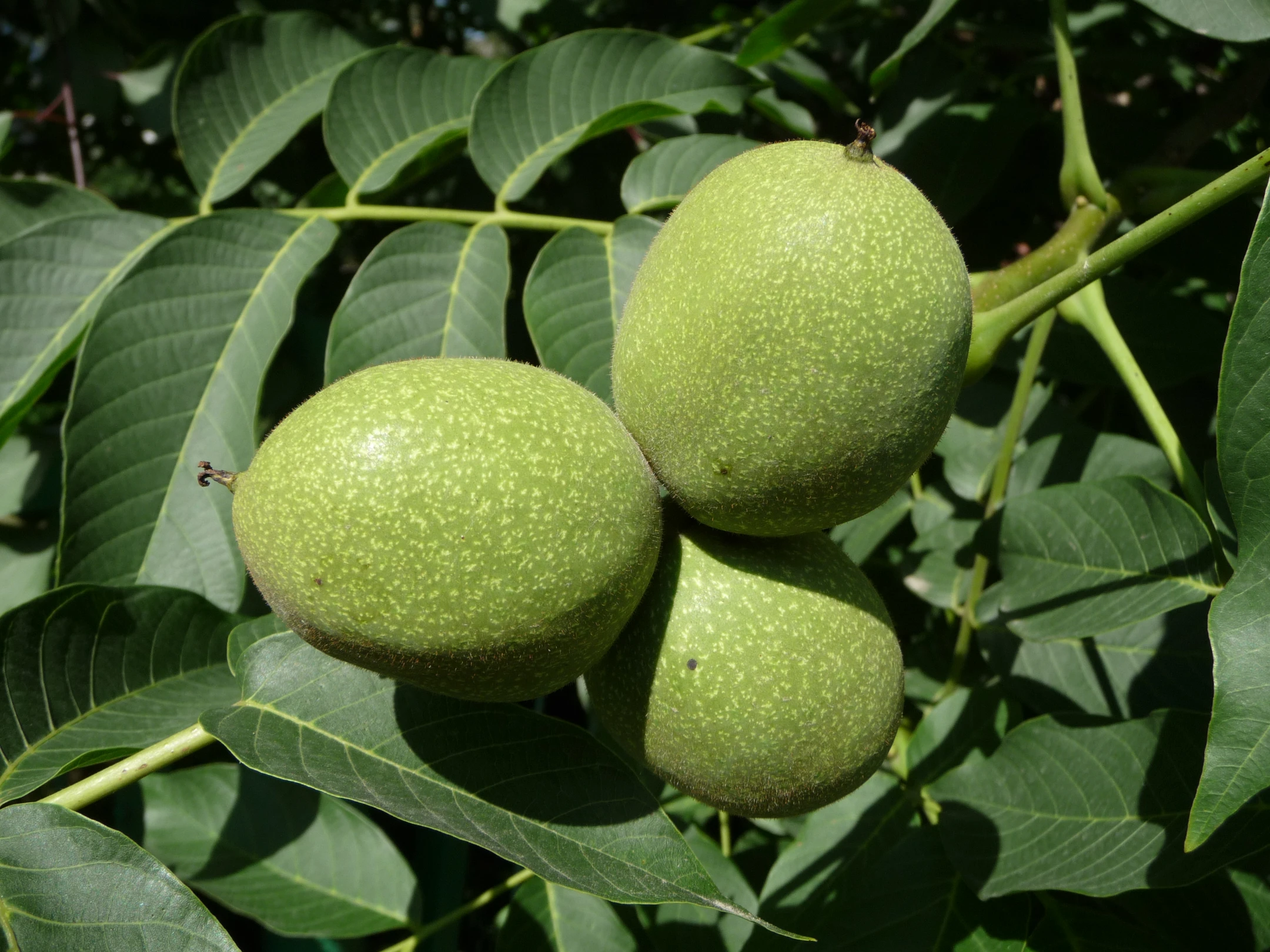
Next, the walnuts placed across the threshold were native Himalayan stone walnuts (Juglans regia), possessing thick, lignified endocarps engineered by nature to withstand years of sub-zero alpine weather without cracking unless shattered with a heavy mallet [8].
Finally, the purple flowers the sister had woven into the garland were Makhamali (Gomphrena globosa, commonly known in English as the globe amaranth). Unlike roses, marigolds, or jasmine, Makhamali blooms are not delicate petals. They are composed of stiff, papery bracts packed with rich betacyanin pigments that do not decay, rot, or lose their vivid purple brilliance even after months of drying [9].
Hours turned into days. Yamaraj watched as the oil ring remained dark and glistening on the stone. He watched as the rock-hard walnut shells refused to splinter. And most astonishingly of all, he watched as the purple Makhamali garland around the brother’s neck remained as crisp, vibrant, and luminous as the moment it had been plucked from the mountain terraces.
Bound by his own cosmic decree, the God of Death recognized that he had been legally, logically, and spiritually outmaneuvered. Unable to break his sworn oath, Yamaraj conceded defeat, mounted his water buffalo, and departed empty-handed into the Himalayan highlands [10].
The brother lived.
The Living Anatomy of Bhai Tika
Centuries later, this mythical defiance remains the foundational blueprint for Bhai Tika (known in the Newar community as Kija Puja), observed on the fifth and final day of Nepal’s autumn festival of Tihar [11].
Every single physical motion performed by Nepalese sisters during Bhai Tika directly reenacts the tactical defense used against Death:
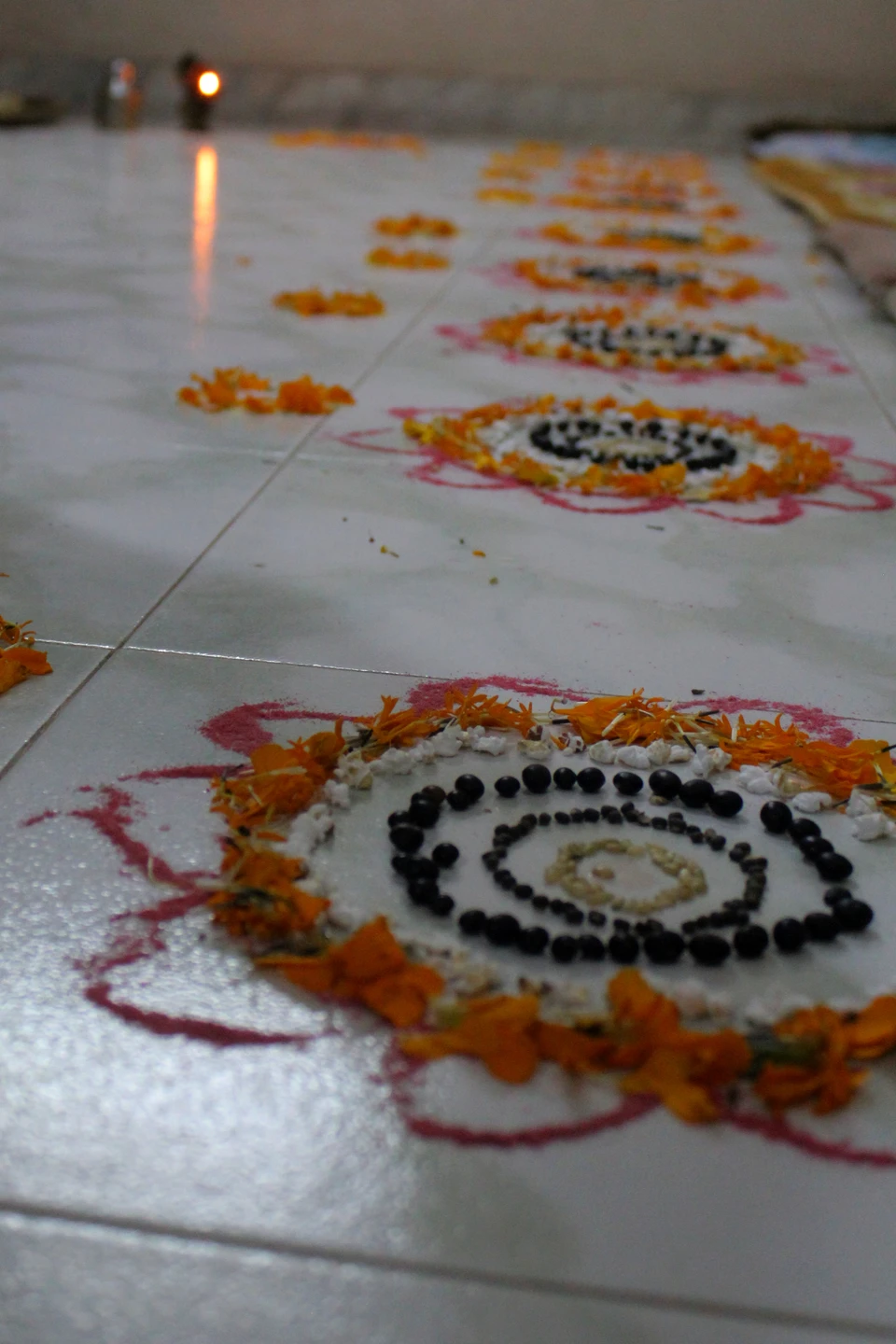
1. The Boundary of Oil (Telko Ghera)
Before seating her brother, the sister dips grass into mustard oil and circles him three times, pouring an unbroken stream on the floor. In traditional belief, Yamaraj and his messengers (Yamadoots) cannot step across an unbroken consecrated ring of oil.
2. The Cracking of the Threshold Walnut
At the entrance of the house, the sister places a hard walnut on the stone threshold and smashes it in a single strike with a grinding stone (silauto). The act is explicitly verbalized: “I do not smash this walnut; I smash the teeth of Yamaraj and the misfortunes of my brother” [12].
3. The Seven-Colored Rainbow Mark (Saptarangi Tika)
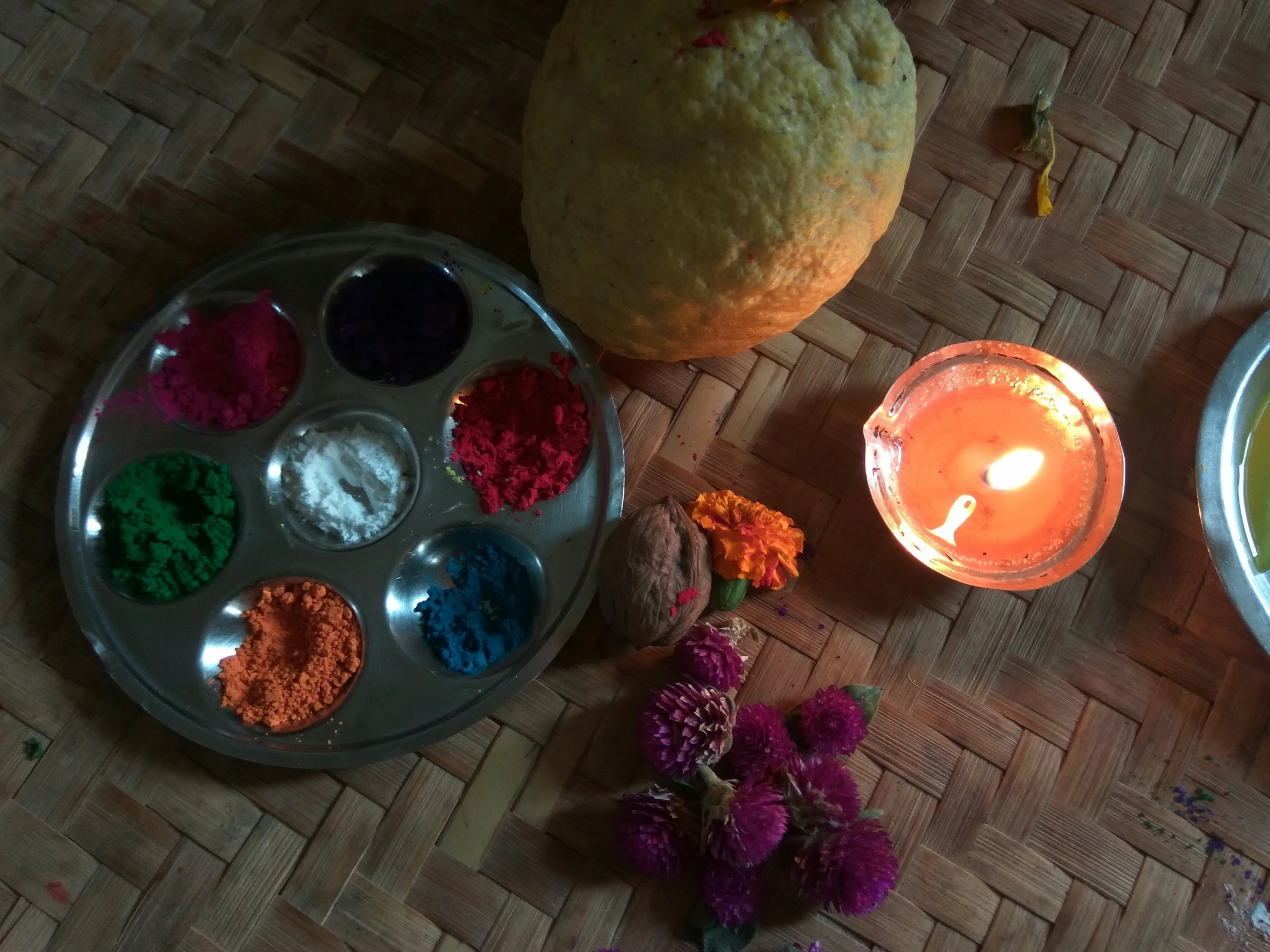
Across the brother’s forehead, the sister paints a vertical stroke using an unbroken foundation of white rice paste (akshata), upon which seven distinct color pigments—yellow, green, red, blue, orange, purple, and white—are layered in a rainbow spectrum. This mark signifies the divine seal of life, warding off sickness and early demise.
4. The Immortal Makhamali Garland
Finally, the sister drapes the purple Makhamali garland around her brother’s neck. Because the globe amaranth flower retains its color indefinitely, it serves as a tangible, physical prayer that her brother’s life and vitality will endure without fading [13].
What the Record Shows
- Cosmic Hospitality Over Force: The sister defeated Yamaraj not through armed combat, but by invoking the unbreakable duty of hospitality (atithi dharma), forcing the deity of justice to bind himself with his own blessing [1], [4].
- Botanical Longevity: The folklore relies on the unique physical characteristics of Gomphrena globosa (Makhamali), whose papery bracts do not rot, dry out, or shed color, symbolizing immortality across Himalayan culture [6], [9].
- Threshold Symbology: The Newar ritual architecture treats the household threshold (pili) as the critical border between the mortal domestic sanctuary and the realm of cosmic spirits [3], [12].
- Surviving Puranic Parallels: The story parallels the Vedic myth of Yamuna and Yamaraj, wherein the river goddess Yamuna entertained her brother Yamaraj on the second day of the bright fortnight of Kartika, granting freedom from the fear of premature death to all who receive blessings on this day [2], [11].
Archival Evidence & Picture Credits
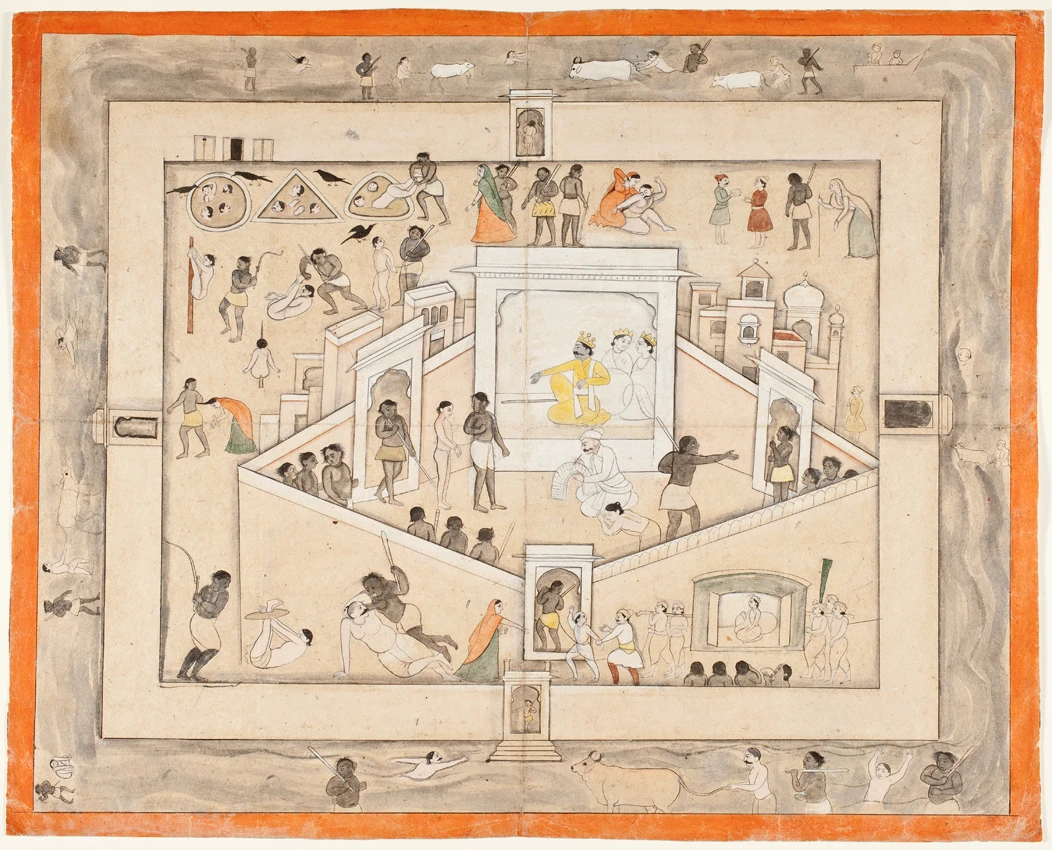
- Court of Yama Historical Painting: The Court of Yama, God of Death, opaque watercolor and gold on paper, circa 1800, Guler School. Los Angeles County Museum of Art Collection (M.83.105.15). Public Domain via Wikimedia Commons.
- Ama Dablam Himalayan Ridge: Himalayas, Ama Dablam, Nepal, high-altitude alpine panorama documenting the origin geography of the lore. CC BY-SA 4.0 via Wikimedia Commons.
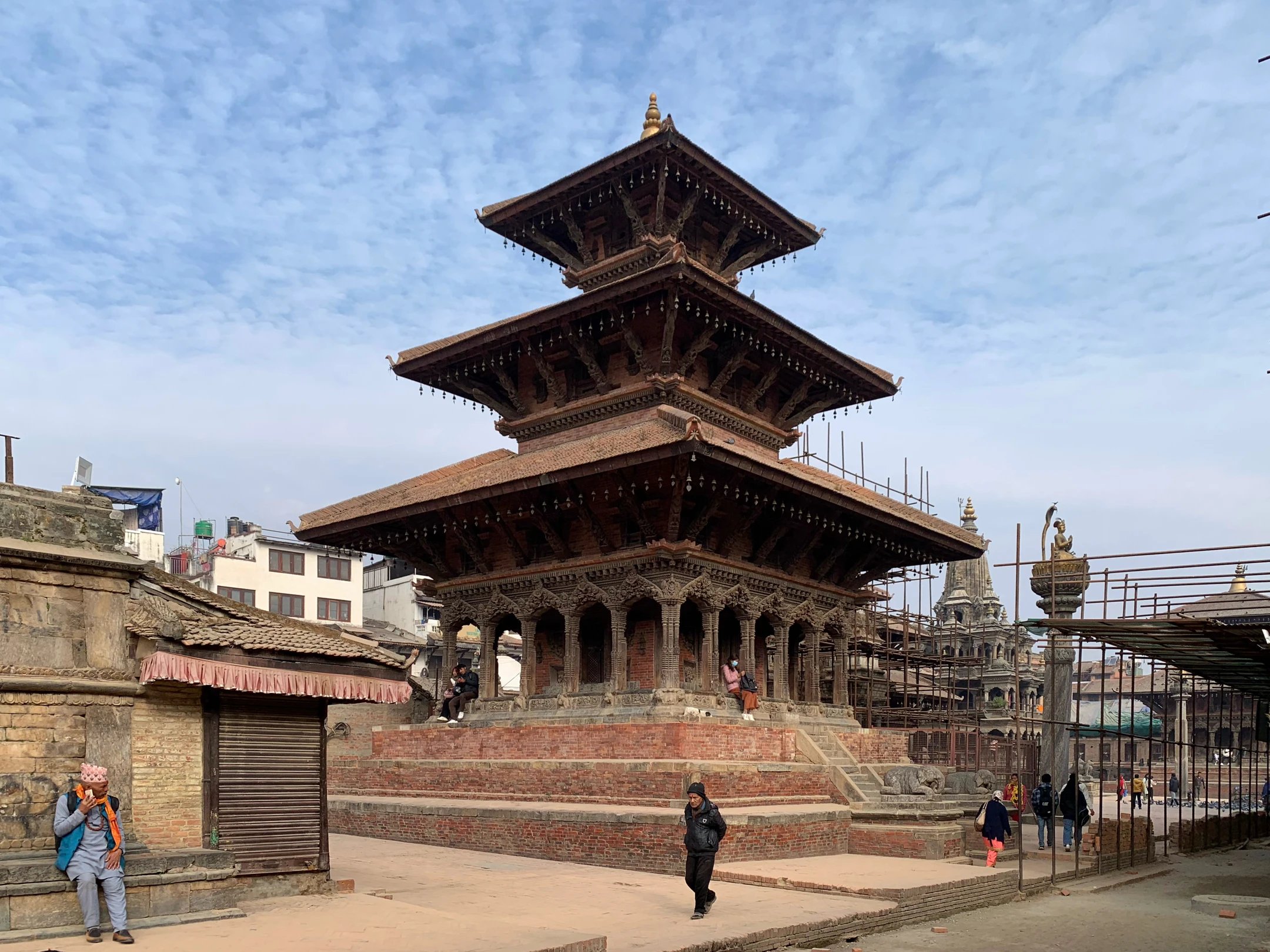
- Patan Durbar Square Pagodas: Lalitpur Durbar Square Temple, multi-tiered Newar wood and brick temple architecture. Photograph by Rajesh Dhungana, licensed under CC BY-SA 4.0 via Wikimedia Commons.
- Patan Museum Sukunda: Sukunda, An Auspicious Oil Lamp, 19th-century bronze ceremonial lamp from Patan Museum collection. CC BY-SA 4.0 via Wikimedia Commons.
- Yama on Buffalo: Yama Mounted on His Vahana (Buffalo), classical Indian miniature painting, British Museum Collection. Public Domain via Wikimedia Commons.
- Himalayan Walnuts: Juglans regia Harvest in Mountain Terraces, documenting the dense unyielding shell of native mountain walnuts. Photograph by George Chernilevsky, CC BY-SA 3.0 via Wikimedia Commons.
- Makhamali Flower Garland: Handcrafted Bhai Tika Garland with Gomphrena globosa. Licensed under CC BY-SA 4.0 via Wikimedia Commons.
- Saptarangi Tika Colors: Sapta Rangi Tika for Bhai Tika, ceremonial brass plate containing seven natural pigments. Licensed under CC BY-SA 4.0 via Wikimedia Commons.
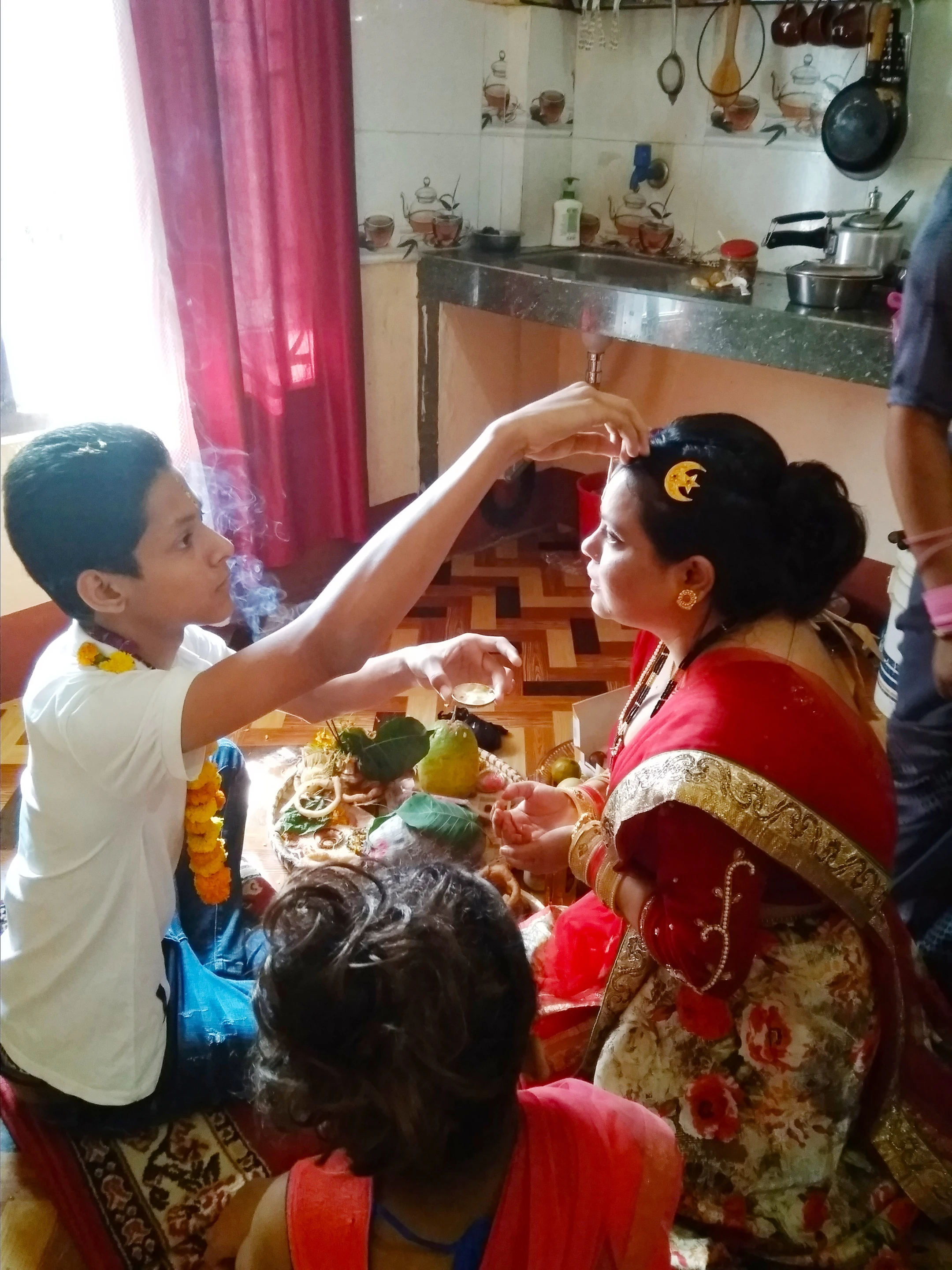
- Sister Applying Tika: Bhai Tika In Nepal, authentic ritual photograph documenting the forehead application ceremony. Licensed under CC BY-SA 4.0 via Wikimedia Commons.


Verified Archival Sources & Bibliography
- Bista, Dor Bahadur. People of Nepal. Kathmandu: Ratna Pustak Bhandar, 1967.
- Slusser, Mary Shepherd. Nepal Mandala: A Cultural Study of the Kathmandu Valley. Princeton University Press, 1982.
- Gellner, David N. Monk, Householder, and Tantric Priest: Newar Religion and its Hierarchy of Ritual. Cambridge University Press, 1992.
- Anderson, Mary M. The Festivals of Nepal. London: Allen & Unwin, 1971.
- Levy, Robert I. Mesocosm: Hinduism and the Organization of a Traditional Newar City in Nepal. University of California Press, 1990.
- Shrestha, Bal Gopal. The Sacred Town of Sankhu: The Anthropology of Newar Ritual, Religion and Society in Nepal. Cambridge Scholars Publishing, 2012.
- Toffin, Gérard. Newar Society: City, Village and Periphery. Social Science Press, 2007.
- Regmi, D. R. Medieval Nepal: A History of the Three Kingdoms, 1520 A.D. to 1768 A.D. Calcutta: Firma K.L. Mukhopadhyay, 1966.
- Manandhar, Narayan P. Plants and People of Nepal. Portland: Timber Press, 2002.
- Michaels, Axel. Homo Ritualis: Hindu Ritual and Its Significance for Social Action. Oxford University Press, 2016.
- Mani, Vettam. Puranic Encyclopaedia: A Comprehensive Dictionary with Special Reference to the Epic and Puranic Literature. Delhi: Motilal Banarsidass, 1975.
- Gutschow, Niels, and Bernhard Kölver. Ordered Space: Concepts and Functions in a Town of Nepal. Wiesbaden: Franz Steiner Verlag, 1975.
- Subedi, Abhi. Nepali Theatre as I See It. Kathmandu: Aarohan, 2006.
Related Archival Dossiers
- Why This Country Worships Dogs: The History of Nepal’s Kukur Tihar
- The Symbolism of Tika and Jamara in Himalayan Festivals
- The Kot Massacre (1846): The Night Nepal Changed Forever
Historical Connection Graph
The King Who Refused Heaven for a Stray Dog: The True History of Nepal's Kukur Tihar
AJ. "She Trapped the God of Death With a Flower: The Ancient History of Nepal's Bhai Tika." Echoes of History Uncut. Last modified November 10, 2026. https://echoesofhistoryuncut.com/articles/the-sister-who-outsmarted-the-god-of-death/.

An independent digital history publication and documentary studio reconstructing historical turning points through primary archives, official inquiries, and scholarly citations. Every factual claim in this dossier is cross-referenced to the numbered bibliography above.