
Six Cars Raced From New York to Paris in 1908. It Took 169 Days.
On February 12, 1908, six primitive automobiles lined up before an ecstatic crowd of 250,000 people in Times Square to start an epic 22,000-mile race around the world to Paris. Driving through trackless wilderness, winter blizzards, axle-deep Siberian quagmires, and rough terrain across North America, Asia, and Europe, only three cars finished. After 169 grueling days, American mechanic George Schuster piloted the 1907 Thomas Flyer down the boulevards of Paris to claim an astonishing victory.
In this dossier (10 chapters) ▾
- 01 A Race Around the World
- 02 Across America in Winter
- 03 The Route Changes Across the Pacific
- 04 The Siberian Quagmire
- 05 Arrival in Paris and the 26-Day Victory Margin
- 06 What the 1908 Race Proved to the World
- 07 Legacy and Preservation
- 08 What the Record Shows
- 09 Archival Evidence & Picture Credits
- 10 Verified Archival Sources & Bibliography
Historical Dossier: The 1908 New York to Paris Race Location: From New York across the United States, Japan and Siberia to Paris | Year: 12 February–30 July 1908 | Key Figures: George Schuster, Montague Roberts, the crews of the Protos, Züst and Thomas Flyer
A Race Around the World
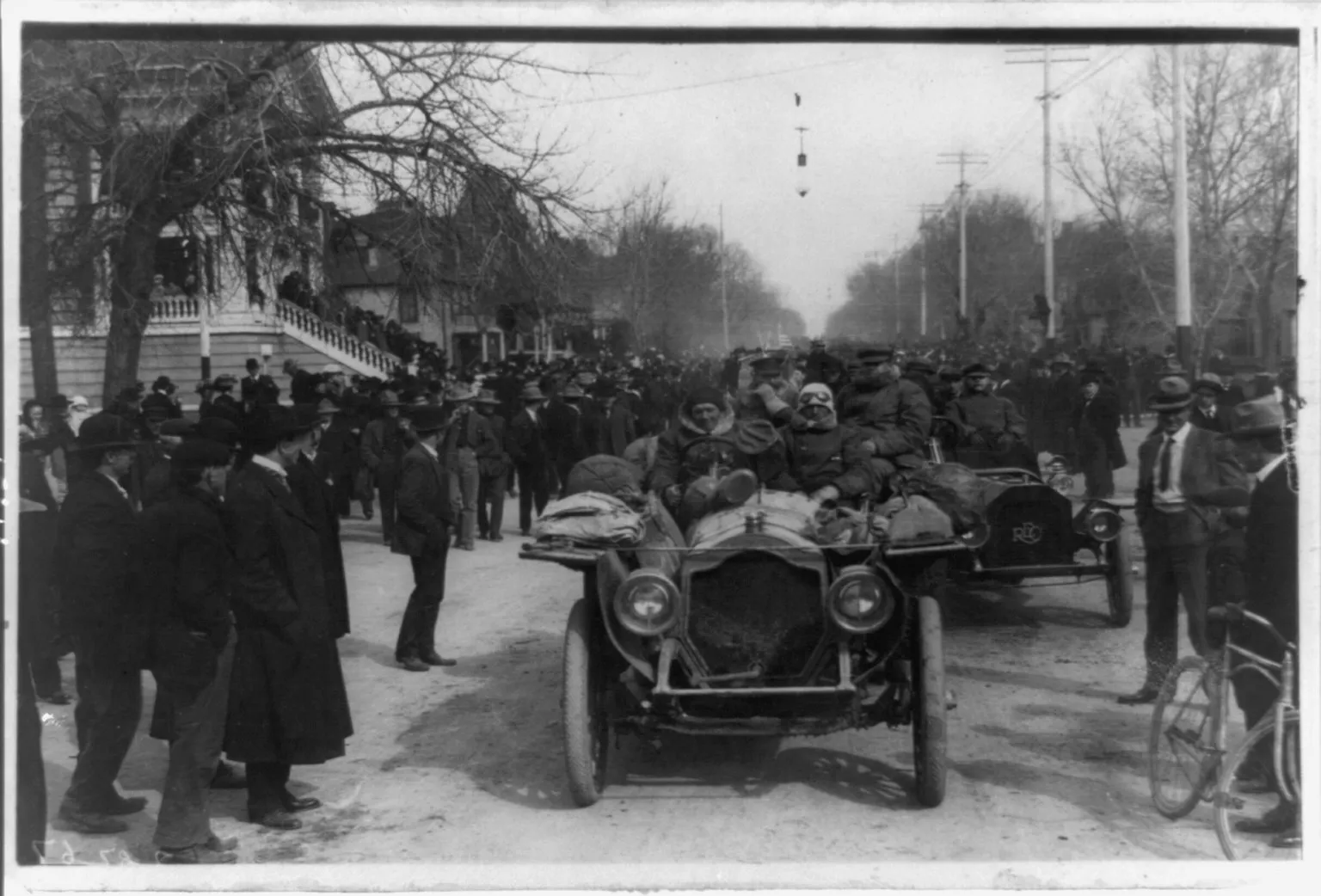
On 12 February 1908—Lincoln’s Birthday—at 11:15 in the morning, a starter’s pistol echoed across Times Square in New York City, sending six open-cockpit automobiles rolling northward before an estimated crowd of 250,000 spectators. Sponsored jointly by the Paris newspaper Le Matin and The New York Times, their destination was the French capital via a westbound circumnavigation of the Northern Hemisphere. The planned 22,000-mile route called for the drivers to cross the North American continent in the dead of winter, push north through Alaska to cross the frozen Bering Strait, and then traverse the vast breadth of Siberia and Europe to reach Paris. Lasting 169 days for the winning crew, it remains the longest and most grueling motorsport endurance event ever staged.
Six vehicles represented four industrial nations eager to prove their mechanical superiority. France entered three automobiles: a De Dion-Bouton, a Motobloc, and a tiny single-cylinder Sizaire-Naudin that broke its differential before even leaving New York State. Germany fielded a heavy military-grade Protos commanded by Lieutenant Hans Koeppen, Italy entered a rugged Züst driven by Giulio Sirtori and Antonio Scarfoglio, and the United States was represented at the eleventh hour by a 1907 four-cylinder, 60-horsepower Thomas Flyer built in Buffalo, New York, and crewed by driver Montague Roberts and chief mechanic George Schuster.
Across America in Winter
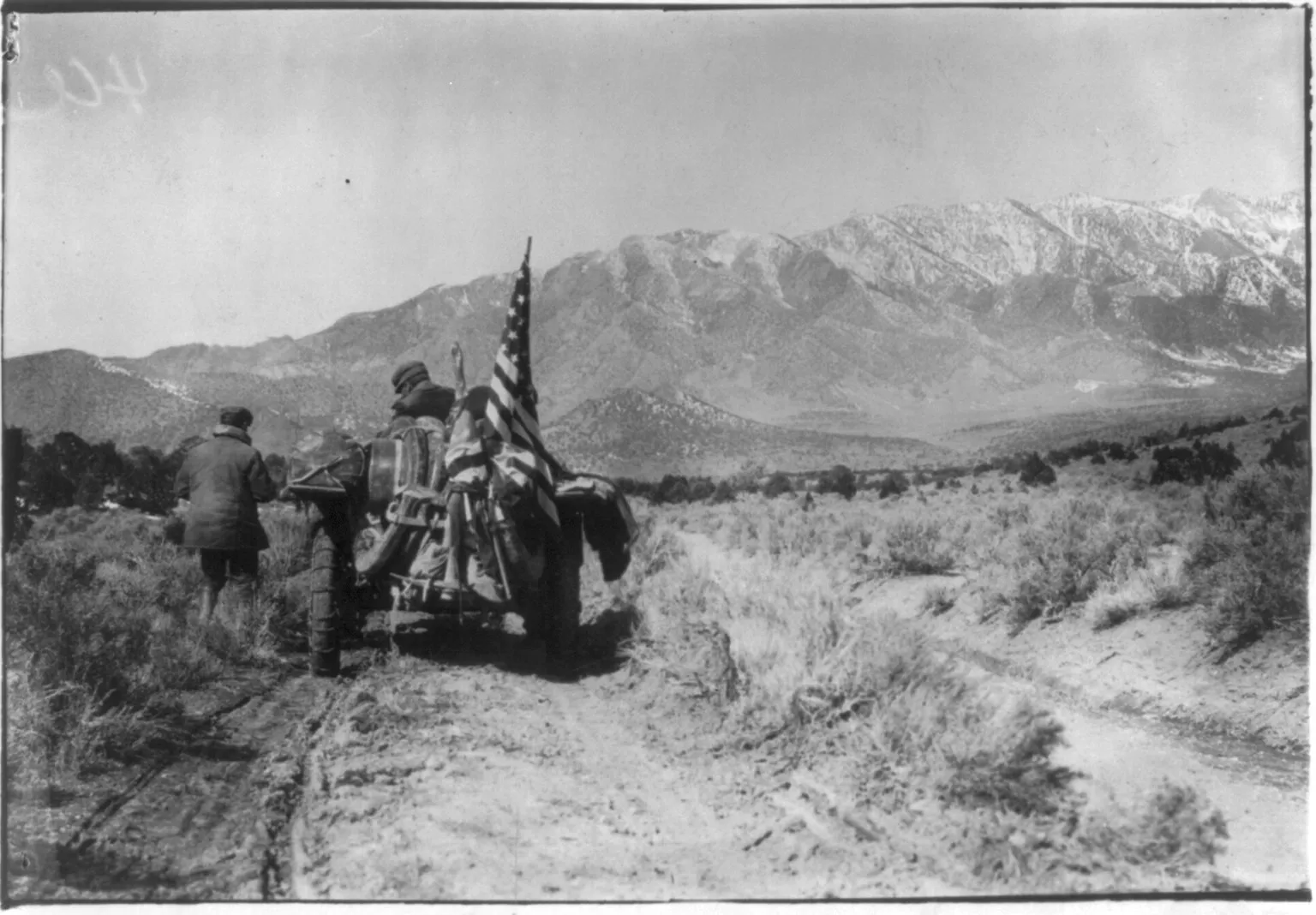
In 1908, the United States had virtually no paved intercity highways west of the Hudson River. Because the organizers deliberately launched the race in February so that the leaders might reach the Bering Strait before the spring thaw, the teams immediately ran into blinding blizzards across upstate New York, Indiana, and Illinois. Crews hired teams of horses to break snowdrifts ahead of their radiators, wrapped heavy iron chains around their pneumatic tires, and drove along frozen Erie Canal towpaths and Union Pacific railroad ties when county roads disappeared beneath snowbanks.
Despite cracked frames and frozen water jackets, the lighter and more nimble American Thomas Flyer steadily extended its lead across the Great Plains, the Rocky Mountains of Wyoming, and the alkali deserts of Nevada. Setting out from Times Square on February 12, the Thomas Flyer rolled into San Francisco on March 24 after 41 days, 8 hours, and 15 minutes—the first time an automobile had ever crossed the United States in winter.
The Route Changes Across the Pacific
From San Francisco, George Schuster and the Thomas Flyer sailed north by coastal steamer to Valdez, Alaska, to inspect the subarctic trail. Once ashore in Valdez, Schuster found deep snowdrifts and rugged mountain passes that no wheeled vehicle could penetrate. Upon receiving his telegraph report, the race committee abandoned the Bering Strait crossing and rerouted the surviving competitors across the Pacific by steamship to Yokohama, Japan.
After driving across the narrow cart tracks and mountain bridges of Honshu to Tsuruga, the teams crossed the Sea of Japan by steamer to the Russian port of Vladivostok. By then, the French Motobloc had retired in Iowa and the De Dion-Bouton was withdrawn in Vladivostok, leaving only three automobiles—the German Protos, the Italian Züst, and the American Thomas Flyer—to face the Asian mainland.
The Siberian Quagmire
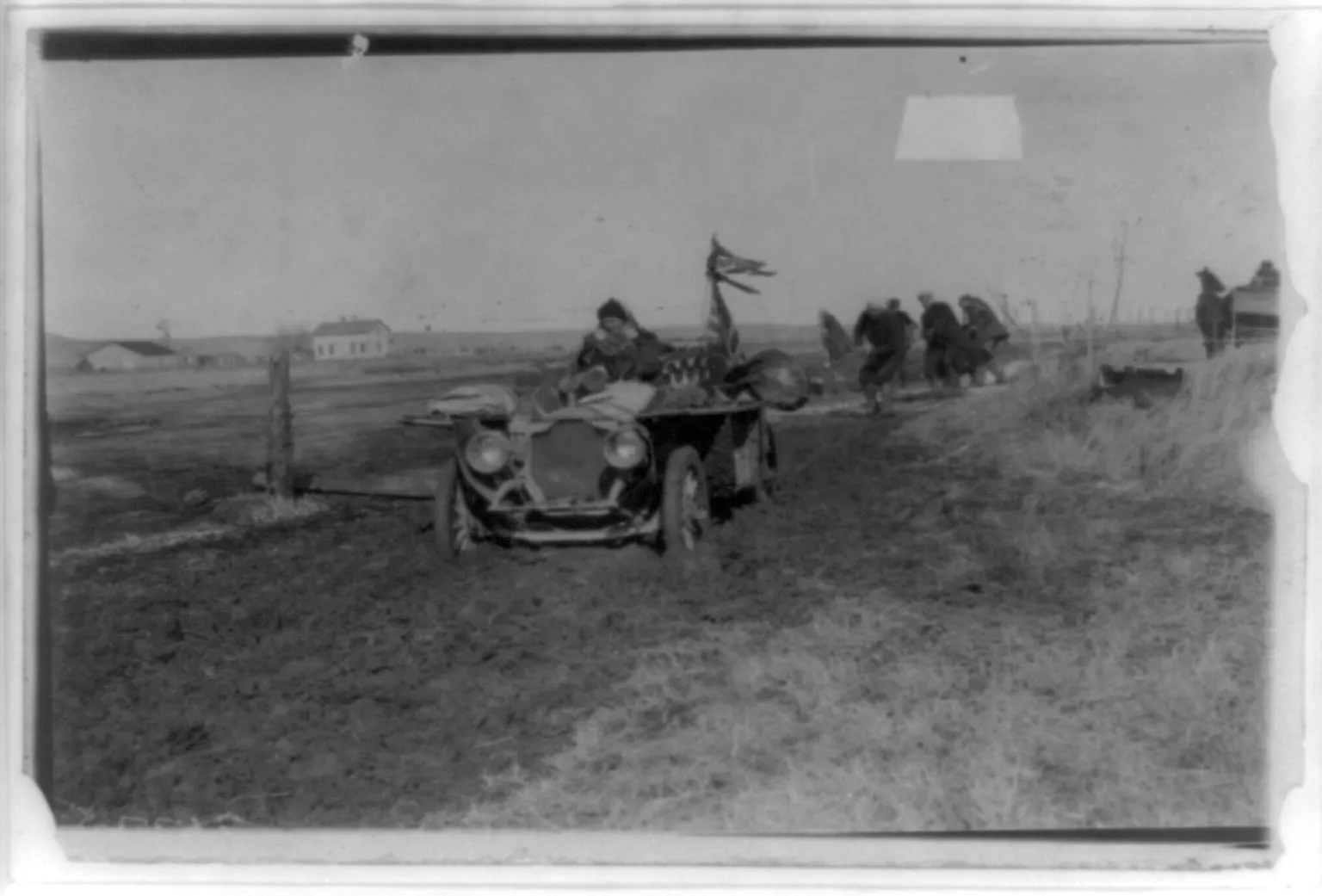
What awaited the three crews beyond Vladivostok was worse than the North American winter. The late spring thaw had turned the Manchurian and Siberian steppes into a bottomless sea of black mud. As historical accounts noted, forward movement was often measured in feet rather than miles per hour. Crews dug, pried with timber levers, and hauled their two-ton vehicles out of axle-deep bogs hour after hour. Where bridges were missing, George Schuster drove the Thomas Flyer directly along the cross-ties of the Trans-Siberian Railway, enduring brutal vibrations that snapped transmission gears and forced him to forge replacement parts in remote village blacksmith shops.
Arrival in Paris and the 26-Day Victory Margin
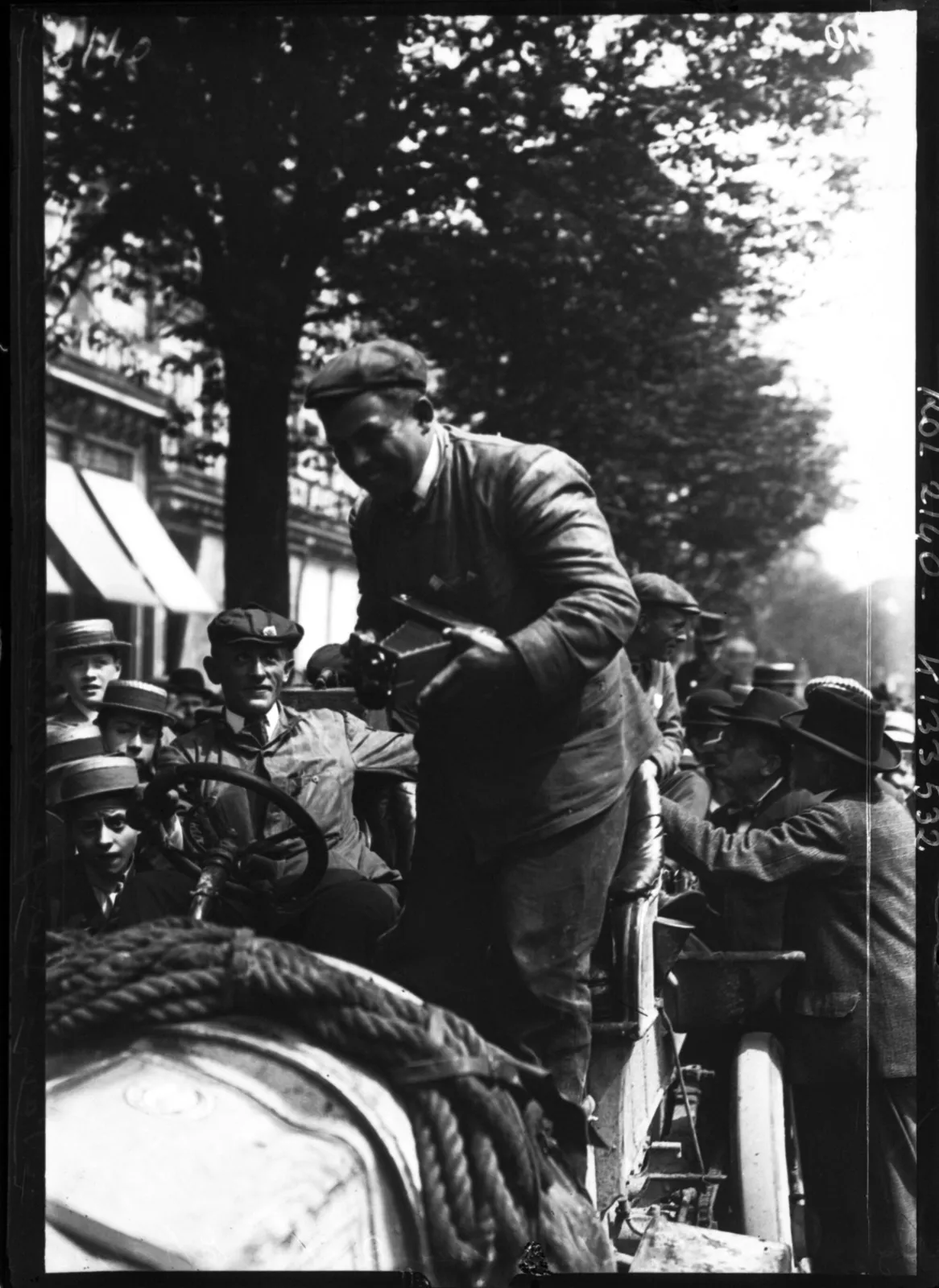
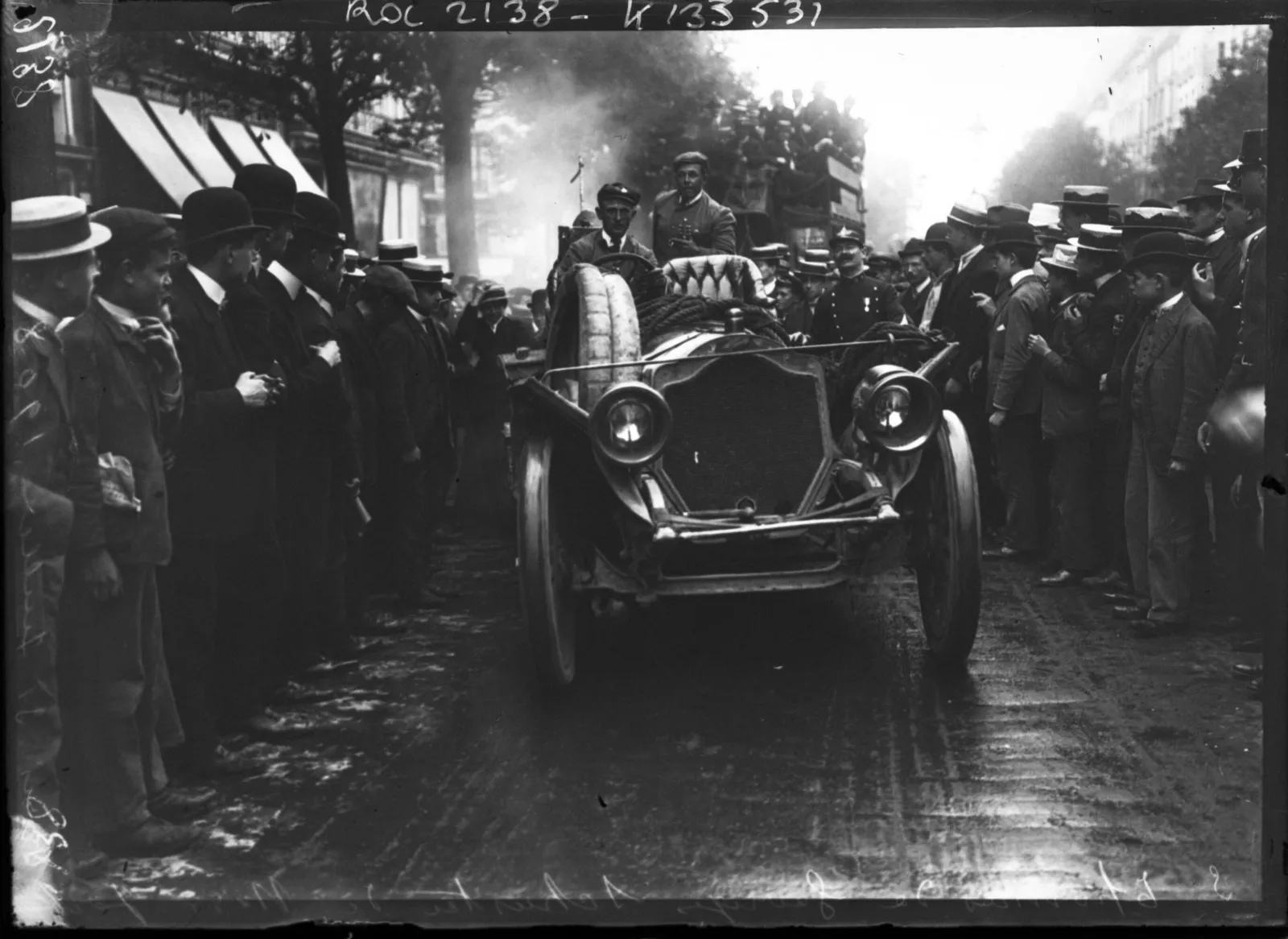
As the roads finally improved across the Ural Mountains into European Russia, Germany, and Belgium, the battered Thomas Flyer made up lost ground. On the evening of 30 July 1908, George Schuster steered the American car into Paris to a roaring welcome outside the offices of Le Matin, having covered approximately 16,700 kilometers (over 13,341 land miles) in 169 days.
Although Lieutenant Koeppen’s German Protos had reached Paris four days earlier on July 26, the race committee assessed Germany a 15-day penalty for shipping the broken Protos by railroad flatcar from Idaho to Seattle and a second 15-day penalty for bypassing the Japanese leg entirely—30 penalty days in total, alongside the 15-day credit awarded to the Americans for their detour to Alaska. That handed official victory to the Thomas Flyer by a remarkable 26-day margin, still the largest winning margin in motorsport history, while the resilient Italian Züst finished third in September 1908. Schuster, who stayed with the car for the entire journey after Roberts left in Cheyenne, became the only American to travel the full distance from New York to Paris.
What the 1908 Race Proved to the World
Together with the Peking to Paris trial held the previous summer, the 1908 New York to Paris race fundamentally transformed public perception of the internal-combustion automobile. At the dawn of the twentieth century, critics still dismissed motor cars as fragile playthings for wealthy hobbyists that could never replace the horse or steam locomotive outside paved city streets. By driving across unmapped wilderness, frozen mountain passes, and Siberian mud bogs, the crews proved the mechanical durability of the automobile and sparked intense public demand for transcontinental highway networks such as the Lincoln Highway.
Legacy and Preservation
Carefully restored withGeorge Schuster’s personal verification of his original frame repairs, the winning 1907 Thomas Flyer is preserved today on permanent display at the National Automobile Museum in Reno, Nevada. George Schuster was inducted into the Automotive Hall of Fame on 12 October 2010, and in 2011 a modern centennial tribute, World Race 2011, set out from Times Square on 14 April and saw four historic vehicles reach the Eiffel Tower on 21 July 2011, carrying among their drivers a great-grandson of George Schuster.
What the Record Shows
10 sourced claims in this story, resting on 10 sources. Numbers link to the bibliography below.
- Six cars entered the race from New York to Paris - sources: 2, 3, 7
- The automobile race from New York to Paris started in Times Square on February 12, 1908 - sources: 2
- The route passed through areas with very few paved roads - sources: 6
- The cars had to travel through winter snow and snow banks - sources: 3, 6
- The American team drove a Thomas Flyer - sources: 5, 10, 9
- The American team arrived first on the Pacific coast - sources: 6
- The race went to Vladivostok by ship to begin crossing the continents of Asia and Europe - sources: 3
- George Schuster drove the Thomas Flyer into Paris on July 30 to win the race - sources: 8, 6
- The Thomas Flyer won the race after 169 days - sources: 4, 10
- Only three of the six cars completed the course: the American, German, and Italian teams - sources: 3, 2
Archival Evidence & Picture Credits
Every image on this page was checked against its Wikimedia Commons file page.
- The crowd and racers at the start of the New York to Paris automobile race, 1908 (Library of Congress / Wikimedia Commons) - Wikimedia Commons file page
- A car in the New York to Paris race, with tire chains and an American flag, on a rough road in the mountains (Library of Congress / Wikimedia Commons) - Wikimedia Commons file page
- Five men pulling a car out of the mud during the New York to Paris race (Library of Congress / Wikimedia Commons) - Wikimedia Commons file page
- George Schuster at the wheel of the Thomas Flyer arriving in Paris, July 1908 (Bibliothèque nationale de France / Wikimedia Commons) - Wikimedia Commons file page
- The Thomas Flyer driven by George Schuster, from New York to Paris, July 1908 (Bibliothèque nationale de France / Wikimedia Commons) - Wikimedia Commons file page


Verified Archival Sources & Bibliography
Every claim in this account has been fact-checked against primary archives and scholarly repositories:
- Montgomery County Department of History & Archives: Great Auto Race (primary)
- University of Houston: The Engines of Our Ingenuity No. 1271: The Longest Race (book)
- Penn State University: Automotive trailblazer’s great-grandson to retrace ‘Great Race’ (primary)
- Alfred State College: Alum retracing great-grandfather’s historic journey (primary)
- Smithsonian Magazine: Paris or Bust: The Great New York-to-Paris Auto Race of 1908 (news)
- The Washington Times (February 13, 1908): New York to Paris Automobile Race (primary)
- The Washington Times (August 9, 1908): The Thomas Car and George Schuster (primary)
- Tonopah Daily Bonanza (March 21, 1908): George Schuster and the Thomas Car (primary)
- The Henry Ford: Thomas Flyer in Germany, New York to Paris Race, 1908 (primary)
Historical Connection Graph
A Lost Airliner Landed on a Racecourse Lit by Car Headlights
AJ. "Six Cars Raced From New York to Paris in 1908. It Took 169 Days.." Echoes of History Uncut. Last modified September 24, 2026. https://echoesofhistoryuncut.com/articles/new-york-to-paris-1908/.

An independent digital history publication and documentary studio reconstructing historical turning points through primary archives, official inquiries, and scholarly citations. Every factual claim in this dossier is cross-referenced to the numbered bibliography above.