
A Single Switch Stopped a Nuclear Blast on US Soil
In January 1961, a Strategic Air Command B-52 Stratofortress suffered structural failure over Goldsboro, North Carolina, jettisoning two 3.8-megaton Mark 39 thermonuclear warheads. Three of four arming mechanisms engaged on descent; only a single low-voltage arm-safe toggle switch prevented an accidental nuclear catastrophe on the American homeland.
In this dossier (8 chapters) ▾
- 01 Bombers in the Air, Day and Night
- 02 A Catastrophic Wing Leak at 10,000 Feet
- 03 Three of Four Arming Steps: The Single Switch
- 04 Weapon No. 2 Buried 180 Feet in the Mud
- 05 The Permanent Easement and Cold War Policy Overhaul
- 06 What the Record Shows
- 07 Archival Evidence & Picture Credits
- 08 Verified Archival Sources & Bibliography
Historical Dossier: The 1961 Goldsboro B-52 Crash Location: Near Faro, Wayne County, North Carolina, USA | Year: 24 January 1961 | Key Figures: Major Walter Scott Tulloch, Parker F. Jones, Robert S. McNamara
Bombers in the Air, Day and Night
At the height of the Cold War in the early 1960s, the United States Strategic Air Command (SAC) maintained nuclear-armed strategic bombers in the sky twenty-four hours a day, 365 days a year, so that a surprise Soviet ballistic-missile first strike could never destroy America’s retaliatory deterrent on the ground. Under airborne alert operations such as “Cover All” and “Chrome Dome,” eight-engine Boeing B-52 Stratofortresses flew marathon twenty-four-hour patrol loops stretching from the Atlantic seaboard across the Canadian Arctic to Greenland and Alaska. Inside their bomb bays hung live multi-megaton thermonuclear weapons—carried directly over American cities, coastal towns, and southern farmland every day.
Shortly before midnight on 23 January 1961—just three days after President John F. Kennedy took the oath of office—a Boeing B-52G Stratofortress (serial number 58-0188) commanded by Major Walter Scott Tulloch lifted off from Seymour Johnson Air Force Base in Goldsboro, North Carolina, carrying two 3.8-megaton Mark 39 Mod 2 hydrogen bombs. Each thermonuclear weapon packed more than 250 times the destructive explosive yield of the atomic bomb dropped on Hiroshima.
A Catastrophic Wing Leak at 10,000 Feet
Around midnight on 24 January 1961, the B-52G rendezvoused with a KC-135 Stratotanker over North Carolina for a routine mid-air refuelling. As the bomber closed toward the refuelling boom, the tanker crew flashed an urgent warning: jet fuel was streaming out of the B-52’s starboard wing. Unlike earlier B-52 models that stored fuel in internal rubber bladder cells, the new B-52G featured a “wet wing” whose structural aluminum skin formed the walls of the integral fuel tanks—a design that proved dangerously prone to metal fatigue under turbulence.
Major Tulloch broke off the refuelling and was instructed by ground control to circle off the Carolina coast to burn down weight before attempting an emergency landing back at Seymour Johnson Air Force Base. Within minutes, however, the hairline fracture in the right wing tore wide open. In the span of just three minutes, the bomber lost 37,000 pounds of JP-4 fuel from its starboard wing. Deprived of aerodynamic lift and structural rigidity on the right side, the giant aircraft rolled violently as it descended through 10,000 feet toward Goldsboro.
At 9,000 feet, with the starboard wing shearing off and the fuselage breaking apart in mid-air, Major Tulloch ordered his eight-man crew to abandon the aircraft. Five crewmen—including Tulloch, his co-pilot, and radar navigator—ejected or parachuted to safety; one officer died on landing after ejecting, and two crewmen perished inside the disintegrating airframe, including Lieutenant Adam Mattocks, the only man in history ever to successfully bail out through the top hatch of a tumbling B-52 without an ejection seat. Burning wreckage rained down across tobacco and cotton farmland near the community of Faro, twelve miles north of Goldsboro.
Three of Four Arming Steps: The Single Switch
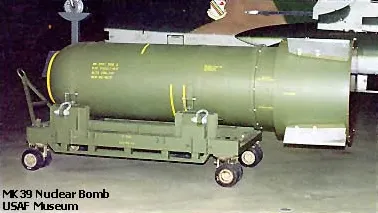
As the B-52G twisted apart between 10,000 and 2,000 feet, centrifugal forces tore both 6,500-pound Mark 39 thermonuclear bombs out of the bomb bay. Although the weapons were engineered so that an accidental drop would never trigger a combat firing sequence, the violent breakup pulled the lanyard release cables attached to the bomber’s racks, initiating the automated arming cycle on both bombs.
When explosive ordnance disposal teams reached the Faro fields at dawn, they found Weapon No. 1 hanging upright from a tree branch, suspended neatly beneath its 100-foot retard parachute just yards from the farmhouse of Julius Hardee. Upon opening the weapon’s access panels, technicians made a chilling discovery. Out of the Mark 39’s four independent safety mechanisms, three had activated in sequence during the fall: the mechanical pull-out rods had been yanked free, firing the thermal batteries; the barometric altitude switches had closed as the bomb passed through its preset pressure threshold; and the 100-foot parachute had deployed, stabilizing the weapon for a timer-driven surface burst. Only a single component—the MC-772 rotary Arm/Safe switch, a low-voltage 28-volt electro-mechanical relay controlled from the cockpit— remained physically in the “SAFE” position, blocking the firing pulse from reaching the X-unit capacitors and detonating the 3.8-megaton warhead.
Eight years later, in a classified 1969 retrospective titled Goldsboro Revisited, or How I Learned to Mistrust the H-Bomb (declassified in 2013 under the Freedom of Information Act), Sandia National Laboratories nuclear weapons safety supervisor Parker F. Jones wrote bluntly: “One simple, dynamo-technology, low voltage switch stood between the United States and a major catastrophe… The MK 39 Mod 2 bomb did not possess adequate safety for the airborne alert role in the B-52.” Had a stray electrical short from the burning aircraft energized that 28-volt line before the bomb broke free, eastern North Carolina would have been vaporized, casting lethal radioactive fallout across Washington, Baltimore, Philadelphia, and New York City.
Weapon No. 2 Buried 180 Feet in the Mud
Weapon No. 2 followed an equally terrifying trajectory. Its parachute failed to deploy properly, and the bomb slammed into a muddy field owned by farmer Biggers Howell at roughly 700 miles per hour, disintegrating on impact without detonating its conventional high-explosive lenses. When Air Force Explosive Ordnance Disposal (EOD) specialists led by Lieutenant Jack ReVelle excavated the crater through icy, chest-deep groundwater, they recovered the bomb’s plutonium/uranium primary trigger stage and found that the impact shock had physically rotated its arm-safe indicator from “SAFE” to “ARM”—though the high-speed crash had simultaneously smashed the high-voltage firing circuits before the thermal batteries could charge them.
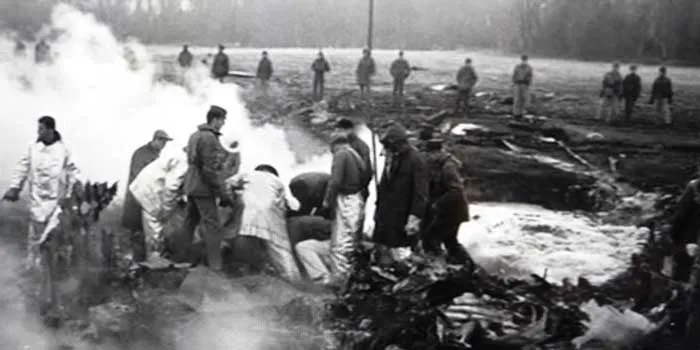
However, the weapon’s cylindrical thermonuclear secondary stage—containing enriched uranium-235 and lithium deuteride fusion fuel—had plunged roughly 180 feet deep into waterlogged quicksand and clay. Despite weeks of round-the-clock pumping, sheet-piling, and digging a 70-foot crater, the relentless inflow of groundwater forced the Air Force to abandon recovery of the secondary core.
The Permanent Easement and Cold War Policy Overhaul
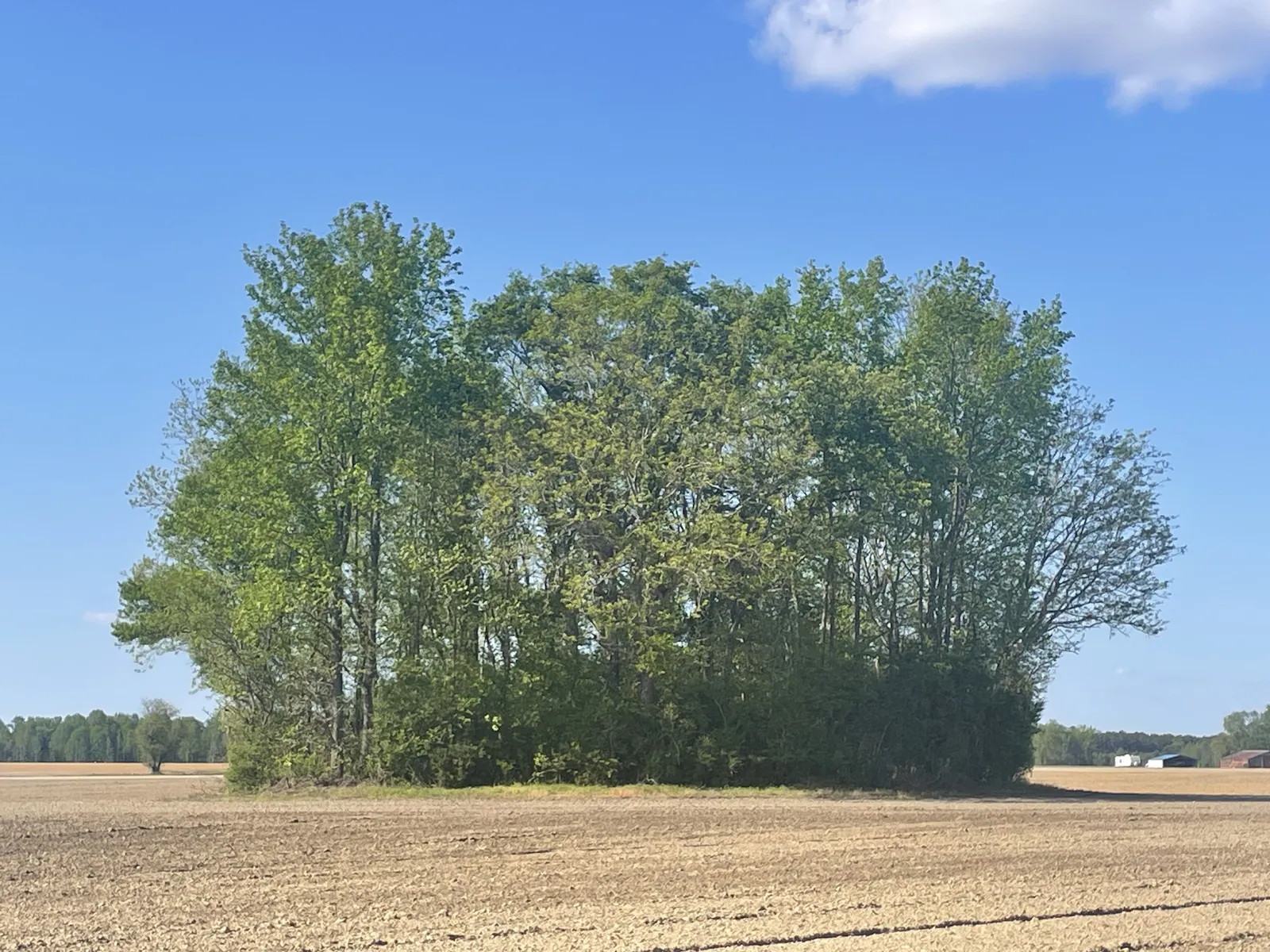
To prevent anyone from ever unearthing the sunken thermonuclear secondary, the U.S. government purchased a permanent circular underground easement measuring 400 feet in diameter over the Faro impact site for $5,200, prohibiting any agricultural or commercial excavation deeper than five feet beneath the surface.
Behind closed doors in Washington, the Goldsboro “Broken Arrow” shaken the Kennedy administration. Newly appointed Secretary of Defense Robert S. McNamara ordered every unmodified Mark 39 Mod 2 bomb removed from airborne alert until Sandia installed the Alt 197 hardware modification, which replaced the vulnerable MC-772 relay with the safer MC-1288 switch that physically isolated the thermal battery circuits until armed. Combined with the later Palomares (1966) and Thule (1968) B-52 crashes, Goldsboro pushed the Pentagon to adopt Permissive Action Links (PALs), insensitive high explosives, and the permanent termination of continuous nuclear-armed airborne patrols in 1968.
What the Record Shows
8 sourced claims in this story, resting on 6 primary and historical records. Numbers link to the bibliography below.
- A B-52G Stratofortress suffered fuel loss and broke apart over Goldsboro, North Carolina on January 24, 1961 - sources: 1
- The bomber carried two Mark 39 thermonuclear bombs, each with an explosive yield of up to 3.8 megatons - sources: 1, 2
- On the first weapon, three of four safety arming mechanisms activated sequentially on descent - sources: 1, 3
- Only a single low-voltage arm-safe toggle switch prevented the first bomb from detonating - sources: 1, 3
- Sandia National Laboratories supervisor Parker F. Jones concluded the weapon lacked adequate safety for airborne alert - sources: 1, 3
- The second bomb entered the ground at 700 mph, burying its secondary stage deep into marshy soil - sources: 2, 5
- The secondary thermonuclear core of the second bomb was never recovered due to severe groundwater flooding - sources: 2, 5
- The Department of Defense purchased a permanent underground easement over the Faro burial site - sources: 5
Archival Evidence & Picture Credits
Every image on this page was checked against its Wikimedia Commons file page.
- A Mark 39 thermonuclear weapon casing, the type carried by the bomber (Wikimedia Commons) - Wikimedia Commons file page
- The military excavation of the Goldsboro crash site in 1961 (Wikimedia Commons) - Wikimedia Commons file page
- The farmland easement in Wayne County where parts of the bomb remain buried (Wikimedia Commons) - Wikimedia Commons file page


Verified Archival Sources & Bibliography
Every claim in this account has been fact-checked against primary archives and scholarly repositories:
- The Guardian: US Nearly Detonated Atomic Bomb over North Carolina – Secret Document (Ed Pilkington) (investigative reporting)
- Internet Archive: Command and Control - Nuclear Weapons, the Damascus Incident, and the Illusion of Safety (Eric Schlosser) (book)
- National Security Archive (George Washington University): The 1961 Goldsboro Broken Arrow Incident Documents (primary)
- North Carolina Department of Natural and Cultural Resources: Nuclear Mishap in Goldsboro (primary)
- Defense Nuclear Agency: Broken Arrow Accident Report Database (primary)
Historical Connection Graph
A King Built a Giant Warship. It Sank in 20 Minutes
AJ. "A Single Switch Stopped a Nuclear Blast on US Soil." Echoes of History Uncut. Last modified September 15, 2026. https://echoesofhistoryuncut.com/articles/goldsboro-nuclear-bomb/.

An independent digital history publication and documentary studio reconstructing historical turning points through primary archives, official inquiries, and scholarly citations. Every factual claim in this dossier is cross-referenced to the numbered bibliography above.