
By Crew Accounts, a Nuclear Launch Needed All 3 Officers to Agree. He Said No.
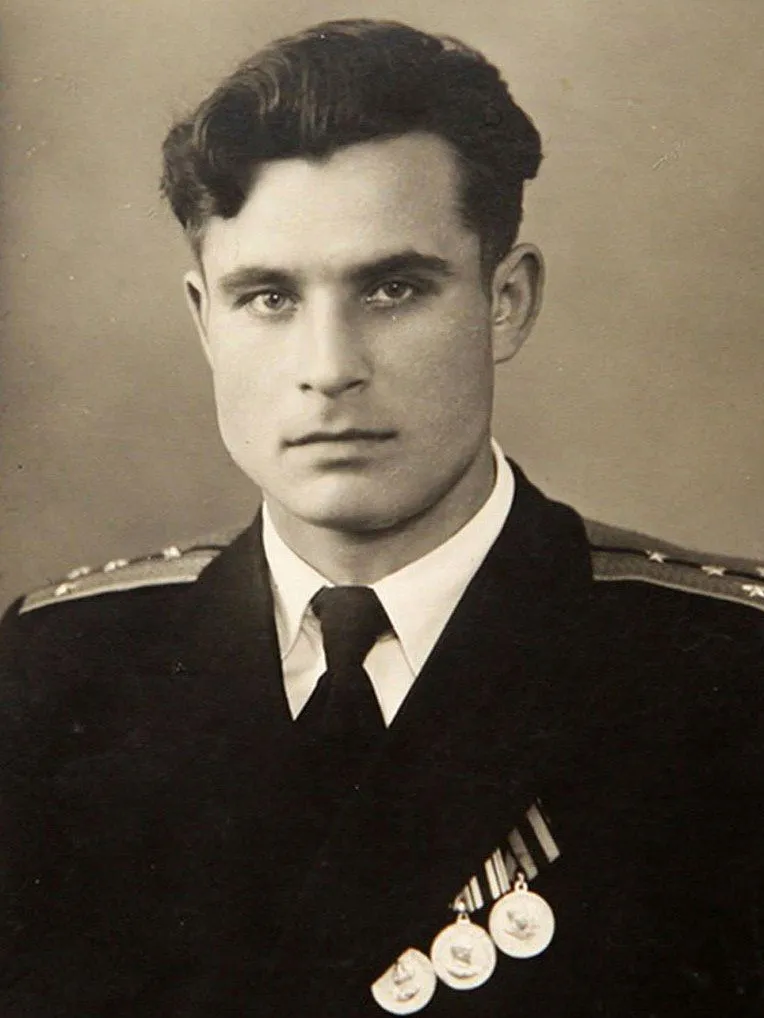
On October 27, 1962, at the peak of the Cuban Missile Crisis, the Soviet submarine B-59 was trapped underwater under depth-charge barrage by the US Navy. With carbon dioxide rising and communications severed, two senior officers authorized the launch of a 10-kiloton nuclear torpedo. Brigade Chief of Staff Vasili Arkhipov cast the lone dissenting vote, according to crew testimony, averting a nuclear launch.
In this dossier (9 chapters) ▾
- 01 A Man Who Had Already Seen a Reactor Fail
- 02 Operation Anadyr and “Black Saturday,” October 1962
- 03 50°C in the Dark: Inside Submarine B-59
- 04 The Three-Officer Rule and Arkhipov’s Veto
- 05 Reprimand in Moscow, Recognition Forty Years Later
- 06 Historiographical Note on Crew Testimony vs. Declassified Logs
- 07 What the Record Shows
- 08 Archival Evidence & Picture Credits
- 09 Verified Archival Sources & Bibliography
Historical Dossier: Vasily Arkhipov and Submarine B-59 Location: The Atlantic Ocean near Cuba | Year: 27 October 1962 | Key Figures: Vasily Arkhipov, Captain Valentin Savitsky, Ivan Maslennikov
A Man Who Had Already Seen a Reactor Fail
Vasily Aleksandrovich Arkhipov was born into a peasant family on 30 January 1926 in the village of Staraya Kupavna near Moscow. Educated at the Pacific Higher Naval School in Vladivostok, he participated in the Soviet–Japanese War in August 1945 aboard a minesweeper before transferring to the submarine service after graduating from the Azerbaijan Higher Naval School in 1947. Rising steadily through posts in the Black Sea, Northern, and Baltic fleets, Arkhipov was appointed in July 1961 as executive officer (deputy commander) of the new Project 658 (Hotel-class) nuclear-powered ballistic missile submarine K-19.
On 4 July 1961, while running exercises near the edge of the polar ice pack southeast of Greenland, K-19 suffered a complete loss-of-coolant accident in its starboard nuclear reactor when a weld in the primary cooling pipe burst. With no backup cooling circuit installed and the reactor core temperature climbing past 800°C toward a catastrophic meltdown, seven engineering crewmen under Lieutenant Boris Korchilov entered the unshielded reactor compartment repeatedly to weld an improvised jury-rigged water pipe from the drinking-water tanks. All eight reactor-room men died of acute radiation sickness within weeks, and fourteen more crew members perished over the next two years. When fearful sailors threatened mutiny, Arkhipov backed Captain Nikolai Zateyev in maintaining discipline and evacuating the crew onto the diesel submarine S-270. Absorbing a heavy dose of ionizing radiation himself, Arkhipov emerged from the K-19 disaster with an unshakable reputation across the Northern Fleet for composure under mortal peril.
Operation Anadyr and “Black Saturday,” October 1962
On 1 October 1962, four long-range Soviet Project 641 (Foxtrot-class) diesel-electric attack submarines—B-4, B-36, B-59, and B-130—making up the 69th Submarine Brigade slipped out of Sayda-Guba bay on the Kola Peninsula as the naval vanguard of Operation Anadyr, Nikita Khrushchev’s secret deployment of ballistic missiles and troops to Cuba. thirty-six-year-old Captain Second Rank Vasily Arkhipov sailed aboard B-59 not as the boat’s captain, but as Chief of Staff of the entire four-submarine brigade—a distinction that made him equal in rank to B-59’s commanding officer, Captain Second Rank Valentin Grigoryevich Savitsky.
Unknown to United States Naval Intelligence, each of the four Foxtrot submarines carried in its forward torpedo room a top-secret T-5 nuclear torpedo tipped with a 10-kiloton atomic warhead—roughly two-thirds the explosive power of the Hiroshima bomb, designed to vaporize an entire American aircraft carrier battle group in a single underwater blast.
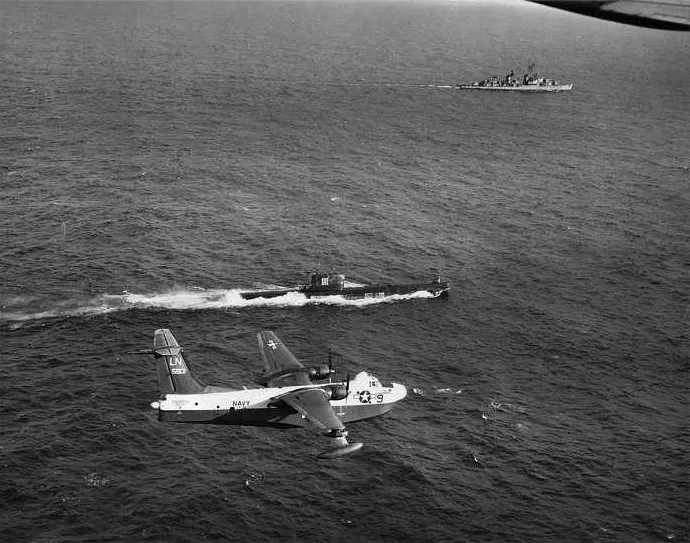
By late October, President John F. Kennedy had announced a strict naval “quarantine” around Cuba. On 27 October 1962—known in Cold War historiography as “Black Saturday,” the same day an American U-2 spy plane was shot down by a Soviet SAM battery over Cuba—an anti-submarine hunter-killer group of eleven U.S. Navy destroyers (USS Beale, USS Cony, USS Charles P. Cecil, USS Lowry, USS Murray, and others) led by the anti-submarine aircraft carrier USS Randolph boxed in B-59 in the Sargasso Sea north of Cuba. To compel the unidentified Soviet submarine to come to the surface in international waters, the American destroyers began dropping hand-grenade-sized Mark 65 practice depth charges (signalling charges) directly above B-59’s hull. Although Washington had notified Moscow of the four-charge signalling procedure on 24 October, that diplomatic message had never reached the submerged submarine.
50°C in the Dark: Inside Submarine B-59
Inside B-59’s pressure hull, the crew was on the verge of physical collapse. Built for the icy waters of the Barents Sea, the Foxtrot-class submarine had no tropical cooling system. Because B-59 had dived repeatedly for days to evade American P-2 Neptune patrol planes and destroyers, her lead-acid storage batteries were drained to the last amps, emergency dim lighting flickered, and the air-regeneration canisters were exhausted. Temperatures in the engine and torpedo compartments exceeded 50°C (122°F) with nearly 100 percent humidity, drinking water was rationed to a single glass a day, carbon dioxide levels climbed to toxic levels, and watchstanders were fainting at their posts.
Cut off from radio contact with Moscow and unable to monitor civilian American broadcasts at depth, the crew had no way of knowing whether World War III had already broken out on the surface. As the American practice depth charges detonated outside the hull like sledgehammers, intelligence officer Captain Lieutenant Vadim Orlov later recalled that Captain Savitsky—exhausted after days without sleep—believed the boat was under lethal attack and shouted: “Maybe the war has already started up there, while we are doing somersaults here! We’re going to blast them now! We will die, but we will sink them all—we will not disgrace our Navy!”
The Three-Officer Rule and Arkhipov’s Veto
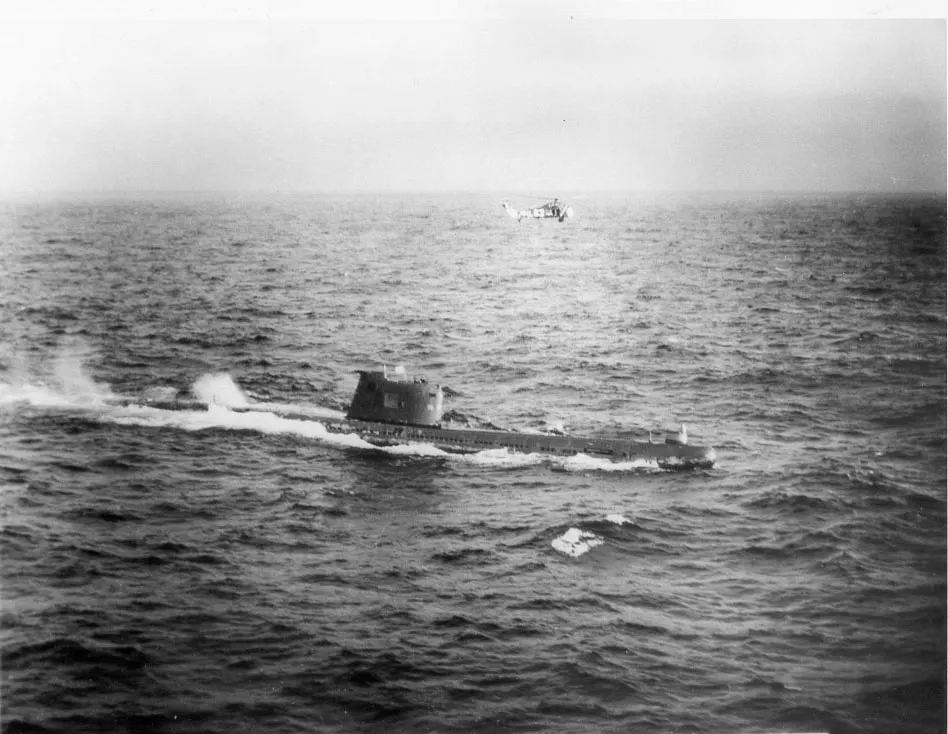
On an ordinary Soviet submarine of that era, arming and launching the T-5 nuclear torpedo required the joint agreement of two men: the commanding officer (Captain Savitsky) and the ship’s political officer (Ivan Maslennikov). According to Orlov’s later testimony, both Savitsky and Maslennikov were prepared to ready the nuclear weapon. However, because B-59 was carrying the Brigade Chief of Staff, standing protocol required the unanimous concurrence of all three senior officers aboard: Savitsky, Maslennikov, and Arkhipov.
Drawing on his authority as Brigade Chief of Staff and his hard-won prestige from K-19, Arkhipov stood firm against firing. Pointing out that the acoustic pattern of the explosions came from signalling grenades dropped to starboard and port rather than direct hull-crushing depth-charge salvos, Arkhipov calmed Savitsky down and persuaded him to bring B-59 to the surface to recharge batteries and await instructions from Moscow. That night, B-59 surfaced in the beam of American searchlights surrounded by U.S. destroyers. Refusing American offers of assistance, Savitsky recharged his batteries on the surface and, upon receiving Moscow’s recall orders two days later, steered B-59 back across the Atlantic.
Reprimand in Moscow, Recognition Forty Years Later
When the four submarines returned to the Northern Fleet in December 1962, Soviet Defense Minister Marshal Rodion Malinovsky and First Deputy Commander-in-Chief Admiral Sergei Gorshkov subjected the captains to harsh criticism for allowing the Americans to force them to the surface—with Malinovsky reportedly snapping that it would have been better if they had gone down with their boats. Yet Arkhipov continued to rise in the Soviet Navy, commanding submarine divisions and squadrons, earning promotion to Rear Admiral in 1975 and Vice Admiral in 1981, and heading the Kirov Higher Naval School in Baku before retiring in 1985. He died on 19 August 1998 at age 72 from kidney cancer attributed to the radiation exposure he suffered aboard K-19 thirty-seven years earlier.
The world knew nothing of the drama inside B-59 until October 2002, at the 40th-anniversary Cuban Missile Crisis conference in Havana attended by Robert McNamara, Fidel Castro, and former Soviet submarine officer Vadim Orlov. Upon hearing that the Foxtrot submarines carried live nuclear torpedoes, National Security Archive director Thomas S. Blanton declared that “a guy called Vasili Arkhipov saved the world.” In 2017, Arkhipov’s daughter Elena and grandson Sergei accepted the inaugural Future of Life Award in London on his behalf.
Historiographical Note on Crew Testimony vs. Declassified Logs
Historians distinguish carefully between the undisputed naval logs and the oral testimony of the control-room confrontation. Declassified Soviet Navy operational reports released in 2022 and analyzed by historians at the National Security Archive and by Sergey Radchenko in 2024 confirm that B-59 carried a 10-kiloton nuclear torpedo, endured extreme heat and carbon-dioxide build-up, and was forced to surface by USS Cony and the Randolph group on 27 October 1962—while noting that the official after-action deck logs contain no written entry of an order to arm the nuclear torpedo or an argument between Savitsky and Arkhipov. Because no Soviet captain or chief of staff could have survived a court-martial had they recorded an unauthorized near-launch in an official logbook sent to the Central Committee, the account of Arkhipov’s decisive vote rests on the first-hand recollection of his shipmates and his widow Olga—standing as the most famous close call of the nuclear age.
What the Record Shows
8 sourced claims in this story, resting on 5 primary and historical records. Numbers link to the bibliography below.
- Soviet submarine B-59 carried a 10-kiloton nuclear-tipped torpedo during the 1962 Cuban Missile Crisis - sources: 1
- Severe cabin heat and failing air filtration raised internal temperatures above 50°C and carbon dioxide to toxic levels - sources: 1, 2
- The US Navy dropped low-yield signaling practice depth charges to force the submarine to surface - sources: 1, 4
- Captain Savitsky and Political Officer Maslennikov both agreed to prepare and fire the nuclear torpedo - sources: 1, 4
- Flotilla Chief of Staff Vasili Arkhipov held veto power and refused to authorize the launch - sources: 1, 4
- Arkhipov had previously survived the K-19 nuclear submarine reactor disaster in 1961 - sources: 2
- B-59 surfaced peacefully, avoiding a direct confrontation with the USS Randolph carrier group - sources: 1, 4
- The incident remained classified in Russia and largely unknown in the West until the Havana 40th anniversary conference in 2002 - sources: 1, 4
Archival Evidence & Picture Credits
Every image on this page was checked against its Wikimedia Commons file page.
- Vasily Arkhipov, Soviet naval officer (Wikimedia Commons) - Wikimedia Commons file page
- A US destroyer and a patrol aircraft escorting a Soviet submarine, B-36, during the Cuban Missile Crisis in October 1962 (Wikimedia Commons) - Wikimedia Commons file page
- The Soviet Foxtrot-class submarine B-59 on the surface in the Atlantic (Wikimedia Commons) - Wikimedia Commons file page


Verified Archival Sources & Bibliography
Every claim in this account has been fact-checked against primary archives and scholarly repositories:
- National Security Archive (George Washington University): The Submarines of October - U.S. and Soviet Naval Encounters During the Cuban Missile Crisis (primary)
- Internet Archive: The Cuban Missile Crisis (Aleksandr Fursenko & Timothy Naftali) (book)
- The Guardian: Vasili Arkhipov - The Soviet Submarine Officer Who Averted Nuclear War (investigative reporting)
- U.S. Naval History and Heritage Command: The Cuban Missile Crisis and the Naval Quarantine (primary)
Historical Connection Graph
A Country With No Army Took On the Royal Navy. And Won.
AJ. "By Crew Accounts, a Nuclear Launch Needed All 3 Officers to Agree. He Said No.." Echoes of History Uncut. Last modified September 15, 2026. https://echoesofhistoryuncut.com/articles/vasili-arkhipov/.

An independent digital history publication and documentary studio reconstructing historical turning points through primary archives, official inquiries, and scholarly citations. Every factual claim in this dossier is cross-referenced to the numbered bibliography above.