
Crushed by Antarctic Ice, 28 Men Survived Five Months on Drifting Floes
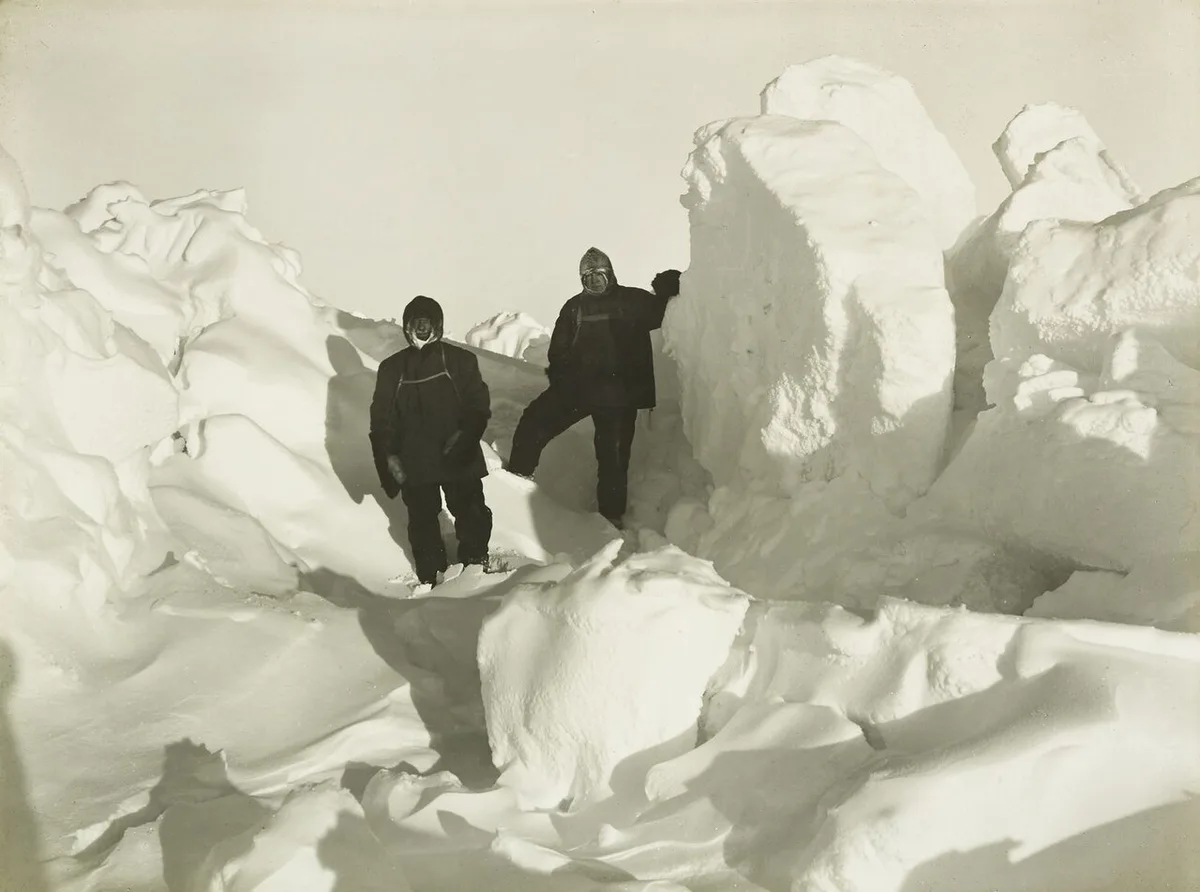
Setting out in 1914 to make the first land crossing of the Antarctic continent from the Weddell Sea to the Ross Sea, Sir Ernest Shackleton and his 28-man crew watched pack ice crush and sink their ship, HMS Endurance. After five months camped on drifting ice floes, an escape to Elephant Island, and an 800-mile open-boat crossing to South Georgia, every man aboard Endurance was rescued.
In this dossier (9 chapters) ▾
- 01 The Vision of a Continental Crossing
- 02 Twenty-Eight Men Depart on the Eve of War
- 03 Crushed in the Vise of the Weddell Sea
- 04 Across the Southern Ocean to South Georgia
- 05 The End of the Heroic Age and the Wreck Found 107 Years Later
- 06 Why It Matters
- 07 What the Record Shows
- 08 Archival Evidence & Picture Credits
- 09 Verified Archival Sources & Bibliography
Historical Dossier: The Imperial Trans-Antarctic Expedition (HMS Endurance) Location: Weddell Sea, Elephant Island & South Georgia, Antarctica | Year: 1914–1916 (Wreck Found 2022) | Key Figures: Sir Ernest Shackleton, Frank Wild, Captain Frank Worsley, Tom Crean
The Vision of a Continental Crossing
With the South Pole already reached by Roald Amundsen and Robert Falcon Scott in 1911–1912, Anglo-Irish explorer Sir Ernest Shackleton conceived a bold new prize: to lead the first expedition in history to make a complete land crossing of the Antarctic continent from the Weddell Sea to the Ross Sea. Making his plans public in a letter to The Times on December 29, 1913, Shackleton relied on his famous charm and enthusiasm to raise the necessary funds from private backers and the British government.
In charting his southern approach, Shackleton incorporated reports of possible landing sites at Vahsel Bay gathered by an earlier German expedition under Wilhelm Filchner, which had sailed south from South Georgia in December 1911.
Twenty-Eight Men Depart on the Eve of War
The crews for the two arms of the Imperial Trans-Antarctic Expedition were trimmed down to 28 men apiece. Aboard the Weddell Sea ship HMS Endurance, Shackleton selected seasoned polar veteran Frank Wild as his second-in-command and signed on Tom Crean—who had been awarded the Albert Medal for saving the life of Lieutenant Edward Evans on Scott’s Terra Nova expedition—as second officer.
Even Sir Daniel Gooch, grandson of the Victorian railway pioneer Daniel Gooch, joined the voyage as a temporary crewman tending the expedition’s sledging dogs as far as South Georgia. After offering his ship and crew to the Admiralty only to receive Winston Churchill’s famous one-word telegram (“Proceed”), Shackleton and his expedition left England on the outbreak of the First World War in August 1914.
Crushed in the Vise of the Weddell Sea
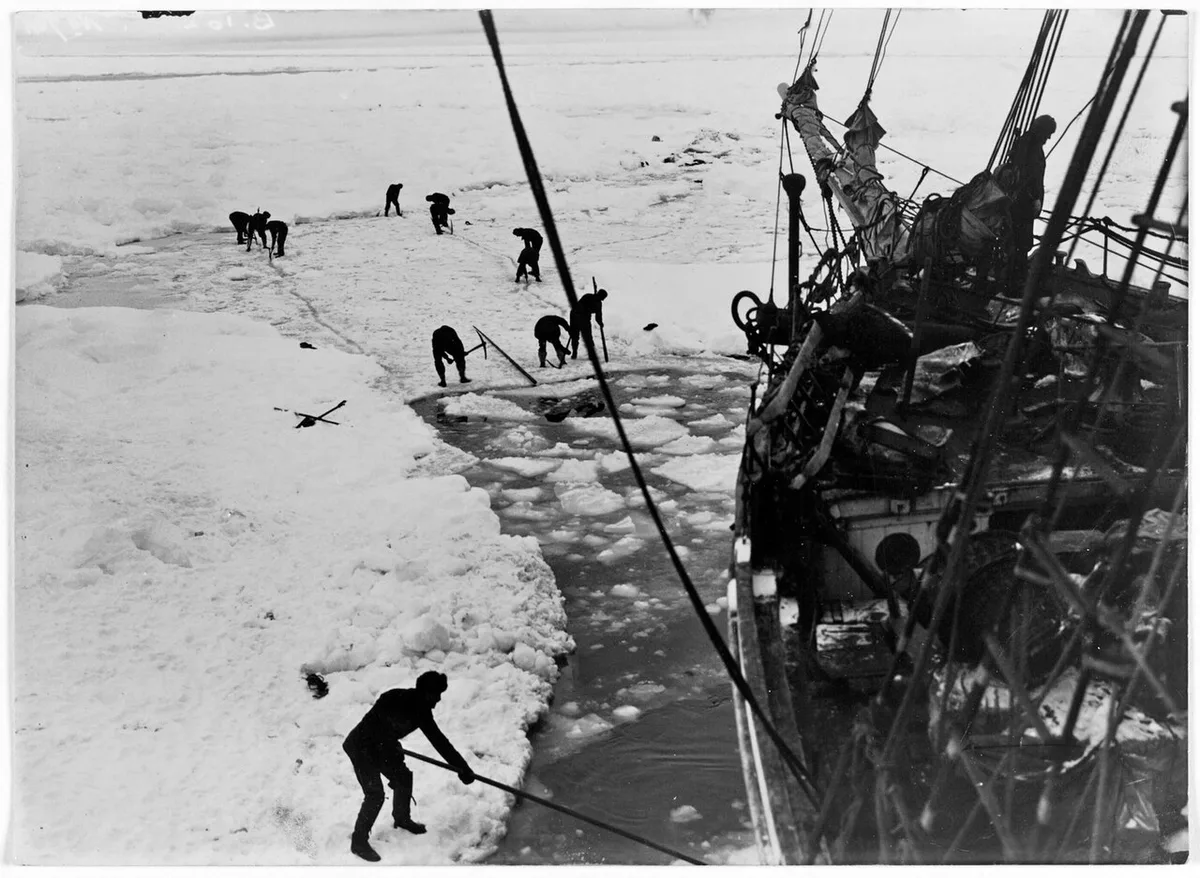
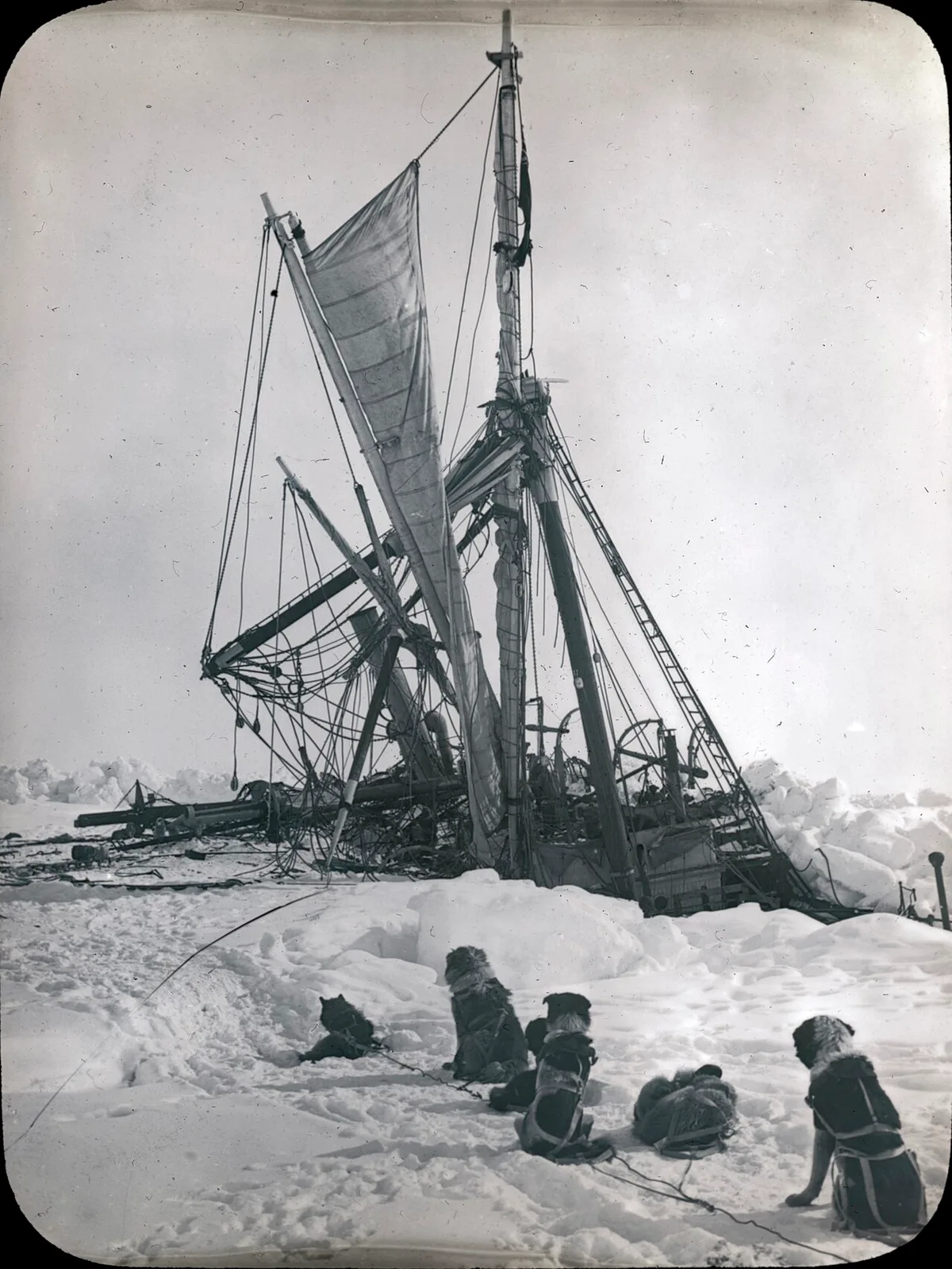
Pushing southward toward Vahsel Bay in early 1915, Endurance became frozen fast in the dense pack ice of the Weddell Sea before a single man could set foot on the Antarctic continent. For months the wooden three-masted barquentine drifted northward locked inside the shifting ice field until giant pressure ridges squeezed her timbers, crushed the hull, and finally sank the ship in November 1915.
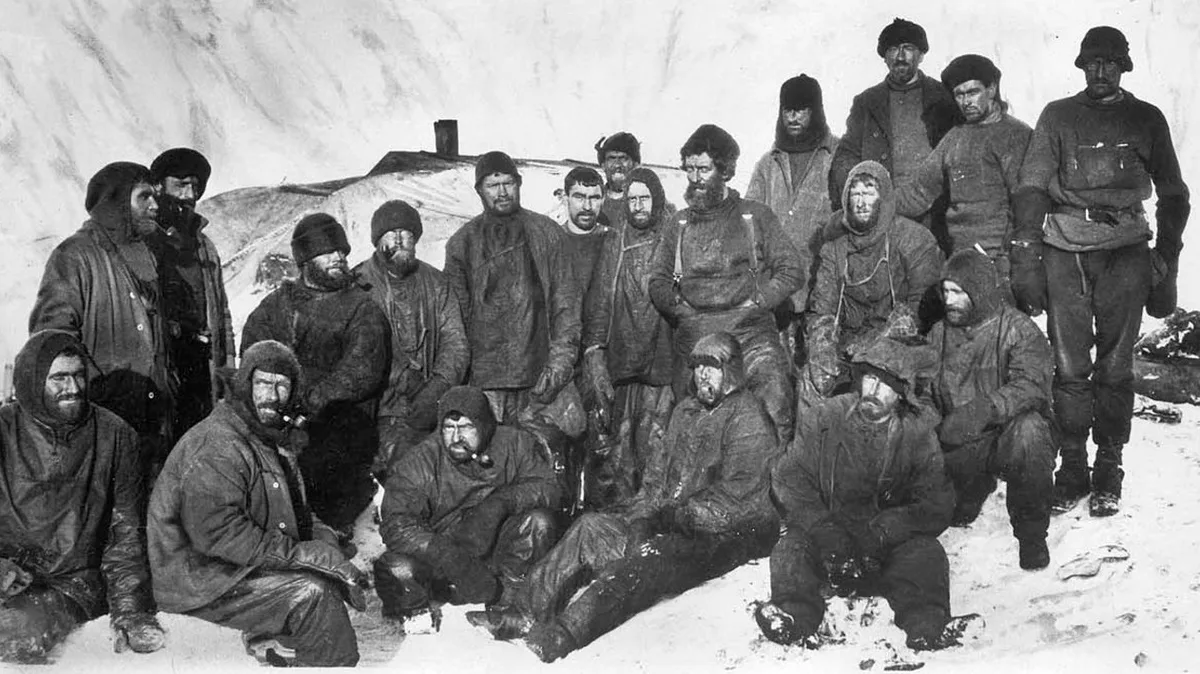
Left stranded hundreds of miles from land, the entire company of 28 men salvaged three open lifeboats, pitched tents on the frozen ocean, and spent five grueling months camped on the drifting ice floes until the pack broke up in April 1916, forcing a desperate seven-day dash through freezing seas to the uninhabited rocks of Elephant Island.
Across the Southern Ocean to South Georgia
Knowing no ship would ever search Elephant Island, Shackleton and five companions launched the 22-foot lifeboat James Caird on an epic 800-mile open-boat journey across the hurricane-swept Southern Ocean to South Georgia. After sixteen days battling towering rollers and icing decks through Frank Worsley’s pinpoint sextant navigation, they made landfall on the uninhabited southern coast of South Georgia.
From there, Shackleton, ship’s captain Frank Worsley, and Antarctic veteran Tom Crean marched for thirty-six continuous hours over unmapped glaciers and mountain peaks to reach the whaling station at Stromness. After three thwarted relief attempts through winter pack ice, Shackleton returned aboard the Chilean steam tug Yelcho and rescued all 22 men waiting on Elephant Island in August 1916—without the loss of a single life from Endurance’s crew.
The End of the Heroic Age and the Wreck Found 107 Years Later
Remembered as the last major expedition of the Heroic Age of Antarctic Exploration, the Endurance saga bound its survivors together for life. When the Shackleton–Rowett Expedition aboard Quest left London on September 17, 1921, eight Endurance veterans—Wild, Worsley, Macklin, McIlroy, Hussey, Alexander Kerr, Thomas McLeod, and cook Charles Green—sailed with their old “Boss,” who died of a heart attack on January 5, 1922, while Quest was anchored at South Georgia.
More than a century later, in March 2022—107 years after the ship sank—a team of scientists, historians, and filmmakers located the remarkably intact wreck of HMS Endurance resting on the seafloor off the coast of Antarctica.
Why It Matters
Although the Imperial Trans-Antarctic Expedition failed in its original goal of walking across the Antarctic continent, its two-year ordeal in the Weddell Sea became the gold standard of crisis leadership and human endurance. By prioritizing the survival and morale of his 28 men over personal glory when the ice closed in, Shackleton turned potential annihilation into the most celebrated rescue in polar history.
What the Record Shows
26 sourced claims in this story, resting on 5 sources. Numbers link to the bibliography below.
- Shackleton was to be the leader of the first expedition to cross the Antarctic continent. - source: 1
- Sir Ernest Shackleton conceived the expedition to make the first land crossing of the Antarctic continent. - source: 2
- Shackleton led an expedition to cross the Antarctic continent from the Weddell Sea to the Ross Sea. - source: 3
- Shackleton’s charm and enthusiasm helped to raise the necessary funds. - source: 1
- Shackleton made his plans public in a letter to The Times on December 29, 1913. - source: 2
- Shackleton incorporated Filchner’s reports of possible landing sites in Vahsel Bay into his developing expedition plans. - source: 2
- A German expedition under Wilhelm Filchner had sailed from South Georgia in December 1911. - source: 2
- The crews for the two arms of the expedition were trimmed down to 28 apiece. - source: 2
- Frank Wild was chosen as Shackleton’s second-in-command. - source: 2
- Tom Crean, awarded the Albert Medal for saving Lieutenant Edward Evans, signed on as Endurance’s second officer. - source: 2
- Sir Daniel Gooch, grandson of the railway pioneer Daniel Gooch, joined the expedition as a temporary crewman. - source: 2
- The expedition left England on the outbreak of the First World War. - source: 3
- Endurance became trapped in the ice of the Weddell Sea and sank after months on the ice. - source: 2
- The men remained camped on the drifting ice until April 1916. - source: 4
- The entire company (28 men) spent five months camped on the ice before escaping in the three lifeboats to Elephant Island. - source: 3
- Shackleton and five others made an epic open boat journey from Elephant Island to South Georgia. - source: 4
- Shackleton, ship’s captain Frank Worsley, and Antarctic veteran Tom Crean walked across the island to the whaling station at Stromness. - source: 4
- The steam tug Yelcho rescued the men on Elephant Island in August 1916. - source: 3
- The Imperial Trans-Antarctic Expedition was the last major expedition of the Heroic Age of Antarctic Exploration. - source: 2
- The Shackleton–Rowett Expedition on Quest left London on 17 September 1921. - source: 2
- Shackleton died of a heart attack on 5 January 1922, while Quest was anchored at South Georgia. - source: 2
- The Endurance crew members who sailed with Quest included Wild, Worsley, Macklin, McIlroy, Hussey, Alexander Kerr, Thomas McLeod, and cook Charles Green. - source: 2
- Sir Ernest Shackleton’s ship, HMS Endurance, was located by a team of scientists, historians, and filmmakers. - source: 5
- The ship was found off the coast of Antarctica. - source: 5
- The ship was found by a team of scientists, historians, and filmmakers. - source: 5
- The ship was found 107 years after it sank. - source: 5
Archival Evidence & Picture Credits
Every image on this page was checked against its Wikimedia Commons file page.
- Frank Wild and Sir Ernest Shackleton in the heavy pressure ice (Public domain, Frank Hurley) - Wikimedia Commons file page
- Crew trying to cut a channel in the ice for Endurance (Public domain, Frank Hurley) - Wikimedia Commons file page
- Panorama of South Georgia Island (Public domain, Frank Hurley) - Wikimedia Commons file page
- Frank Hurley and Ernest Shackleton on the Antarctic ice floe, 1914–1915 (Public domain, State Library of New South Wales) - Wikimedia Commons file page
- Final sinking of HMS Endurance, November 1915 (Public domain, Frank Hurley) - Wikimedia Commons file page
- Elephant Island party awaiting rescue, 1916 (Public domain, Frank Hurley) - Wikimedia Commons file page
- SY Aurora in Sydney Harbour, 1914 (CC0, William Hall Collection, Australian National Maritime Museum) - Wikimedia Commons file page


Verified Archival Sources & Bibliography
Every claim in this account has been fact-checked against primary archives and scholarly repositories:
- Glasgow Digital Library Scotia Polar Archive — Sir Ernest Shackleton and the Imperial Trans-Antarctic Expedition (primary)
- Wikipedia — Imperial Trans-Antarctic Expedition (1914–1917) Historical Record (reference)
- Scott Polar Research Institute, University of Cambridge — Shackleton’s Endurance Expedition Archive (primary)
- State Library Victoria La Trobe Journal — Frank Hurley’s Photographs and the Endurance Survival Account (primary)
- CNN Archival Report — HMS Endurance Wreck Discovered 107 Years After Sinking off Antarctica (news)
Historical Connection Graph
The Ship That Rescued the Titanic Survivors Met a Deadlier Fate.
AJ. "Crushed by Antarctic Ice, 28 Men Survived Five Months on Drifting Floes." Echoes of History Uncut. Last modified October 15, 2026. https://echoesofhistoryuncut.com/articles/imperial-trans-antarctic-expedition/.

An independent digital history publication and documentary studio reconstructing historical turning points through primary archives, official inquiries, and scholarly citations. Every factual claim in this dossier is cross-referenced to the numbered bibliography above.