
He Survived Hiroshima, Then Walked Straight Into Nagasaki
On August 6, 1945, naval engineer Tsutomu Yamaguchi survived the atomic bombing of Hiroshima less than two miles from ground zero. After boarding an evacuation train home to Nagasaki, he reported to work wrapped in bandages—only for the second atomic bomb to detonate outside his office window as his supervisor dismissed his story.
In this dossier (7 chapters) ▾
- 01 The Final Day in Hiroshima (August 6, 1945)
- 02 The Night Train to Nagasaki (August 7–8, 1945)
- 03 The Second Flash: The Nagasaki Office Climax (August 9, 1945)
- 04 Official Recognition as Nijū Hibakusha (2009)
- 05 What the Record Shows
- 06 Archival Evidence & Picture Credits
- 07 Verified Archival Sources & Bibliography
Historical Dossier: The Double Atomic Bombing Survival of Tsutomu Yamaguchi (Nijū Hibakusha) Location: Hiroshima & Nagasaki, Empire of Japan | Dates: August 6 & August 9, 1945 | Key Figure: Tsutomu Yamaguchi (1916–2010)
The Final Day in Hiroshima (August 6, 1945)
In the summer of 1945, 29-year-old naval design engineer Tsutomu Yamaguchi was completing a three-month temporary assignment in Hiroshima for Mitsubishi Heavy Industries. His team was designing an oil tanker for the Imperial Japanese Navy. August 6 was scheduled to be his final morning in the city before returning home to his wife, Hisako, and infant son, Katsutoshi, in Nagasaki [1].
At approximately 8:15 AM, as Yamaguchi walked along a footpath toward the Mitsubishi shipyard docks, he realized he had forgotten his company identification stamp (hanko) at his boarding house. He turned back toward the city center. Moments later, the American B-29 bomber Enola Gay released the uranium gun-type weapon code-named Little Boy over the Aioi Bridge, roughly 3 kilometers (less than two miles) from Yamaguchi’s position [2].
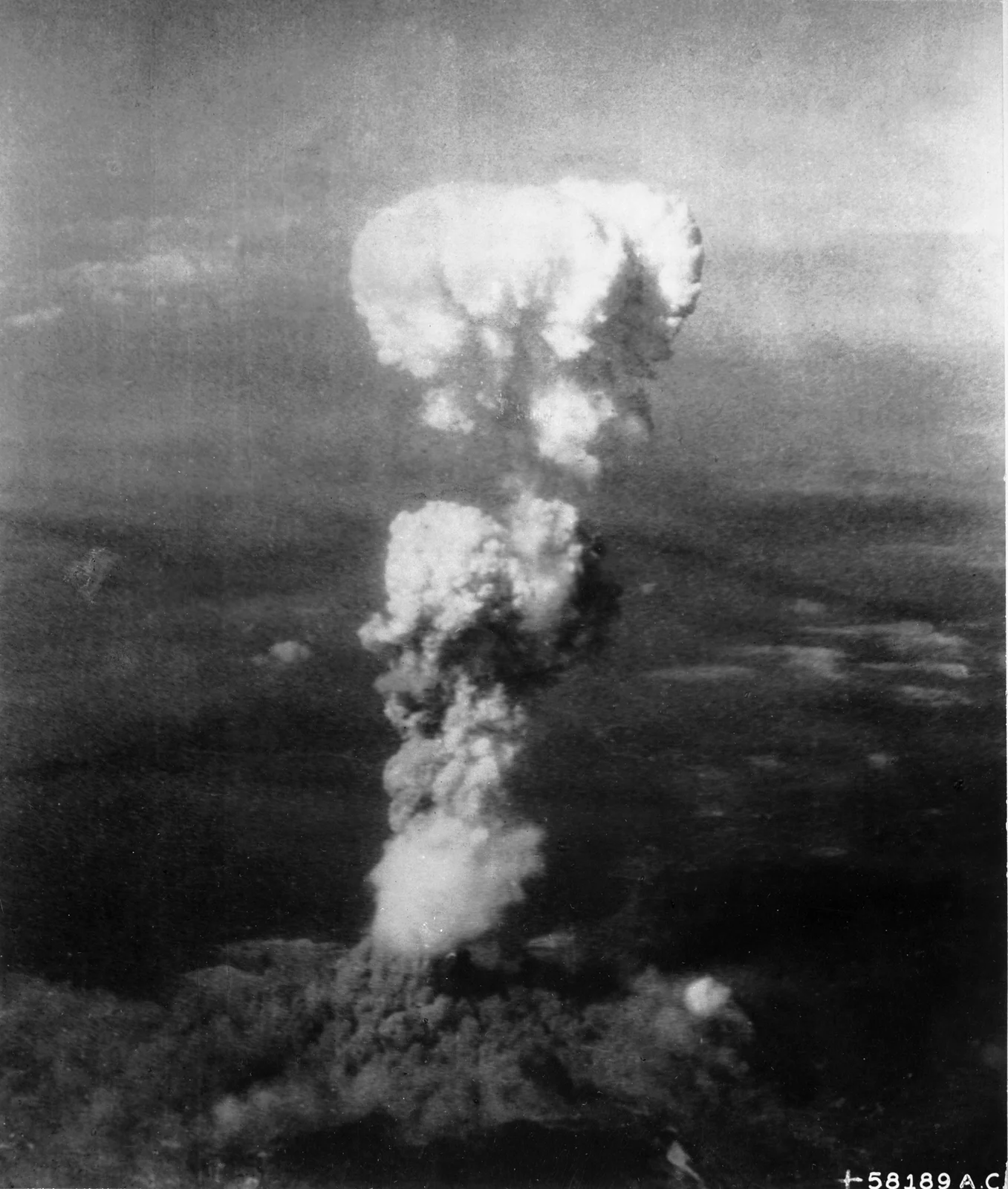
Yamaguchi later recounted seeing two small parachutes descend before the sky ignited with an all-consuming white flash—what Japanese survivors described as the pikadon (flash-boom). Thrown backward into an irrigation ditch by the shockwave, Yamaguchi suffered severe heat burns across his face and the left side of his torso, as well as ruptured eardrums. After recovering consciousness in the burning rubble of the industrial district, he found his two colleagues, Akira Iwanaga and Kuniyoshi Sato, alive [1, 3].
The Night Train to Nagasaki (August 7–8, 1945)
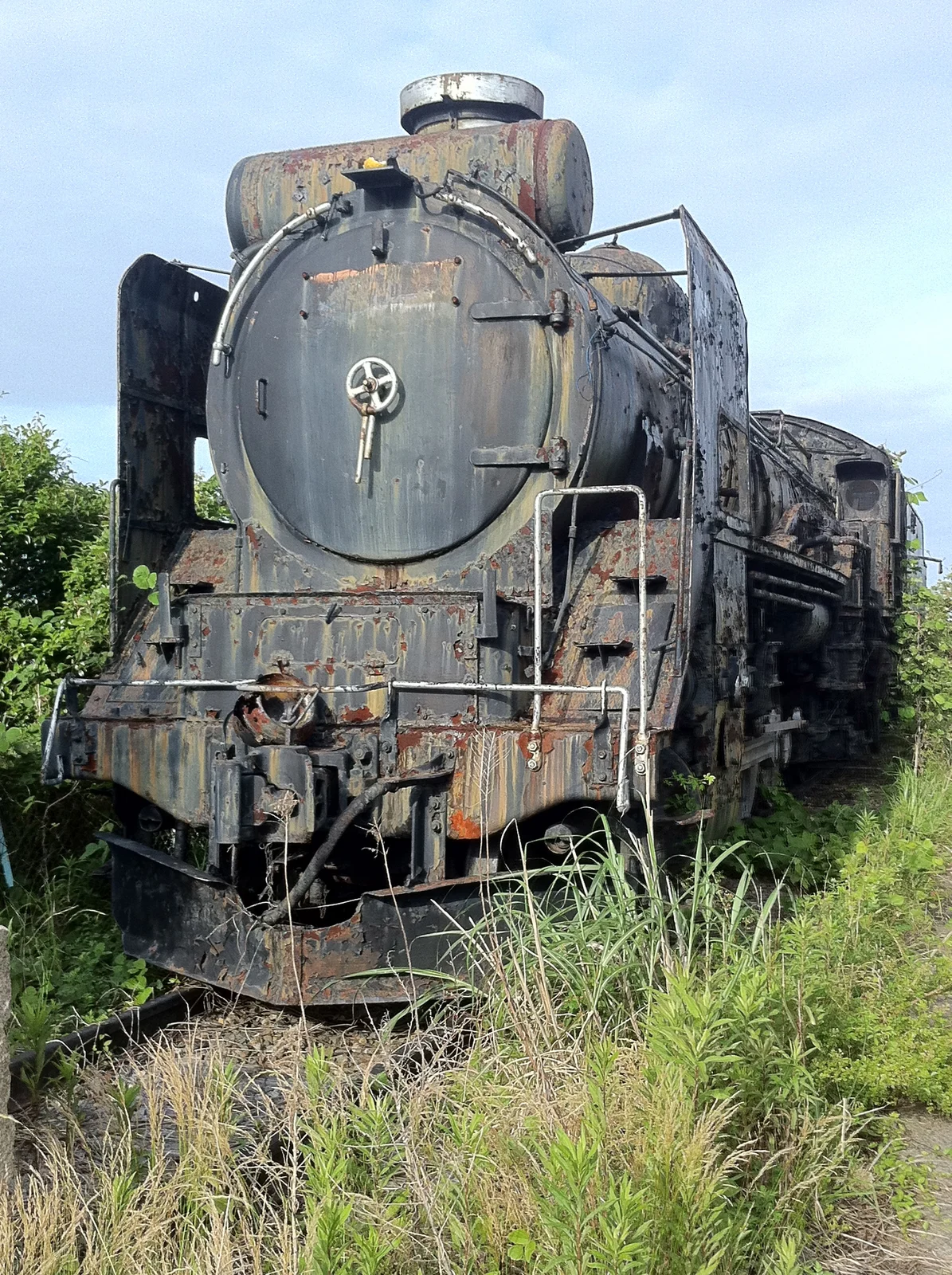
Despite collapsed bridges and severed infrastructure across Hiroshima, the Japanese National Railways (JNR) managed to keep a single evacuation line running along the southern coast. Crawling through the smoldering city, Yamaguchi reached Hiroshima Station on the morning of August 7 and boarded an overcrowded steam locomotive filled with burn casualties and soldiers heading westward across Kyushu [2].
Arriving in Nagasaki on August 8, Yamaguchi staggered into a local relief clinic where a former schoolmate, working as a physician, barely recognized him beneath his blackened facial burns. Emergency staff cleaned his scorched skin and wrapped his head, arms, and torso in heavy gauze bandages. When Yamaguchi returned to his family home that evening, his mother initially thought she was looking at a ghost.
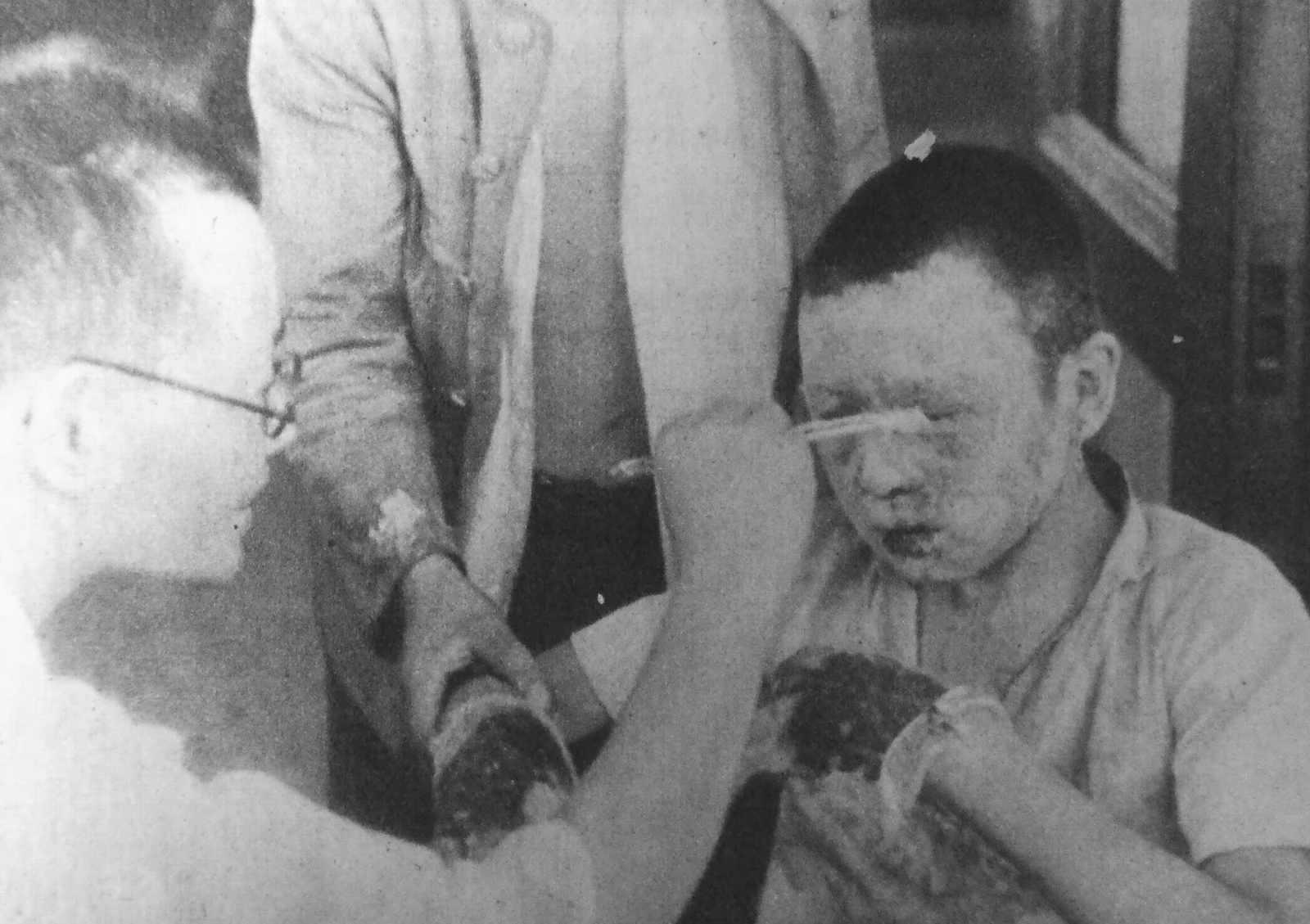
Despite a high fever, acute radiation sickness symptoms, extreme physical exhaustion, and ruptured eardrums, wartime workplace discipline compelled Yamaguchi to report to the Mitsubishi Heavy Industries head office on the morning of August 9 to brief his superiors on the destruction of the Hiroshima shipyard and file his technical travel report [1].
The Second Flash: The Nagasaki Office Climax (August 9, 1945)
At 11:00 AM on August 9, Yamaguchi stood inside the Mitsubishi design office in the industrial Urakami Valley of Nagasaki. His supervisor, senior company director Kenshi Inoue, listened in disbelief as the bandaged engineer described how a single B-29 bomber had obliterated the entire city of Hiroshima in a blinding flash of light and a mushroom-shaped pillar of smoke. Inoue dismissed his testimony as impossible, remarking:
“You’re an engineer. Calculate it. How could a single bomb destroy a city of three hundred thousand people? You’ve suffered heatstroke.” [1, 4]
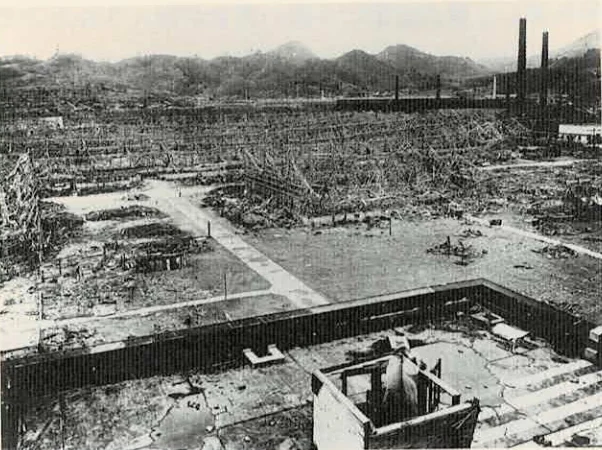
At 11:02 AM, before Yamaguchi could finish defending his account, the second atomic weapon—Fat Man, a 21-kiloton plutonium implosion bomb dropped by the B-29 Bockscar after clouds obscured its primary target at Kokura—detonated 500 meters above the Matsuyama district in the Urakami Valley, once again roughly 3 kilometers from Yamaguchi’s position [2, 5].
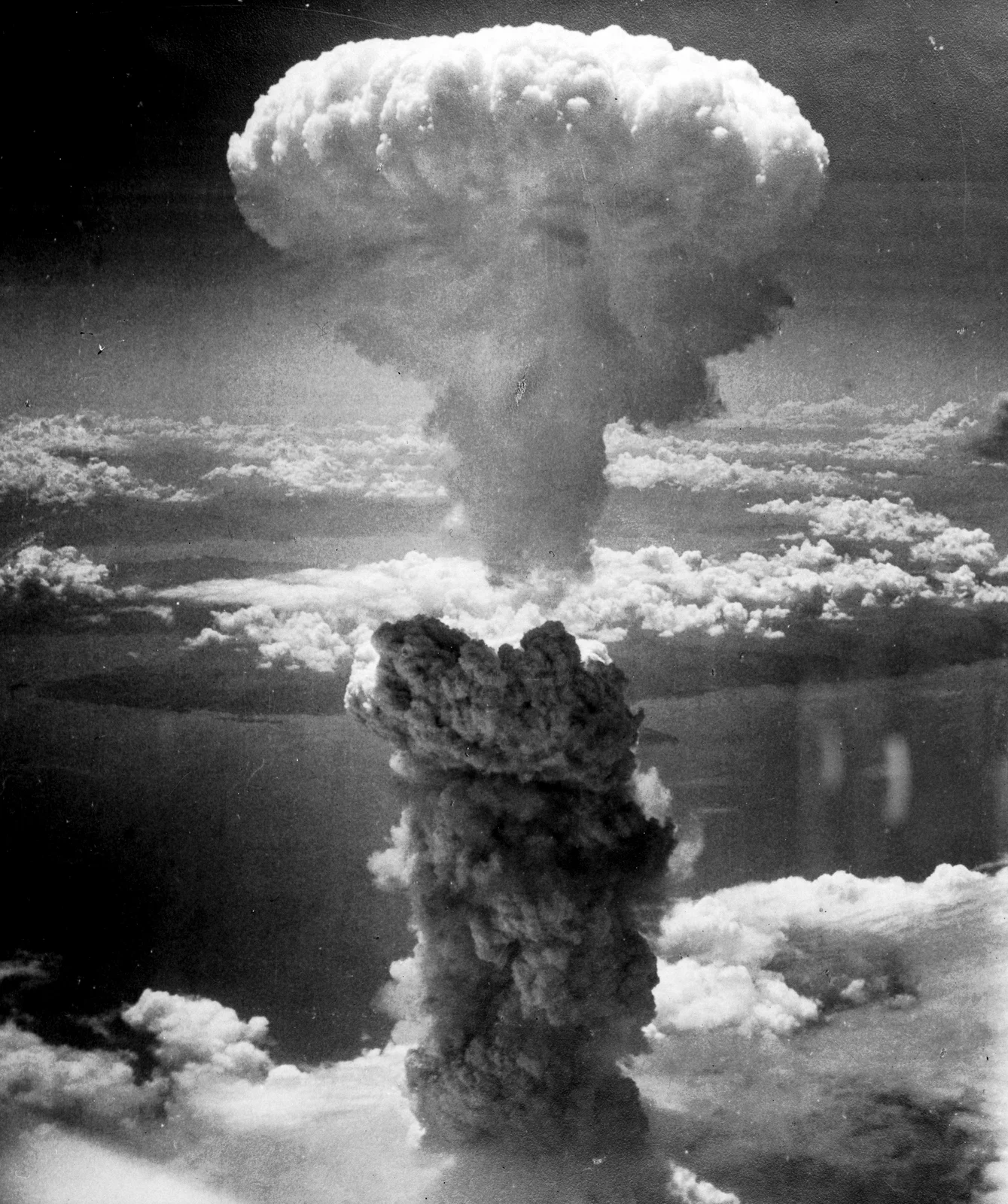
The exact same magnesium-white flash flooded the office windows. Instinctively recognizing the pikadon from seventy-two hours earlier, Yamaguchi dropped flat onto the floorboards beside a reinforced concrete stairwell wall, thinking that the atomic cloud had followed him from Hiroshima. Seconds later, the supersonic shockwave shattered the office windows, tore off the roof, and ripped the bandages from his burns. Because the steep hills of Nagasaki partially shielded the lower harbor and the Mitsubishi office building featured heavy reinforced steel and concrete framing, Yamaguchi, his stunned supervisor, and several colleagues survived the blast wave [1, 3].
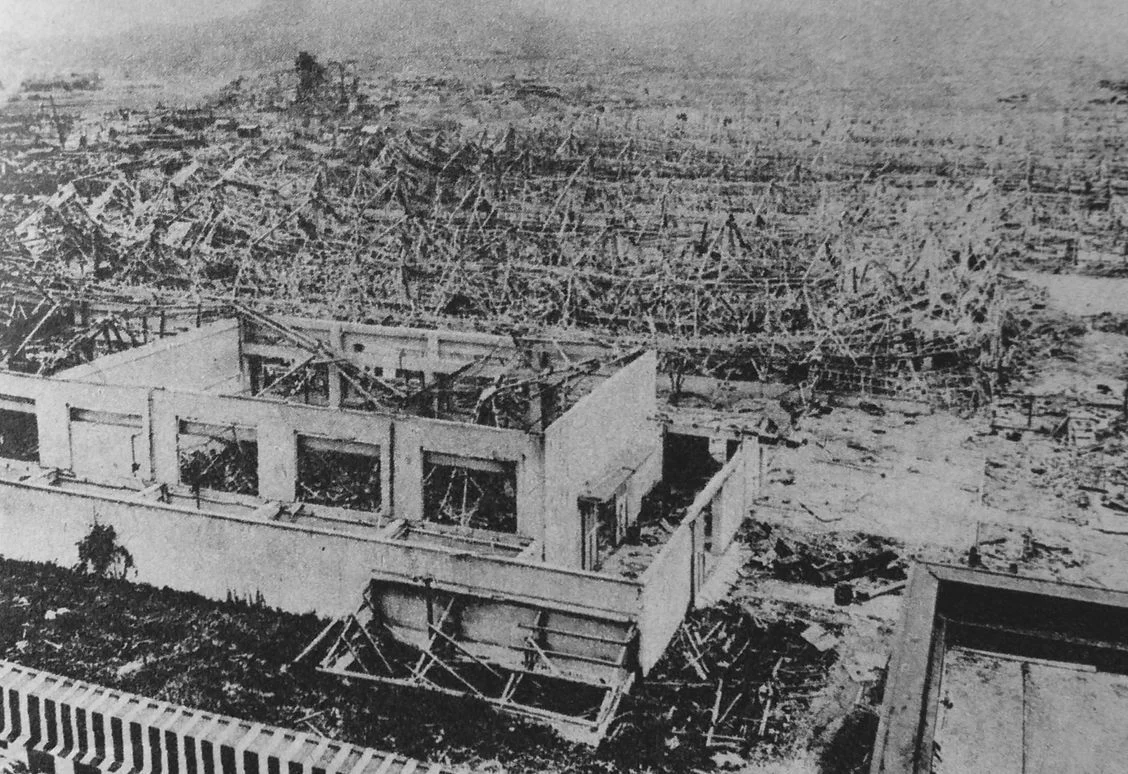
Rushing back to his residential neighborhood through the burning streets, Yamaguchi found that his house had been partially collapsed; however, his wife Hisako and infant son Katsutoshi had gone out that morning to purchase burn ointment for his Hiroshima wounds and had taken cover inside a hillside air-raid tunnel when the air-raid siren sounded, sparing them direct blast exposure. For the next week, the family sheltered inside the damp bunker while Yamaguchi endured acute radiation sickness—losing his hair, suffering persistent vomiting, and watching his wounds suppurate before slowly recovering over the months that followed [1, 2].
Official Recognition as Nijū Hibakusha (2009)
After Japan’s surrender, Yamaguchi worked as a translator for the Allied occupation forces in Nagasaki, taught school, and later returned to Mitsubishi Heavy Industries to design commercial supertankers. For more than five decades, while registered as a Nagasaki atomic bomb survivor (hibakusha), he rarely spoke in public about his ordeal because he had recovered to relative health and felt survivors who were still suffering should be heard first. Following the death of his son Katsutoshi from cancer in 2005 at age 59, Yamaguchi began speaking out internationally, publishing his memoir, addressing the United Nations in New York, and becoming the first and only person officially certified by the Japanese government on March 24, 2009, as a survivor of both the Hiroshima and Nagasaki atomic bombings (nijū hibakusha) before his death at age 93 on January 4, 2010.
What the Record Shows
- Double Ground Zero Proximity: Yamaguchi was located approximately 3 km from hypocenter in Hiroshima on August 6, and approximately 3 km from hypocenter in Nagasaki on August 9 [1, 2].
- Official Government Recognition: In March 2009, the government of Japan officially recognized Tsutomu Yamaguchi as the first certified nijū hibakusha (double atomic bomb survivor) with legal documentation in both cities [3].
- Survival & Longevity: Despite suffering acute radiation sickness, vomiting, permanent loss of hearing in his left ear, and temporary loss of hair, Yamaguchi outlived both blasts by more than six decades, living until age 93 [1].
- United Nations Testimony: In 2006, at age 90, Yamaguchi traveled to United Nations Headquarters in New York to advocate for the total abolition of nuclear weapons, declaring: “Having experienced atomic bombing twice and survived, it is my destiny that I must speak out.” [1, 4]
Archival Evidence & Picture Credits
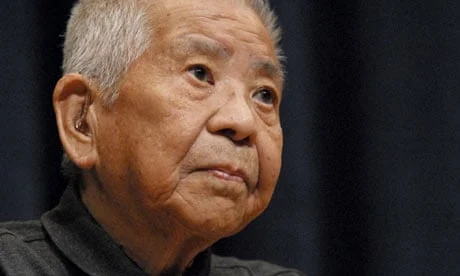
- Portrait of Tsutomu Yamaguchi (1916–2010): Archival portrait documented during his official certification as double hibakusha. Photograph by Justin McCurry / The Guardian / Shueisha Records under Fair Use.
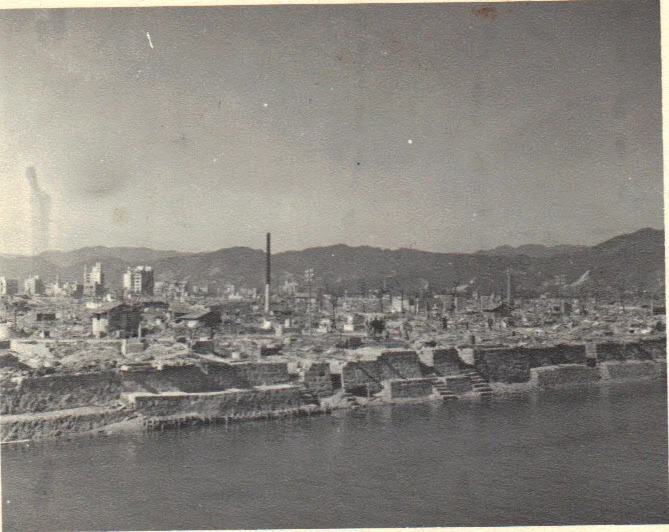
- Hiroshima Ground Zero Devastation (August 1945): Panoramic damage survey taken by US Navy personnel aboard the USS Tuscaloosa. Public Domain via Wikimedia Commons.
- Hiroshima Mushroom Cloud (August 6, 1945): Photographed from the tail gunner position of the Enola Gay. US Army Air Forces / US National Archives (Record Group 77). Public Domain via Wikimedia Commons.
- Burn Treatment of Hibakusha Victim (1945): Medical documentation photograph taken by the United States Strategic Bombing Survey at Hiroshima Red Cross Hospital. US National Archives (Public Domain).
- Japanese Steam Locomotive (JNR Class D51): Standard 1940s passenger and freight evacuation locomotive. Photograph courtesy of Wikimedia Commons under CC BY-SA 4.0.
- Ohashi Plant of Mitsubishi Nagasaki Arms Factory (1945): Pre-blast survey documentation of the industrial facility in the Urakami Valley. US Strategic Bombing Survey. Public Domain via Wikimedia Commons.
- Nagasaki Mushroom Cloud (August 9, 1945): Photographed by Lieutenant Charles Levy aboard The Great Artiste. US National Archives (Record Group 342-FH-3A-40157). Public Domain via Wikimedia Commons.
- Mitsubishi Nagasaki Shipyard & Office Ruins (1945): Survey photograph documenting structural blast deformation. United States Strategic Bombing Survey (USSBS). Public Domain via Wikimedia Commons.


Verified Archival Sources & Bibliography
- Goldstein, Richard. “Tsutomu Yamaguchi, Survivor of 2 Atomic Blasts, Dies at 93.” The New York Times, January 6, 2010. Archival Link.
- United States Strategic Bombing Survey (USSBS). The Effects of Atomic Bombs on Hiroshima and Nagasaki. Chairman’s Office, 1946. US Government Publishing Office.
- McCurry, Justin. “A Little Deaf in One Ear — Meet the Japanese Man Who Survived Hiroshima and Nagasaki.” The Guardian, March 25, 2009. Archival Link.
- Yamaguchi, Tsutomu. Twice Bombed, Twice Survived: The Double Hibakusha of Hiroshima and Nagasaki. Documentary Testimony directed by Hidetaka Inazuka, 2006.
- Craig, William. The Fall of Japan: The Final Weeks of World War II in the Pacific. New York: The Dial Press, 1967.
Historical Connection Graph
Their Warship Was Wrecked. So 50 Sailors Stole a Ghost Ship.
AJ. "He Survived Hiroshima, Then Walked Straight Into Nagasaki." Echoes of History Uncut. Last modified November 7, 2026. https://echoesofhistoryuncut.com/articles/tsutomu-yamaguchi-hiroshima-nagasaki/.

An independent digital history publication and documentary studio reconstructing historical turning points through primary archives, official inquiries, and scholarly citations. Every factual claim in this dossier is cross-referenced to the numbered bibliography above.